GHMC Expansion to 300 Wards Strengthens Hyderabad’s Urban Growth
Introduction
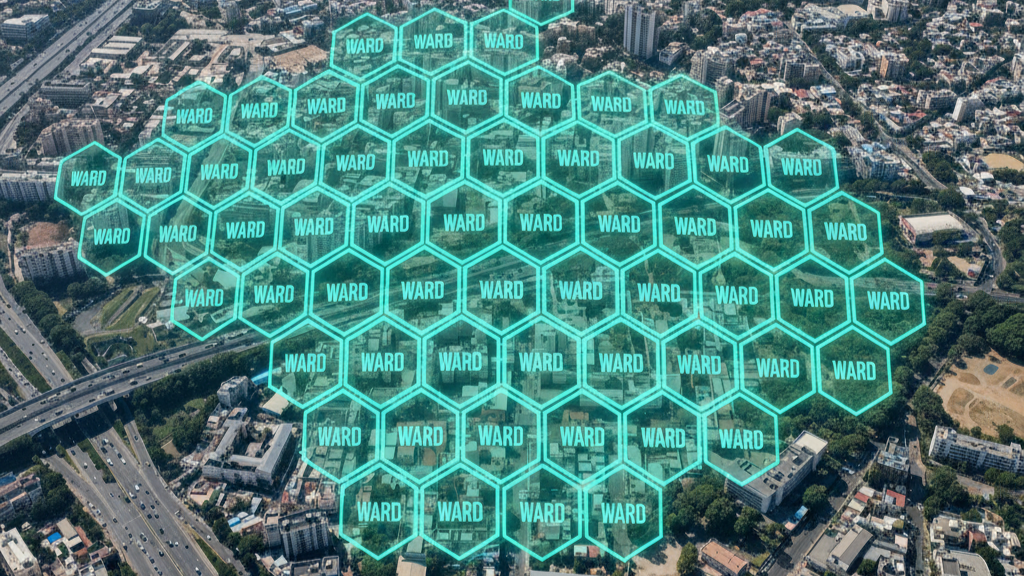
Hyderabad is entering a new phase of planned urban expansion as discussions around increasing the Greater Hyderabad Municipal Corporation (GHMC) limits to 300 wards gain momentum. The move — based on merging surrounding municipalities and urban local bodies — aims to create a more unified governance structure, improve infrastructure delivery, and boost confidence in fast-growing suburban corridors.
For homebuyers, developers, and investors, this shift has long-term implications. A larger GHMC footprint typically leads to better civic services, more predictable regulations, and increased property market stability. This blog explores what the expansion means, why it matters, and how it will influence growth across Hyderabad’s expanding boundaries.
Why the 300-Ward Expansion Is Being Proposed
Unified governance for a growing metro
Hyderabad’s growth has moved far beyond its earlier municipal limits. Suburbs such as Bachupally, Narsingi, Manchirevula, Pedda Amberpet, Dundigal, and Kompally have rapidly urbanised due to demand for housing, proximity to IT corridors, and ongoing infrastructure investments.
Bringing these fast-growing municipalities under GHMC allows for:
Uniform development standards
Consistent service delivery
Better long-term planning
Streamlined oversight for civic works
Reports from Niti Aayog’s urbanisation studies highlight that integrated metropolitan governance is essential for efficient public service delivery as cities expand.
Better alignment with future infrastructure plans
Hyderabad is one of the few Indian cities where major infrastructure projects — including Metro Phase 2, the Regional Ring Road, multi-grade separators, and new water pipelines — are planned beyond the traditional urban core.
Merging surrounding municipalities ensures that planning, funding, and execution are cohesive rather than fragmented across multiple authorities.
How the Expansion Will Improve Infrastructure Delivery
1. Consistent civic standards across new zones
Areas newly added to GHMC will receive standardised norms for:
Road widening
Drainage and stormwater systems
Street lighting
Waste management
Public amenities and open spaces
These upgrades often lead to improvements in liveability and long-term property value. World Bank’s urban infrastructure assessment notes that local bodies with unified frameworks deliver faster and more consistent civic upgrades.
2. Stronger funding capacity
A larger GHMC brings enhanced financial capability through:
Consolidated tax revenues
Increased state-level support
Better eligibility for central urban development programs
More funding means quicker execution of large-scale civic projects, benefiting suburban and newly added corridors.
3. Integration of digital governance
GHMC has already digitised several services, including property tax payments, building permissions, and grievance redressal. Extending these systems to merged zones simplifies compliance for property owners and improves transparency.
Impact on Real Estate: Why Suburban Corridors Benefit Most
Suburban areas gain civic legitimacy
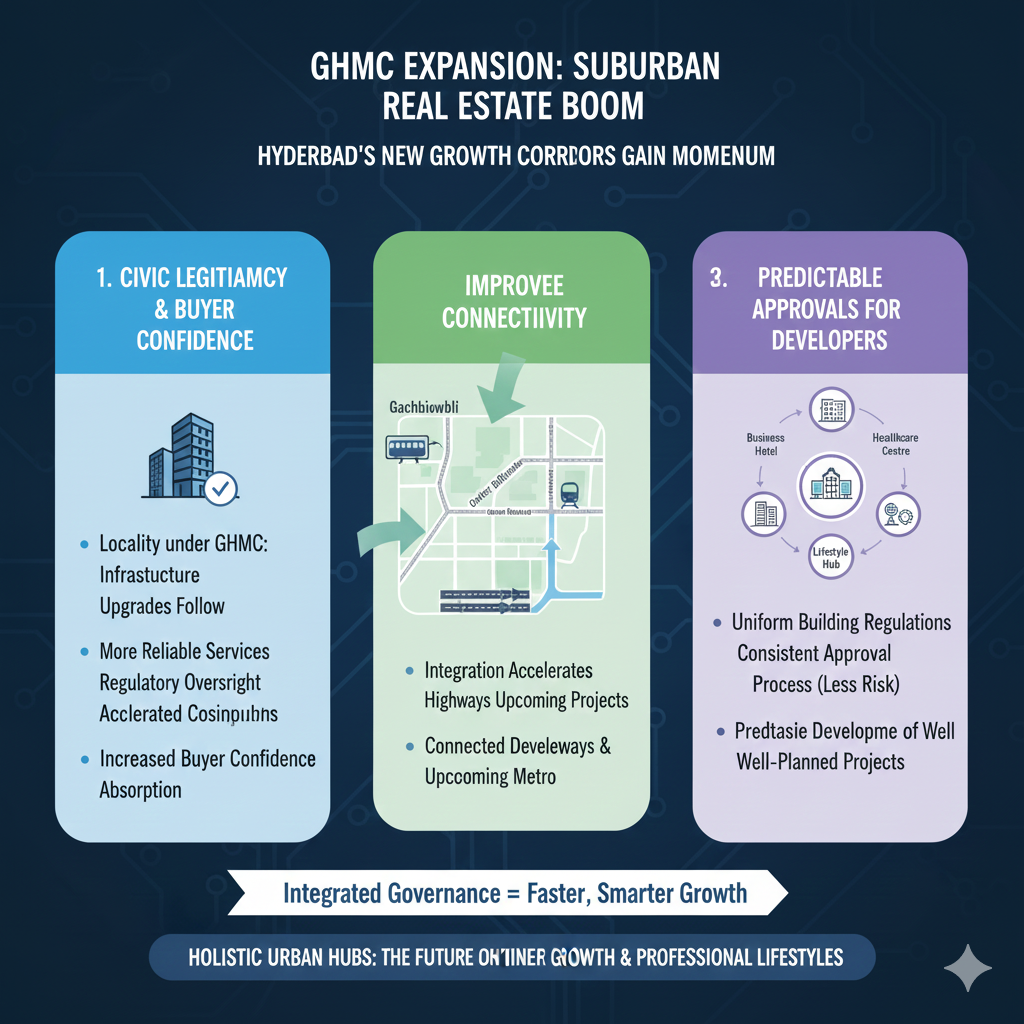
When a locality moves under GHMC, long-overdue infrastructure upgrades generally follow. Buyers often view areas under GHMC as more reliable because of predictable service delivery and stronger regulatory oversight.
This transition typically increases buyer confidence and accelerates residential absorption.
Improved connectivity accelerates demand
Many suburbs seeking inclusion into GHMC are already connected to major highways, ORR interchanges, and upcoming Metro alignments. With governance integration, connectivity upgrades tend to be prioritised sooner.
Hyderabad’s Metropolitan Development Plan 2031 has repeatedly indicated that integrated governance speeds up corridor-level mobility projects.
Predictable approval systems for developers
Developers prefer operating under one clear regulatory system. When fragmented municipalities are merged into GHMC, they benefit from uniform building regulations, a consistent approval process, and predictable development taxes.
This can increase supply of well-planned residential and mixed-use projects in emerging suburban pockets.
Which Corridors Stand to Gain
1. West and Northwest Corridors
Kollur, Mokila, Bachupally, Mallampet, Bowrampet, and Miyapur outskirts already witnessing strong residential traction may see accelerated civic upgrades and better transport integration.
2. East and Southeast Corridors
Areas near Pedda Amberpet, Adibatla, and LB Nagar outskirts benefit from enhanced road connectivity and more predictable municipal services.
3. North Corridor
Kompally, Medchal, and surrounding suburbs may see improved drainage networks, water pipelines, and commercial zoning clarity supporting both residential and retail growth.
These regions have shown rising demand in recent reports by ANAROCK Research (https://www.anarock.com/insights), driven by affordability, job proximity, and upcoming infrastructure.
Implications for Homebuyers and Investors
For Homebuyers
Better civic infrastructure improves day-to-day convenience.
Stormwater, sewage, and water supply upgrades reduce environmental risk.
GHMC areas typically witness more stable property values.
Transparent regulatory norms reduce uncertainty in approvals and property taxes.
For Investors
Newly integrated zones often see appreciation as services improve.
Expansion supports long-term rental demand as suburban areas become more livable.
Unified governance reduces risk of policy inconsistencies affecting land or development.
For Developers
Clarity in approvals increases willingness to launch new projects.
Standardised norms allow for consistent product planning across micro-markets.
Stronger suburban civic infrastructure widens the scope for township and community-scale launches.
FAQ Section
Q. How will merging surrounding municipalities into GHMC help residents?
A. It ensures uniform civic services, standardised infrastructure, and quicker execution of development works across all zones.
Q. Will property prices rise immediately after the expansion?
A. Price growth depends on actual infrastructure delivery, but historically newly added GHMC zones see stronger appreciation once upgrades begin.
Q. Does the expansion increase taxes for homeowners?
A. Any change in tax framework is governed by GHMC norms. In many cases, improved service delivery offsets incremental costs.
Q. Why is GHMC expansion important for Hyderabad’s long-term growth?
A. Unified governance reduces fragmentation, simplifies infrastructure planning, and supports balanced urban growth across suburban corridors.
Conclusion

The proposed expansion of GHMC to 300 wards marks a significant step toward structured metropolitan development. By merging surrounding municipalities into a single governance framework, Hyderabad can deliver infrastructure more efficiently, plan long-term investments more strategically, and foster balanced growth across suburban corridors.
For buyers, developers, and investors, this move enhances confidence in emerging zones and strengthens the city’s position as one of India’s fastest-growing real estate markets.
Let’s Join Together to Bring Change to the World of Real Estate.
Relai – For right home.
Thinking about your next home?
relai scores every project on data, not paid placements, and it's free for buyers.