Infrastructure Doesn’t Raise Prices. Timing Does.
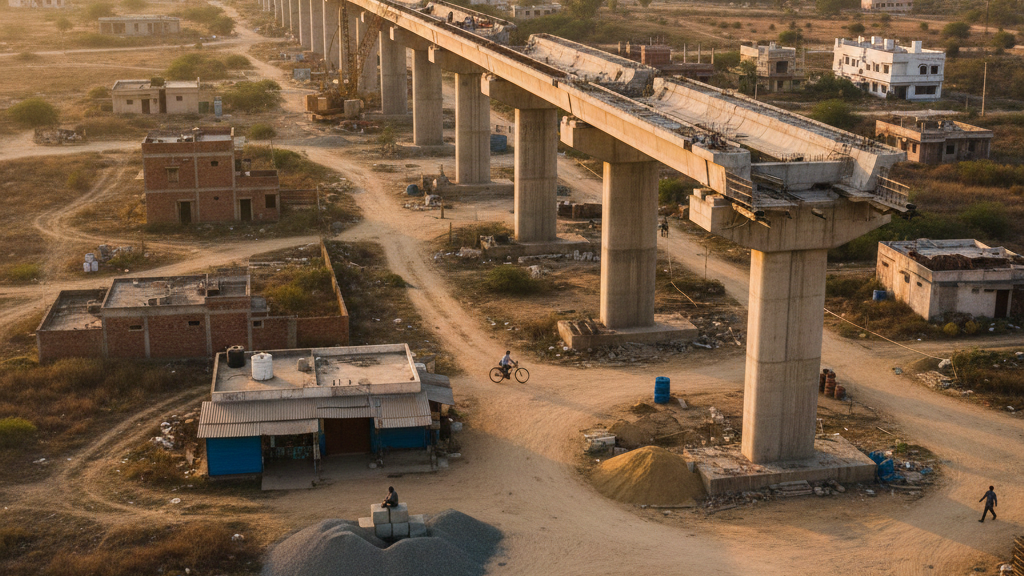
Every real estate cycle has a familiar story.
A new metro line is announced. A highway extension is planned. An airport road is proposed. Almost immediately, prices in nearby locations start rising—on paper.
Buyers are told infrastructure equals appreciation.
But infrastructure alone does not raise prices. Timing does.
In Indian cities like Hyderabad and Bengaluru, many buyers enter markets too early or too late, mistaking announcements for value creation. The result is disappointment, long holding periods, and muted returns.
This blog explains why infrastructure announcements don’t move markets by themselves, how timing shapes real gains, and where buyers usually misread infra-led growth.
Why Announcements Alone Don’t Move Markets
Infrastructure announcements create attention, not value.
When a project is announced, three things usually happen:
• Developers raise launch prices
• Investors rush in expecting early gains
• Marketing narratives get louder
But the underlying livability does not change overnight.
No new jobs appear the day a metro line is announced. Commute times don’t improve. Access doesn’t change. End-user demand remains largely the same.
Price appreciation driven only by announcements is speculative. It relies on the next buyer paying more for the same experience.
True price growth requires usage, not headlines.
Execution Lag vs Speculation Cycles
Most infrastructure projects have long execution timelines.
Metro corridors can take 5–8 years from announcement to full operational impact. Highways and flyovers face land acquisition, approvals, and funding delays.
Speculation, however, moves much faster.
Prices often spike early—sometimes within months of announcement—well before execution risk is resolved. This creates a mismatch:
• Early buyers price in future benefits
• Actual benefits arrive years later
• End-user demand catches up slowly
By the time infrastructure is operational, much of the upside is already absorbed into prices.
This is why many buyers feel infra “didn’t work” for them, even though the project eventually delivered.
Who Benefits First and Who Waits Longest
Infra-led growth does not reward everyone equally.
Who Benefits First
• Landowners who entered before announcements
• Developers with large land banks
• Early institutional players with long holding capacity
These participants absorb volatility and wait for execution certainty.
Who Waits the Longest
• Retail buyers entering post-announcement
• End-users buying during peak hype
• Investors with short holding horizons
For them, appreciation depends on a second wave of demand—which often takes much longer than expected.
Timing determines whether infrastructure is a tailwind or a trap.
Why Buyers Misread Infra-Led Growth
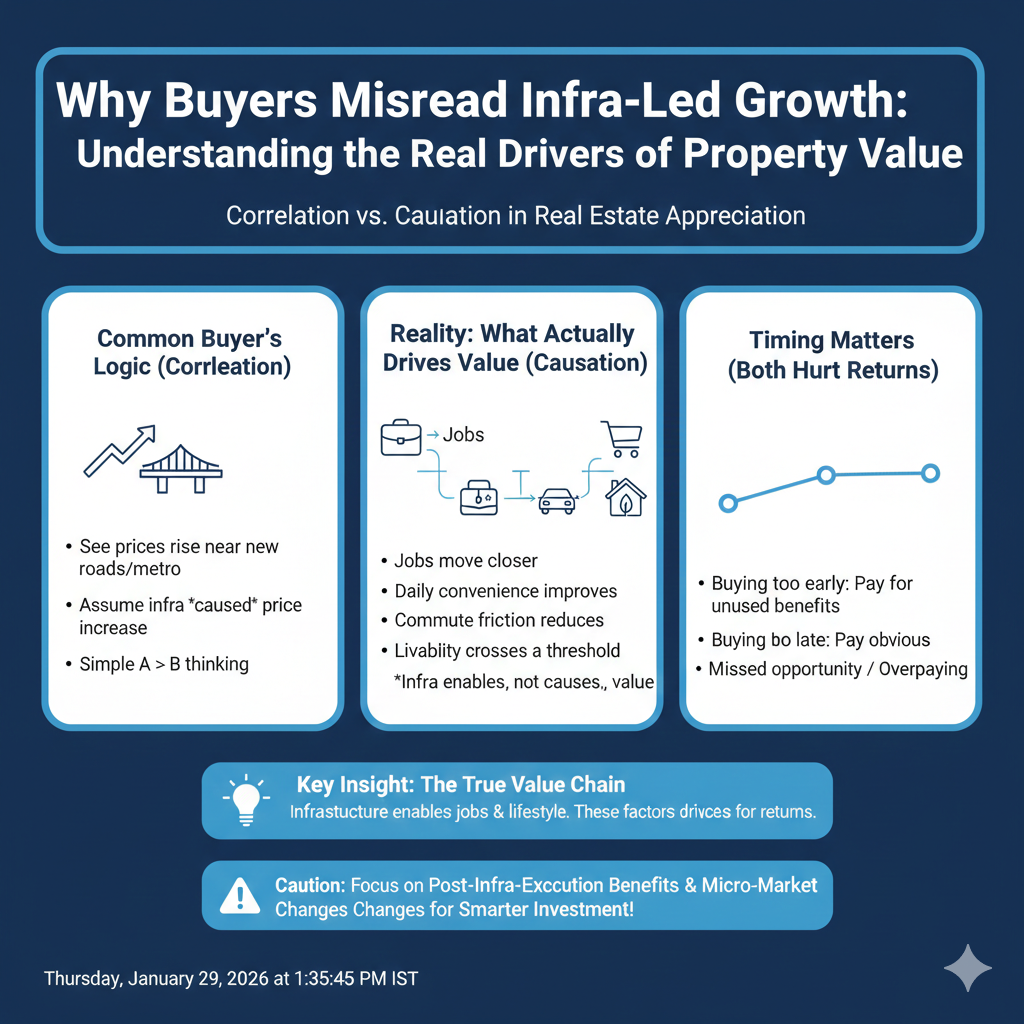
Most buyers confuse correlation with causation.
They see prices rising near infrastructure corridors and assume infra caused it. In reality, prices rise when:
• Jobs move closer
• Daily convenience improves
• Commute friction reduces
• Livability crosses a threshold
Infrastructure enables these changes, but only after execution and adoption.
Buying too early means paying for benefits you cannot use. Buying too late means paying for benefits everyone already sees.
Both hurt returns.
The Absorption Test Matters More Than the Announcement
A reliable way to judge infra impact is to watch absorption, not price quotes.
Healthy infra-led growth shows up as:
• Faster sales velocity
• Reduced unsold inventory
• Higher end-user participation
• Rental demand improving organically
If prices rise but absorption remains weak, growth is speculative.
Markets reward areas where infrastructure converts into daily utility, not just future promise.
When Infrastructure Actually Drives Appreciation
Infrastructure-driven appreciation works best when:
• Execution is already visible
• Partial usage has started
• Supporting ecosystems exist nearby
• Pricing is still aligned with current livability
For example, areas where metro stations are nearing completion or where road connectivity has already reduced commute times see more durable appreciation.
Here, buyers are paying for improvement in progress—not hope.
Smarter Timing Strategies for Buyers
Instead of chasing announcements, buyers can improve outcomes by:
• Entering just before execution completion
• Tracking construction progress, not press releases
• Evaluating who is buying—users or investors
• Studying rental demand trends post infra usage
Good timing often feels boring. There is less hype, fewer “last chance” narratives, and more clarity.
But boring timing usually protects capital better.
FAQ Section
Does infrastructure always increase property prices?
No. Infrastructure enables growth, but prices rise meaningfully only when execution improves livability and demand.
Is it bad to buy immediately after an announcement?
It can be risky, as prices may already factor in optimistic assumptions without execution certainty.
How long does infra impact take to reflect in prices?
Often several years, depending on project scale, execution speed, and surrounding demand drivers.
Should end-users ignore infrastructure plans?
No. End-users should consider infrastructure, but prioritise current usability over future promises.
Conclusion

Infrastructure shapes cities, but timing shapes outcomes.
Buyers who mistake announcements for value often enter too early and wait too long. Those who align purchases with execution and adoption see more stable appreciation and better living outcomes.
In real estate, patience is not about waiting blindly—it is about entering when improvement becomes real, not just visible on maps.
Thinking about your next home?
relai scores every project on data, not paid placements, and it's free for buyers.