Why Amenities Are Losing Their Power to Sell Homes
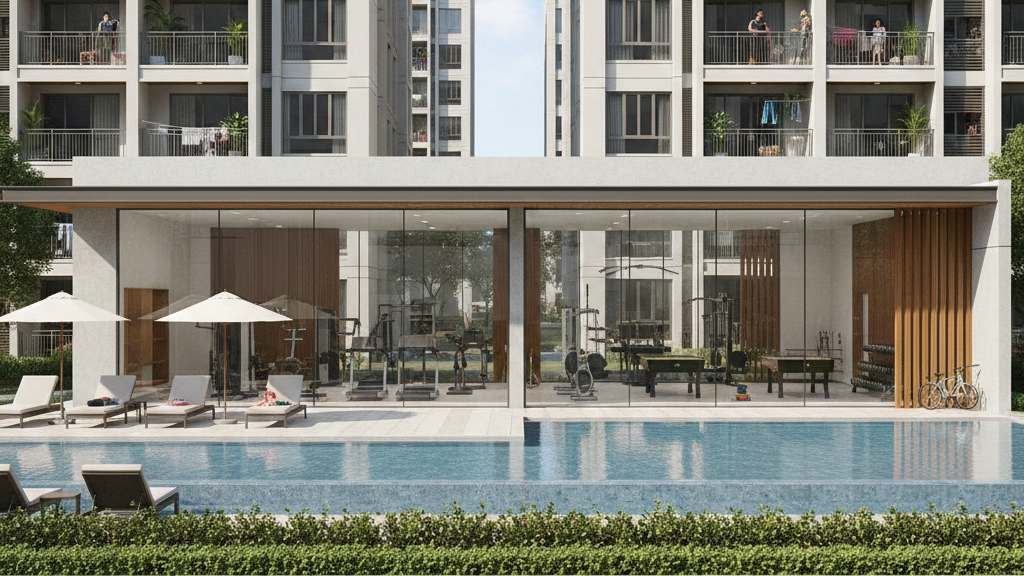
For years, amenities were the headline act in residential real estate.
Clubhouses, rooftop pools, co-working lounges, mini theatres, sky decks—projects were sold as lifestyle destinations rather than homes. Buyers were told that more amenities meant better value and stronger appreciation.
That logic is quietly weakening.
Across cities like Hyderabad and Bengaluru, amenities are no longer the decisive factor they once were. Many buyers are reassessing what actually improves daily living versus what simply looks good in brochures.
This blog explains why amenities are losing their selling power, how rising costs are changing buyer behaviour, and what homebuyers increasingly value instead.
Overbuilt Amenities vs Actual Usage
Most residential projects today are over-amenitised.
Developers stack amenities to stand out in a crowded market. The result is long lists of features that look impressive during launch but see limited real-world use.
Common patterns emerge after possession:
• Swimming pools used by a small fraction of residents
• Clubhouses active mainly on weekends
• Sports facilities locked or under-maintained
• Co-working spaces unused once novelty fades
Amenities are shared, time-bound, and dependent on community participation. As occupancy grows, access often becomes restricted rather than enhanced.
Buyers are slowly realising that owning a home is about daily convenience, not occasional experiences.
Rising Maintenance Costs Are Changing the Equation
Amenities don’t come free.
Every additional facility adds to:
• Electricity consumption
• Staffing requirements
• Repair and replacement costs
• Long-term capital expenditure
What looks like a marginal difference at launch compounds over time.
Many buyers only notice this after handover, when maintenance charges escalate steadily. High fixed costs make monthly expenses inflexible, regardless of whether amenities are used.
This creates dissatisfaction, especially among end-users who prioritise predictable expenses over lifestyle branding.
As maintenance becomes a long-term burden, buyers are reassessing whether amenities truly add value or simply add cost.
Amenities Age Faster Than Homes
Homes age slowly. Amenities age quickly.
A well-designed living space remains functional for decades. Amenities, on the other hand, face rapid wear and changing preferences.
What felt premium five years ago often feels dated today.
Examples include:
• Theatres replaced by personal streaming setups
• Gyms underused as fitness habits shift
• Large clubhouses that feel oversized for actual demand
Upgrading or replacing amenities requires collective consensus and funding—both difficult in large communities.
Buyers are becoming cautious of paying today for facilities that may feel obsolete tomorrow.
What Buyers Value More Than Clubhouses
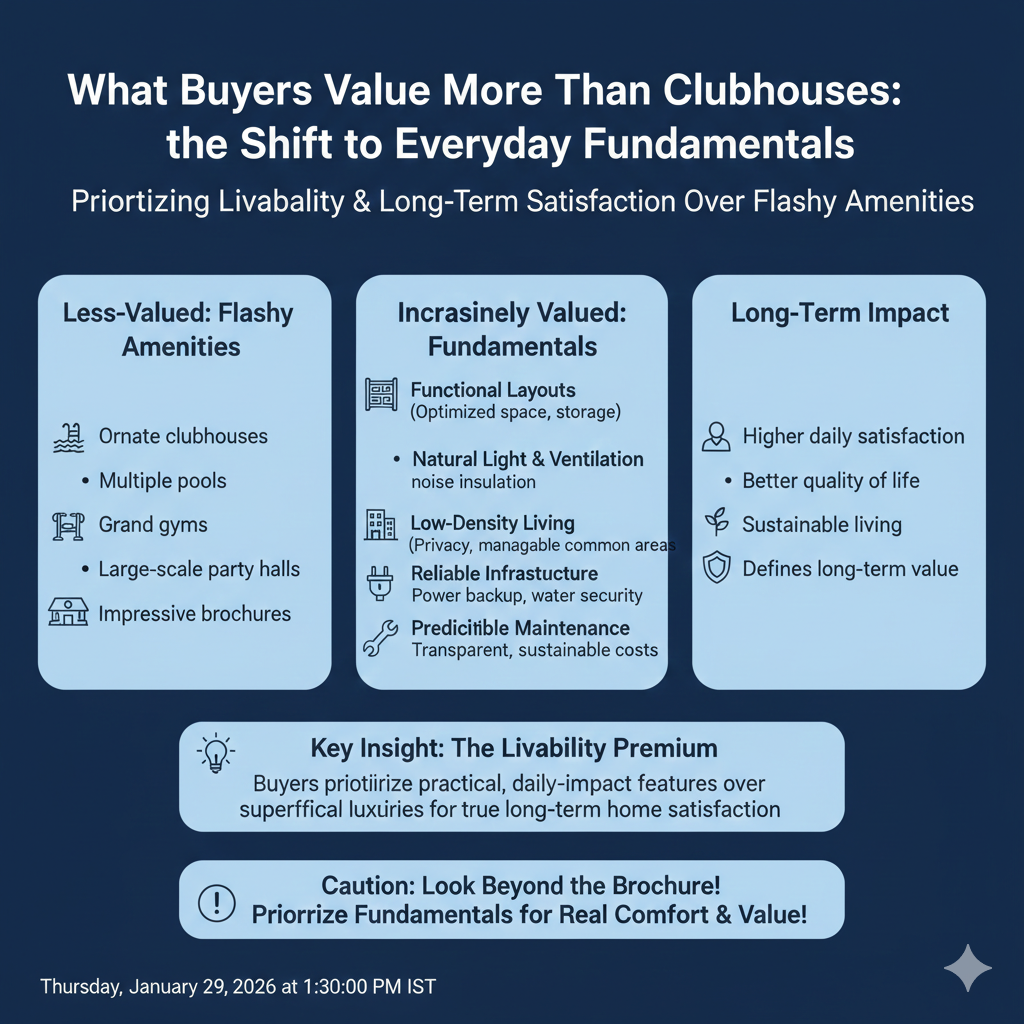
As the novelty of amenities fades, buyers are focusing on fundamentals that impact everyday life.
Increasingly valued factors include:
Functional Layouts
Homes that optimise usable space, storage, and flexibility outperform those with flashy common areas.
Natural Light and Ventilation
Good light, cross-ventilation, and noise insulation matter more than shared luxuries.
Low-Density Living
Fewer units, better privacy, and manageable common areas are becoming premium differentiators.
Reliable Infrastructure
Power backup, water security, lift reliability, and waste management deliver real comfort.
Predictable Maintenance
Transparent, sustainable maintenance costs are now a decision factor, not an afterthought.
These elements don’t photograph well for brochures—but they define long-term satisfaction.
The Shift Toward Functional Design
The market is slowly shifting from amenity-led selling to function-led design.
Projects that focus on:
• Efficient floor plans
• Practical balconies and storage
• Flexible work-from-home spaces
• Thoughtful circulation and access
are seeing stronger end-user interest, even with fewer headline amenities.
Buyers are recognising that a well-designed home compensates for fewer shared facilities—but the reverse is rarely true.
Why Amenities Still Matter—but Differently
This doesn’t mean amenities are irrelevant.
It means their role has changed.
Amenities that continue to hold value are:
• Simple, high-usage facilities
• Low-maintenance and cost-efficient
• Aligned with daily routines
Walking tracks, children’s play areas, seating spaces, and small gyms often deliver more value than grand clubhouses.
Utility is replacing spectacle.
How Buyers Can Evaluate Amenities Better
Instead of counting amenities, buyers should ask:
• How often will I realistically use this?
• What does this add to monthly maintenance?
• Who maintains it, and at what cost?
• Will this age well over the next decade?
Amenities should support living—not justify pricing.
FAQ Section
Do amenities still increase resale value?
Only if they are well-maintained and aligned with buyer preferences. Overbuilt or poorly used amenities rarely command premiums.
Are low-amenity projects a bad choice?
Not necessarily. Many low-amenity, well-designed projects offer better livability and lower long-term costs.
Why do developers still push amenities heavily?
Amenities are easier to market visually and help differentiate projects during launch phases.
Should end-users prioritise amenities at all?
End-users should prioritise daily usability first, and treat amenities as secondary benefits.
Conclusion

Amenities once sold dreams. Today, buyers are waking up to realities.
As maintenance costs rise and usage patterns become clearer, the market is shifting back to fundamentals—space, comfort, privacy, and predictability.
Homes that support everyday living will always outlast those built to impress at launch.
In the long run, function sells better than spectacle.
Thinking about your next home?
relai scores every project on data, not paid placements, and it's free for buyers.