Why Two Identical Flats in the Same Project Sell at Different Prices
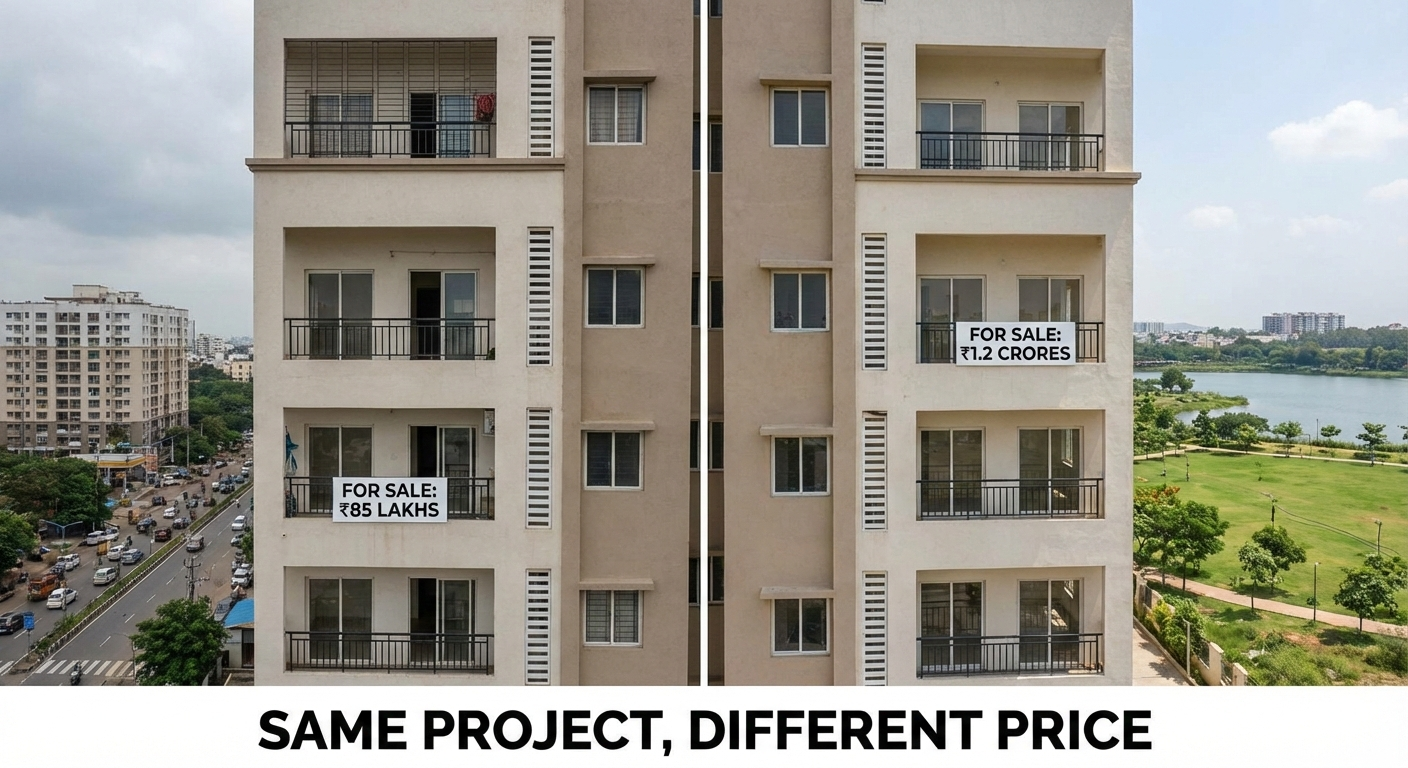
Many homebuyers assume that if two flats are in the same project, have the same size, and similar layouts, they should cost the same. In reality, this almost never happens. Even within a single tower, prices can vary by several lakhs for homes that look “identical” on paper.
Understanding why these price differences exist is critical. Without this clarity, buyers often overpay without realizing it, driven by demand bias rather than real livability or long-term value.
This article breaks down the real reasons behind price variation and helps buyers make smarter decisions.
The Myth of “Identical” Flats
Developers and brokers often label flats as identical based on size and configuration. But in practice, no two flats are truly the same. Factors like floor level, facing, stack position, and demand perception quietly influence pricing.
Some of these differences genuinely affect livability and resale value. Others exist mainly because buyers believe they matter.
Knowing the difference is where smart buying begins.
Floor Level: Perception vs Practical Value
Floor level is one of the biggest price differentiators.
Higher floors usually cost more due to:
Better views
Less noise from traffic
Perceived premium living
However, the actual livability difference between, say, the 10th and 15th floor is often minimal, especially in dense areas where views are blocked over time by new construction.
Lower floors may be priced lower due to:
Noise concerns
Privacy issues
Fear of dust or insects
Yet, lower floors offer advantages such as quicker access, easier evacuation, and better suitability for families with seniors.
The key point is this: floor premiums are often driven by demand perception, not proportional lifestyle improvement.
Facing: What Truly Matters and What Doesn’t
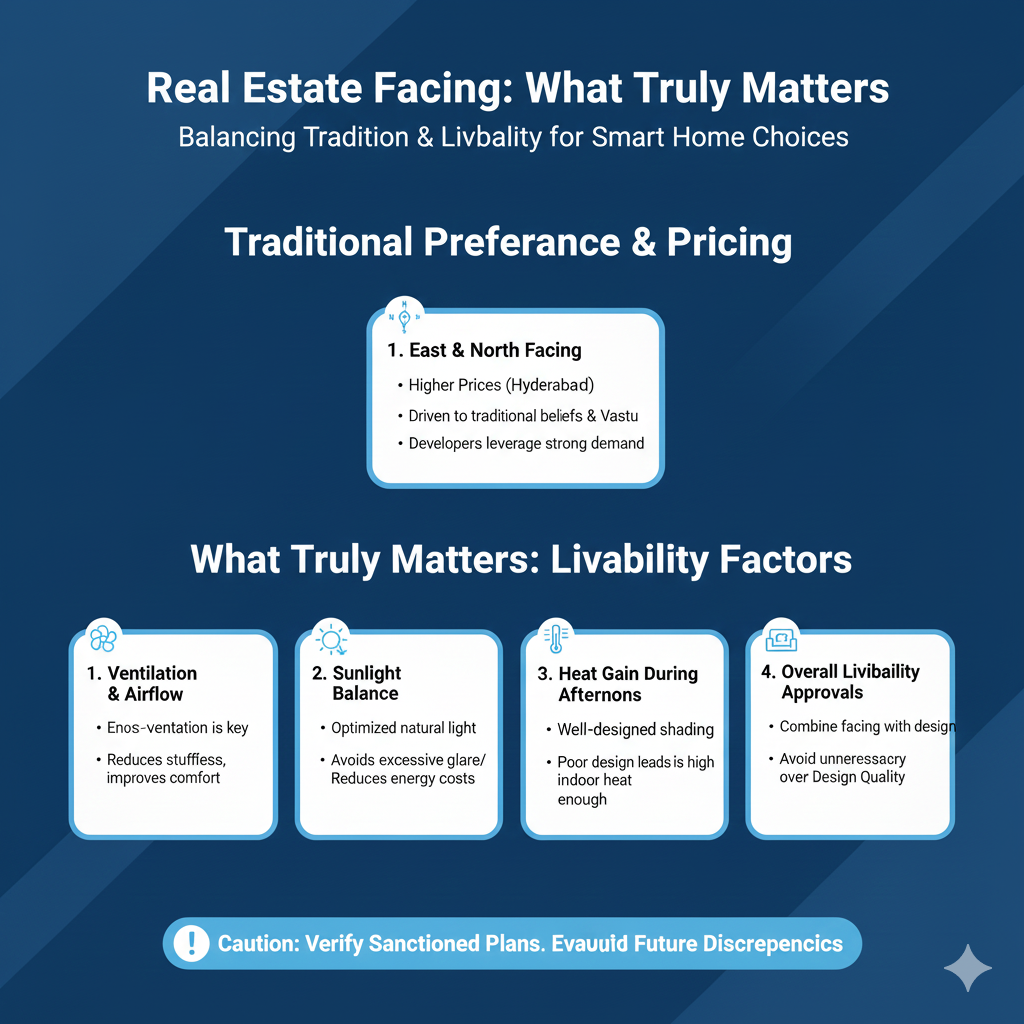
Facing is another factor that causes price variation, especially in Hyderabad.
East- and north-facing flats often command higher prices because of traditional beliefs and buyer preference. Developers price these units higher knowing demand is strong.
However, actual comfort depends more on:
Ventilation
Sunlight balance
Cross airflow
Heat gain during afternoons
A well-ventilated west-facing flat with good shading can be more comfortable than a poorly designed east-facing one.
Buyers often pay extra for “preferred facing” without checking real livability conditions, leading to unnecessary overpayment.
Stack Position: The Hidden Price Driver
Stack refers to flats aligned vertically in a tower, such as A-stack, B-stack, etc.
Two flats on different stacks can have very different experiences:
One may face open land or greenery
Another may face another tower or service road
One may have better airflow
Another may overlook a transformer yard or parking ramp
Stacks facing internal gardens usually command premiums, while those facing utilities or future development zones are discounted.
Many buyers overlook stack positioning during booking and realize its impact only after possession.
Demand Bias: Why Certain Units Sell Faster
Demand bias plays a huge role in pricing.
Certain unit types attract more buyers simply because:
They are limited in number
They are highlighted more aggressively in marketing
Early buyers pick them first, creating perceived scarcity
Corner units, for example, often carry premiums due to better ventilation and privacy. While this can be valid, the premium sometimes exceeds the actual benefit.
When demand bias increases, pricing follows—even if livability advantages are marginal.
How Buyers Unknowingly Overpay
Many buyers overpay due to a lack of comparative evaluation.
Common mistakes include:
Assuming higher floor always means better value
Paying extra for facing without checking heat and airflow
Ignoring stack disadvantages
Booking early without reviewing the full layout plan
Trusting verbal explanations instead of site orientation
Over time, this overpayment may not reflect in resale or rental returns.
Resale buyers are more practical. They compare maintenance, actual comfort, and usable value rather than emotional preferences.
Impact on Resale and Rental Value
Not all premiums paid at purchase translate into higher resale value.
Factors that matter more during resale:
Overall building maintenance
Society management
Location demand
Layout efficiency
Floor and facing premiums tend to compress over time, especially once the building is occupied and surrounding development matures.
For rentals, tenants rarely pay extra for higher floors or specific facing. They prioritize rent, maintenance, and accessibility.
This makes it even more important to evaluate whether the premium you pay today will hold value tomorrow.
What Smart Buyers Do Differently
Smart buyers look beyond price charts and ask deeper questions.
They compare multiple units within the same project.
They stand inside the flat to assess light and airflow.
They check future construction around the stack.
They evaluate maintenance impact, not just base price.
They separate emotional preference from financial logic.
Most importantly, they question why a premium exists, not just accept it.
FAQ Section
1. Why do higher-floor flats cost more?
Higher floors are perceived as premium due to views and reduced noise, but the actual livability difference may be limited depending on surroundings.
2. Does flat facing really affect resale value?
Facing influences buyer preference but has a smaller impact on resale compared to location, maintenance, and layout efficiency.
3. What is stack position and why does it matter?
Stack position determines what a flat faces, its ventilation, noise exposure, and long-term comfort, which can affect pricing and livability.
4. Do tenants care about floor and facing?
Most tenants prioritize rent, maintenance, and accessibility over floor level or traditional facing preferences.
5. How can buyers avoid overpaying?
Buyers should compare multiple units, understand premium logic, assess real livability, and not rely solely on marketing narratives.
Conclusion

Two flats may look identical on paper, but pricing differences are driven by a mix of real factors and perceived demand. Floor, facing, and stack do influence value, but not always in proportion to the premium charged.
Buyers who understand the difference between demand bias and actual livability make better long-term decisions. Overpaying for perception rarely translates into higher resale or rental returns.
At Relai – For right home, we help buyers evaluate homes based on real comfort, fair pricing, and long-term value, not just brochure-driven premiums.
Let’s Join Together to Bring Change to the World of Real Estate.
Thinking about your next home?
relai scores every project on data, not paid placements, and it's free for buyers.