Why Some Premium Locations Don’t Attract End Users
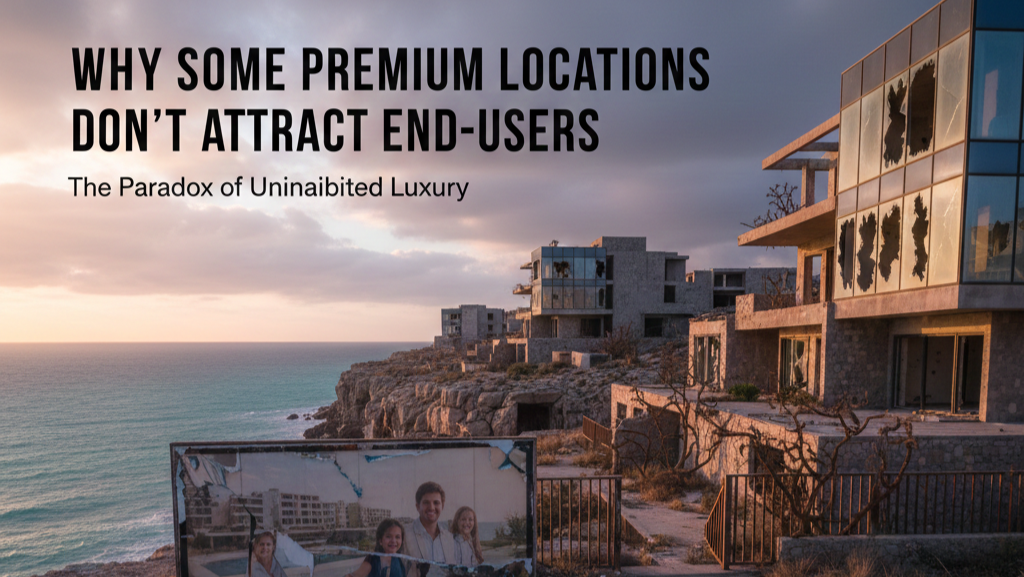
In many cities, certain localities are labelled as “premium” based on price, branding, or proximity to business districts. Yet, despite high ticket sizes and glossy projects, end users often stay away. These locations see strong investor interest, but weak self-use demand.
This gap confuses first-time buyers. If an area is premium, why are people hesitant to live there?
The answer lies in the difference between price perception and livability reality. Premium pricing does not always translate into daily comfort, community life, or long-term suitability for families.
This article explains why some premium locations struggle to attract end users, and what that means for buyers thinking long term.
1. Investor-Driven vs End-User-Driven Markets
Real estate markets are shaped by who the dominant buyer is.
Investor-Driven Locations
Investor-driven areas attract buyers looking for capital appreciation rather than daily use. These locations usually show:
• High share of bulk or early-stage purchases
• Lower actual occupancy even after completion
• Strong marketing narratives around future growth
Prices here move quickly during optimistic cycles, but usage remains thin. Homes function more as financial assets than living spaces.
End-User-Driven Locations
End-user markets are sustained by people who intend to live in the property. Demand here depends on schools, commute comfort, healthcare access, and community life.
Price growth in such areas is usually slower but more stable. Occupancy is high, and resale liquidity tends to remain strong across cycles.
Many so-called premium locations lean heavily toward investor demand, which explains the end-user hesitation.
2. Livability Gaps Buyers Often Ignore
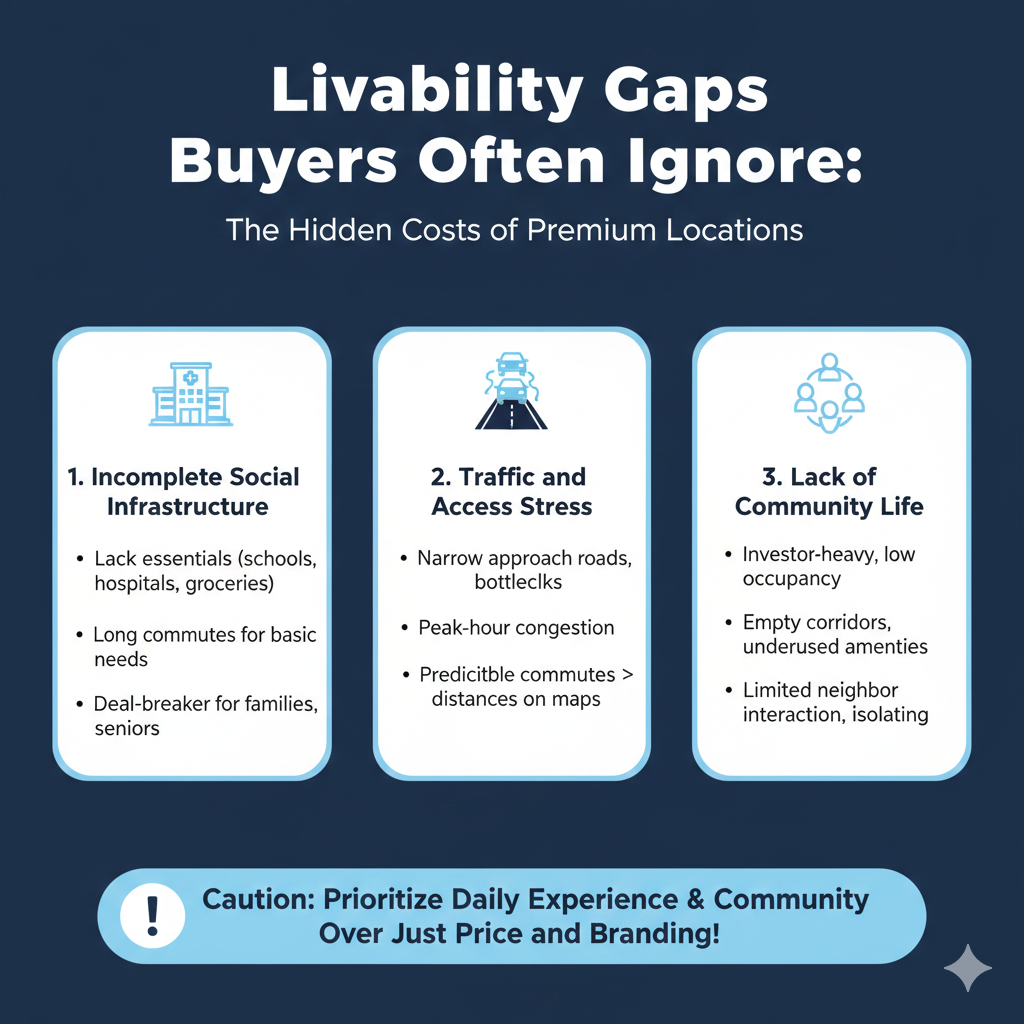
Premium locations are often judged by price and branding, not by daily experience.
Incomplete Social Infrastructure
Some high-priced corridors lack essentials like good schools, hospitals, grocery access, or walkable spaces. Residents depend heavily on long commutes for basic needs.
For families and older buyers, this becomes a deal-breaker over time.
Traffic and Access Stress
Proximity to business districts does not always mean ease of access. Narrow approach roads, bottlenecks, and peak-hour congestion can make daily travel exhausting.
End users value predictable commute times more than short distances on maps.
Lack of Community Life
Investor-heavy projects often have low occupancy. Empty corridors, underused amenities, and limited neighbour interaction reduce the sense of belonging.
What looks premium on paper can feel isolating in reality.
3. Pricing That Ignores Usage Value
In some premium locations, prices are driven more by future expectations than current utility.
Buyers are asked to pay for:
• Brand positioning
• Anticipated infrastructure
• Long-term appreciation narratives
End users, however, evaluate homes based on present-day comfort. When pricing runs far ahead of livability, self-use demand weakens.
This gap explains why rental demand may stay soft despite high capital values.
4. Maintenance and Operating Cost Mismatch
Premium projects often come with premium maintenance.
High monthly charges make sense when amenities are well-used and add daily value. In low-occupancy projects, however, residents pay more for facilities they rarely use.
End users are sensitive to this imbalance. High fixed costs without proportional lifestyle benefits reduce long-term appeal.
5. Long-Term Resale Implications
Weak end-user demand affects resale in subtle ways.
Investor-dominated locations often face:
• Longer selling cycles
• Price rigidity during downturns
• Dependence on new investor interest for exits
If fresh investor demand slows, resale becomes difficult. End-user-driven locations, on the other hand, always have a base level of organic demand.
For long-term buyers, this difference matters more than short-term price appreciation.
6. How Buyers Should Evaluate “Premium” Claims
Instead of relying on labels, buyers should ask practical questions:
• Who is actually living here today?
• How easy is daily life without long travel?
• Are rents strong because people want to live here, or because supply is limited?
• Would this home still appeal if prices stayed flat for a few years?
Clear answers reveal whether a location is truly premium for living, not just for investing.
FAQ Section
Does premium pricing guarantee better living quality?
No. Price reflects market perception, not always daily comfort or community life.
Are investor-driven locations bad choices?
Not necessarily, but they suit investors more than end users seeking long-term stability.
Can premium locations become end-user friendly later?
Yes, if social infrastructure, occupancy, and connectivity improve over time.
Should end users avoid low-occupancy projects?
In most cases, yes. High occupancy usually signals stronger livability and resale support.
Conclusion

Premium locations are not defined by price alone. For end users, real value lies in livability, community, and everyday ease.
Areas dominated by investors may look attractive during growth phases, but often struggle to create lasting residential demand. Buyers who confuse market hype with living quality risk long-term dissatisfaction.
In real estate, a location becomes truly premium only when people genuinely want to live there.
Let’s Join Together to Bring Change to the World of Real Estate.
Thinking about your next home?
relai scores every project on data, not paid placements, and it's free for buyers.