How Sale Deeds and Agreements Hide Clauses Buyers Rarely Read

Most homebuyers believe the biggest risk in real estate is location or price. In reality, some of the costliest mistakes are hidden quietly inside sale deeds and agreements.
These documents are usually signed at an emotionally charged moment, after months of searching and negotiations. By then, buyers are tired and assume the paperwork is standard. That assumption often proves expensive.
This blog explains the clauses buyers commonly overlook, why they exist, and how a simple legal review can prevent long-term financial damage.
One-Sided Clauses Favoring Developers
Many agreements are drafted primarily to protect the developer, not the buyer.
Common one-sided clauses include:
Broad rights for developers to change layouts or specifications
Limited liability for delays caused by vague “force majeure” reasons
Clauses allowing alteration of common areas
Restrictions on buyer objections during construction
While some flexibility is reasonable, excessive discretion tilts power heavily toward the developer. Buyers usually discover the impact only when a dispute arises.
Once signed, these clauses are difficult to challenge unless they clearly violate law or RERA provisions.
Exit Penalties and Delayed Possession Terms
Exit clauses are among the least read and most misunderstood sections.
Agreements often impose:
High penalties if buyers cancel due to personal reasons
Long lock-in periods before resale or transfer
Minimal compensation for developer delays
Delayed possession terms are frequently framed in broad timelines with buffer periods built in. A “36-month possession” may quietly extend to 42 or even 48 months through grace periods and exceptions.
This imbalance means buyers bear heavier consequences for delays or exits than developers do.
Clauses That Affect Resale and Financing
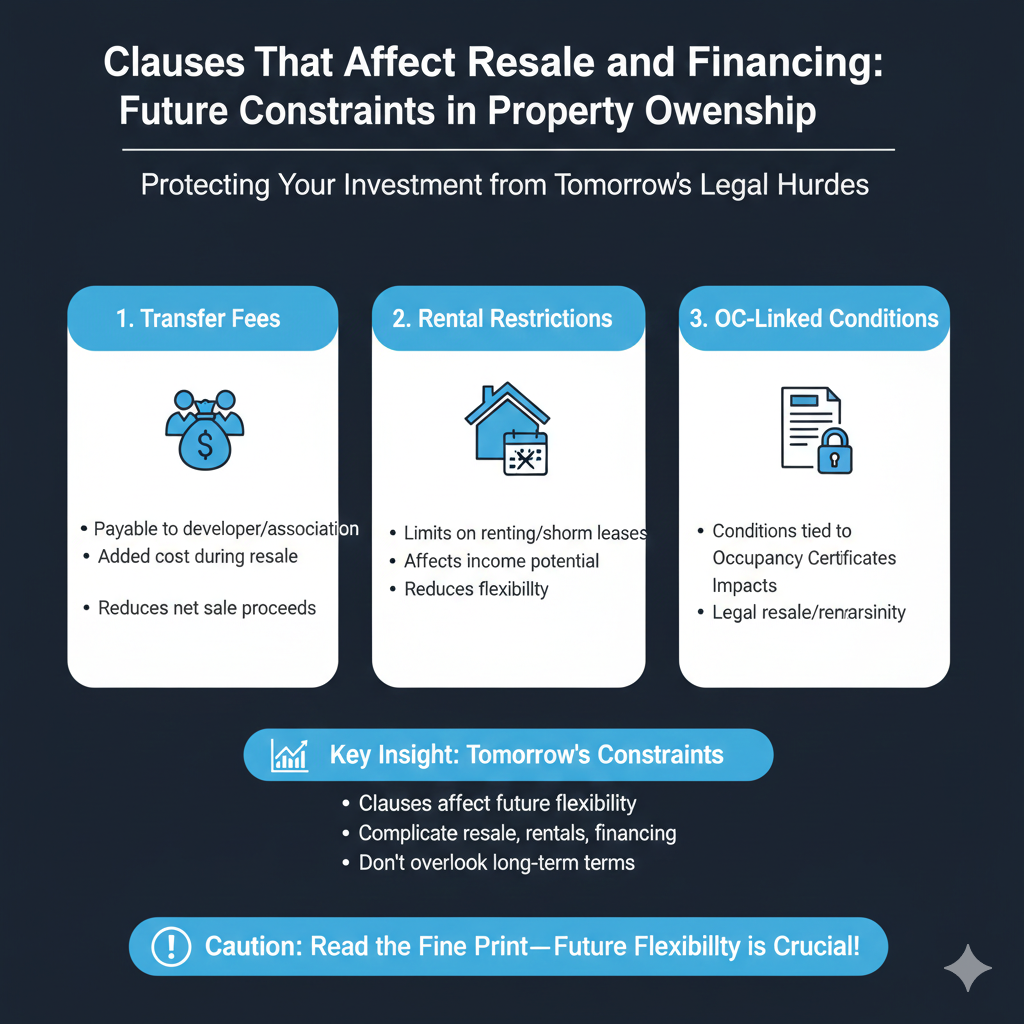
Some clauses quietly impact future flexibility.
These include:
Transfer fees payable to the developer or association
Restrictions on renting or short-term leasing
Conditions tied to obtaining Occupancy Certificates
Such clauses may not affect immediate possession but can complicate resale, rentals, or bank refinancing later.
Buyers focusing only on today’s purchase often overlook tomorrow’s constraints.
Why Legal Review Saves Money
Many buyers skip legal review to save time or cost. This is a false economy.
A proper legal review:
Flags clauses that can be negotiated before signing
Explains financial exposure in delay or exit scenarios
Verifies alignment with RERA and local approvals
Protects resale and financing flexibility
The cost of legal review is insignificant compared to the losses caused by one unfavourable clause.
FAQ Section
Are sale agreements usually negotiable?
Some clauses are negotiable before signing, especially in buyer-friendly markets.
Does RERA protect buyers from unfair clauses?
RERA offers protection, but it does not automatically nullify all one-sided terms.
Is legal review necessary for reputed developers?
Yes. Reputation reduces risk but does not eliminate contractual imbalance.
When should legal review be done?
Before paying major amounts or signing any binding agreement.
Conclusion

Sale deeds and agreements are not just formalities. They are financial contracts that decide how risk is shared.
Buyers who read only price and possession dates miss the clauses that matter most during delays, exits, or resale. A calm, professional legal review protects not just the purchase, but years of ownership decisions.
In real estate, clarity on paper is as important as confidence in the project.
Let’s Join Together to Bring Change to the World of Real Estate.
Thinking about your next home?
relai scores every project on data, not paid placements, and it's free for buyers.