Why “Perfect Floor Plans” Often Fail in Daily Living
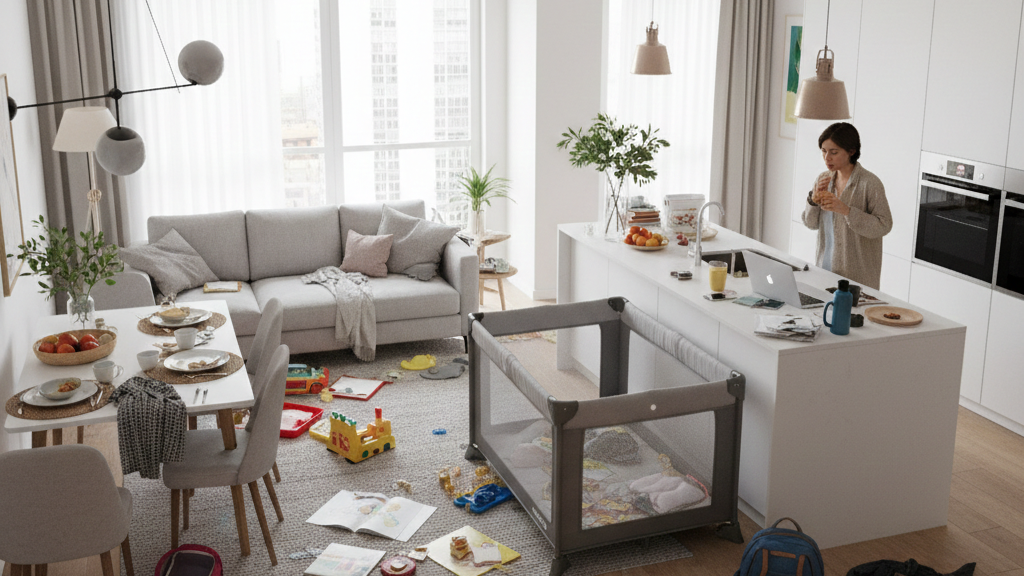
Floor plans look perfect on paper. Clean lines, balanced rooms, efficient square footage. Yet many homeowners realise within months that daily living feels awkward, noisy, or inefficient.
This gap exists because brochures sell visual logic, while real life tests functional logic. A plan that looks ideal during purchase can behave very differently once furniture, people, routines, and neighbours enter the picture.
This blog explains why seemingly perfect floor plans fail in daily use and what buyers should evaluate beyond drawings and dimensions.
Usable Space vs Brochure Space
One of the biggest misunderstandings is the difference between total area and usable space.
Brochures highlight:
Carpet area efficiency percentages
Symmetry and room proportions
Minimal passage wastage on paper
In reality, usable space depends on:
Furniture placement
Door swing directions
Column placements
Odd corners that cannot be used meaningfully
A living room may look large in drawings but shrink once sofas, TV units, and movement paths are added. Bedrooms may appear spacious until wardrobes consume entire walls.
Floor plans optimise for visual balance, not lived-in functionality.
Ventilation, Light, and Noise Factors
Daily comfort is driven more by air, light, and sound than by room size.
Many well-drawn plans fail because:
Windows open into shafts or neighbouring walls
Cross-ventilation exists only in theory
Kitchens share walls with lifts or service areas
Bedrooms face common corridors or amenities
Noise from lifts, generators, clubhouses, or traffic often becomes noticeable only after occupancy. Similarly, inadequate daylight affects mood, energy use, and long-term comfort.
These issues rarely show up in brochures but dominate daily experience.
How Real Usage Exposes Design Flaws
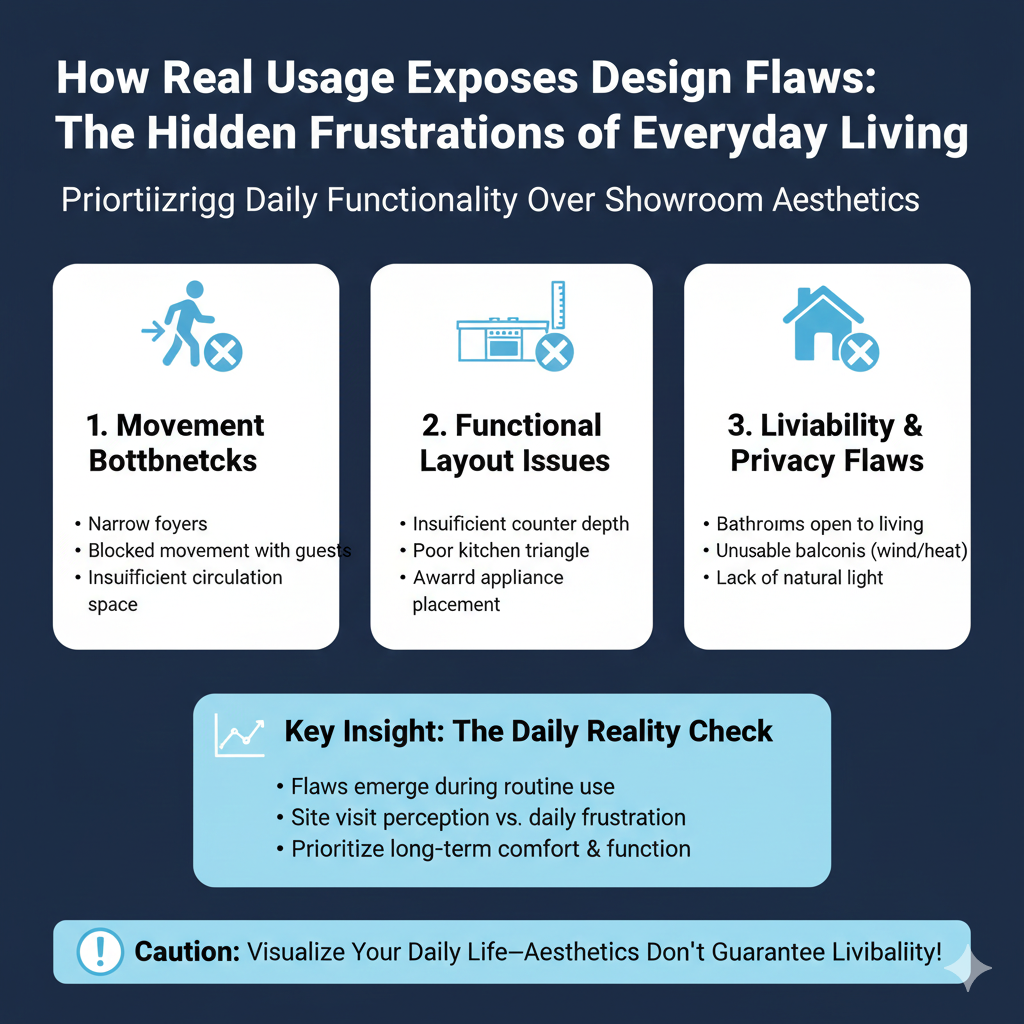
Design flaws emerge when routines begin.
Common examples include:
Narrow foyers that block movement during guests
Kitchens with insufficient counter depth
Bathrooms opening directly into living spaces
Balconies that are unusable due to wind or heat
What feels acceptable during a site visit can become frustrating when used multiple times a day.
Families with children, work-from-home setups, or elderly members feel these mismatches more sharply. The floor plan did not change, but life did.
Why Buyers Miss These Issues
Buyers usually evaluate floor plans emotionally and quickly.
Sales discussions focus on:
Number of rooms
Size comparisons
Vastu alignment
Price per square foot
Very little time is spent simulating daily routines like cooking, storage, movement, or privacy. Without imagining real usage, flaws remain hidden.
How to Evaluate Floor Plans Better
Buyers can reduce regret by:
Mentally placing furniture before committing
Checking window positions, not just count
Standing inside sample flats during peak hours
Asking about noise sources and service areas
A good floor plan should support living quietly, not just look good on paper.
FAQ Section
Are larger flats always more comfortable?
No. Comfort depends on layout efficiency, light, ventilation, and noise control.
Do sample flats accurately reflect real usage?
Partially. They often use scaled-down furniture and ideal lighting.
Is Vastu more important than layout functionality?
Functionality affects daily life more consistently than directional alignment.
Can design flaws be fixed later?
Some can, but many structural issues cannot be changed after possession.
Conclusion

A perfect-looking floor plan is not a guarantee of comfortable living.
Usable space, airflow, light, and noise behaviour only reveal themselves through real usage. Buyers who evaluate plans through daily routines, not brochure aesthetics, make decisions they regret far less.
In real estate, livability is experienced, not drawn.
Let’s Join Together to Bring Change to the World of Real Estate.
Thinking about your next home?
relai scores every project on data, not paid placements, and it's free for buyers.