Why Rental Demand Doesn’t Always Mean Good Investment Returns
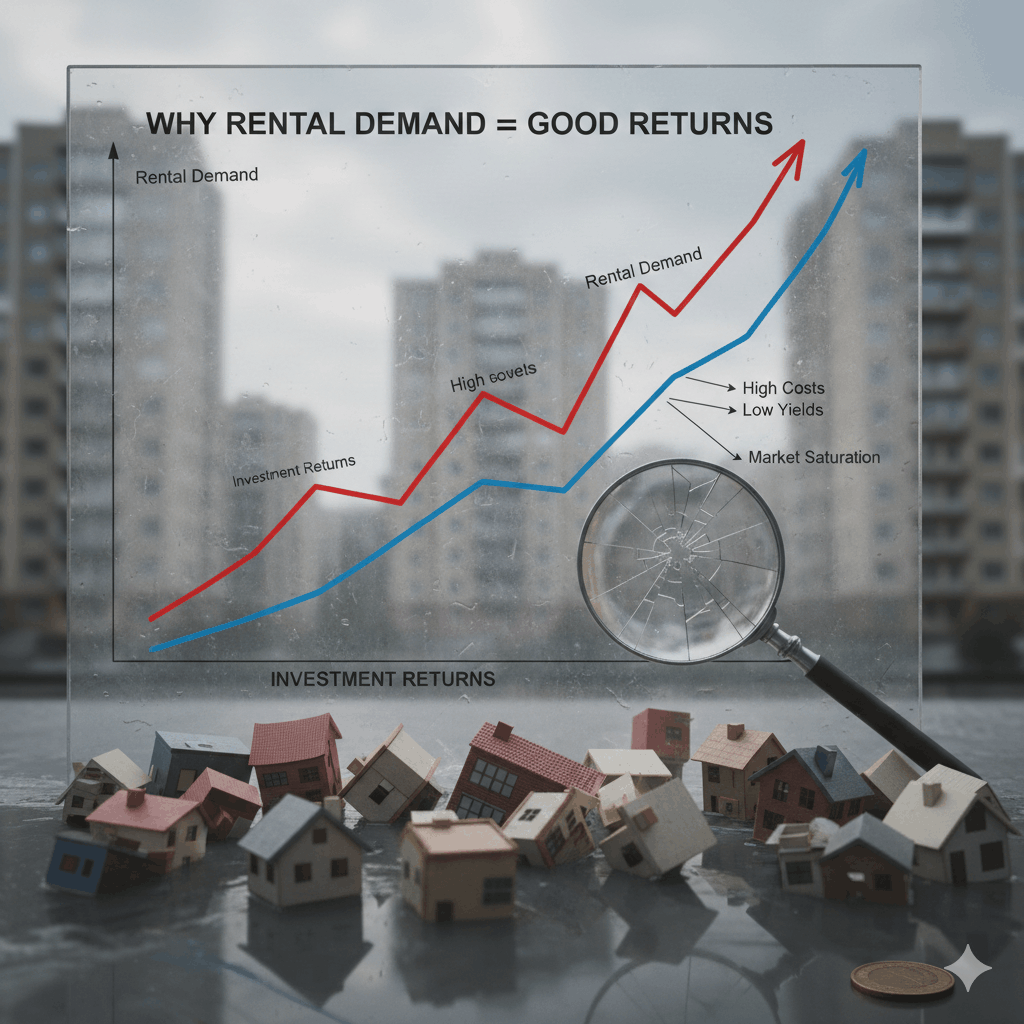
Rental demand is often treated as a shortcut for a “safe” real estate investment. If tenants are lining up and rents look strong, many buyers assume returns will automatically be good. In reality, rental demand and investment performance are related, but they are not the same thing.
Across Indian cities, including Hyderabad, several high-rental pockets have delivered disappointing long-term returns for owners. The reason is simple: returns are decided by math and behavior, not just demand headlines.
This blog breaks down why strong rental demand can still result in weak investment outcomes, and what buyers should evaluate beyond monthly rent figures.
High Rents vs High Entry Prices
The most common trap investors fall into is confusing absolute rent with return on capital.
In many popular rental locations, prices rise much faster than rents. A flat that rents for ₹60,000 a month may look attractive on the surface, but if the purchase price is ₹2.2–2.5 crore, the yield becomes modest.
Rental demand often pushes entry prices up first. Investors compete with end users, pushing values higher. Rents, however, move slower because tenant affordability has limits.
What looks like a “high-rent property” often turns into a low-yield asset once you calculate the actual percentage return.
This gap widens in:
Prime IT corridors with heavy investor interest
Branded gated communities where pricing includes lifestyle premiums
Locations where future growth is already priced in
Strong rent does not compensate for an inflated buying price.
Vacancy Cycles and Tenant Quality
Rental demand is rarely uniform throughout the year or across tenant segments.
Some areas experience short bursts of demand driven by:
New office openings
Academic admission cycles
Temporary project-based migration
Outside these windows, vacancies increase quietly. Owners then reduce rent, offer longer lock-in discounts, or accept less stable tenants.
Tenant quality matters as much as tenant quantity. Frequent tenant churn leads to:
Brokerage and repainting costs
Short vacancy gaps between leases
Higher wear and tear on the unit
Areas dominated by short-term tenants may show strong headline demand but weaker net returns over time.
Net Yield vs Perception
Most investors evaluate rental performance using gross rent, not net yield.
Net yield accounts for:
Maintenance charges
Property tax
Vacancy periods
Brokerage and minor repairs
Once these costs are deducted, the actual return often looks very different from what was expected at purchase.
For example, a property earning ₹50,000 per month may appear to generate ₹6 lakh annually. After costs and vacancy adjustments, the effective return may drop significantly.
In premium projects with high amenities, maintenance alone can erase a meaningful portion of rental income.
This is why two properties with similar rents can deliver very different investment outcomes.
When Rental Demand Still Makes Sense
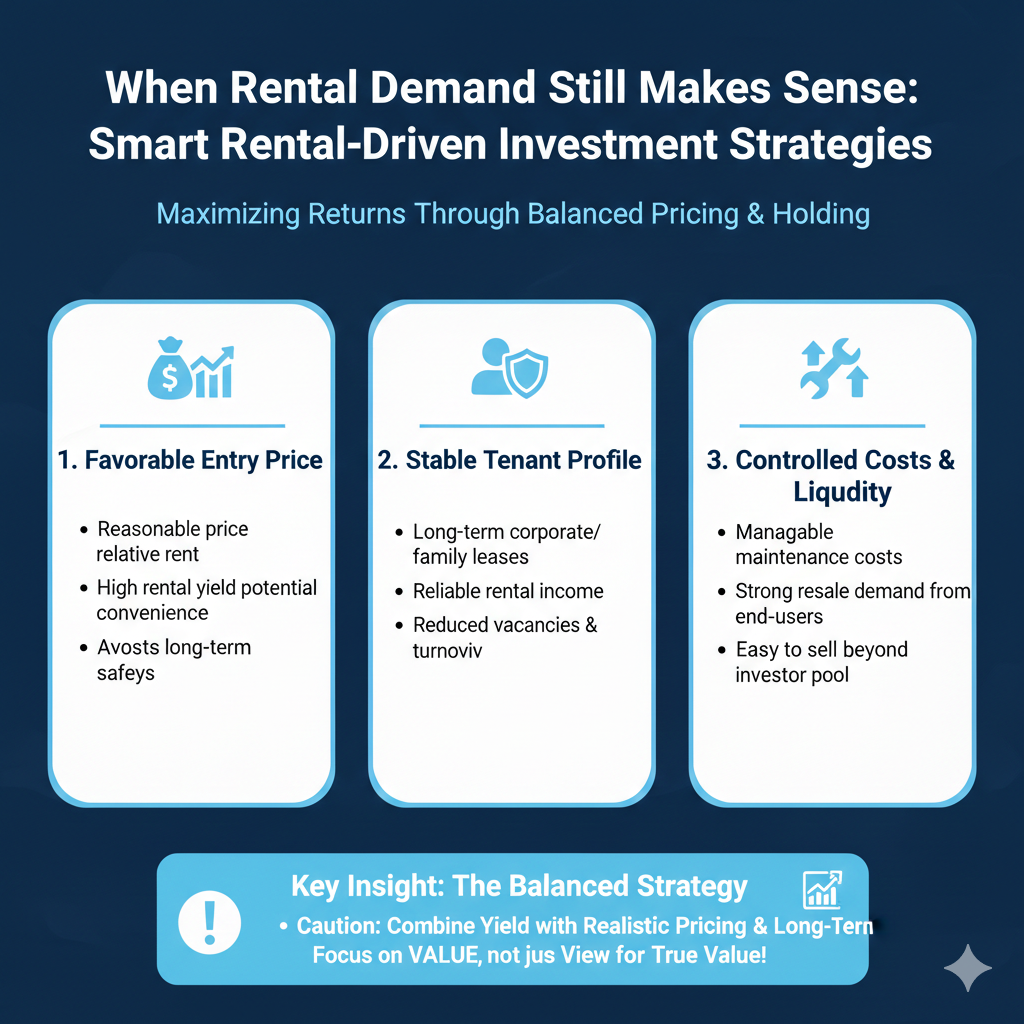
Rental demand does matter, but only when combined with the right pricing and holding strategy.
Rental-driven investments work better when:
Entry price is reasonable relative to rent
Tenant profile is stable and long-term
Maintenance costs are controlled
Resale liquidity exists beyond investor demand
In such cases, rental income supports holding costs while capital appreciation builds gradually.
FAQ Section
Does high rent always mean good investment returns?
No. Returns depend on the relationship between purchase price, rent, costs, and vacancy, not rent alone.
Is rental yield more important than appreciation?
Both matter. Yield supports cash flow, while appreciation drives long-term wealth. Ignoring either creates imbalance.
Are IT corridor properties always good rental investments?
Not always. Many IT locations have high demand but also inflated prices, which compress yields.
Should first-time investors prioritise rental demand?
Rental demand should be one factor, not the deciding factor. Entry price discipline matters more.
Conclusion

Rental demand is a visibility signal, not a profitability guarantee. High rents often mask high entry prices, unstable tenant cycles, and hidden costs that quietly reduce real returns.
Smart investors focus less on how fast a property rents out and more on how efficiently capital is deployed over time.
Understanding the difference between perceived income and actual yield is what separates comfortable ownership from disappointing investments.
Let’s Join Together to Bring Change to the World of Real Estate.
Thinking about your next home?
relai scores every project on data, not paid placements, and it's free for buyers.