Why Some Locations Appreciate Fast but Struggle to Resell

In Hyderabad’s booming real estate market, certain areas witness rapid price appreciation over a short period. News headlines, online portals, and brokers often highlight these “hot zones,” tempting buyers with the promise of quick wealth. However, high price growth does not always translate into easy resale. Many investors find that while property values rise, selling the unit later is more challenging than anticipated.
Understanding the dynamics of appreciation, liquidity, and end-user demand can help buyers make smarter decisions.
Speculative Growth vs End-User Demand
Rapid price appreciation often occurs in locations driven by speculation rather than genuine demand from end users. Speculative growth can be triggered by announcements of upcoming infrastructure, pre-launch hype, or investor interest.
While early buyers may see their property’s value climb quickly, actual residents—families, working professionals, or students—may not find these locations desirable. Limited local amenities, poor connectivity, or unestablished communities can deter end-users, reducing the pool of potential buyers when you attempt to resell.
For example, areas near planned IT corridors may see fast price jumps, but without actual corporate offices or supporting infrastructure, occupancy and resale options remain limited.
Liquidity vs Price Appreciation
Price appreciation and liquidity are not always correlated. A property can double in value over five years, but finding a buyer at that price may take months or even years. Liquidity—the ease of converting a property into cash—is often driven by end-user demand rather than speculative pricing.
Projects in high-demand micro-markets like Gachibowli or Hitech City enjoy both appreciation and liquidity because they cater to real residents. In contrast, speculative areas, despite high returns, may struggle with long sales cycles and delayed possession transfers.
How to Balance Both
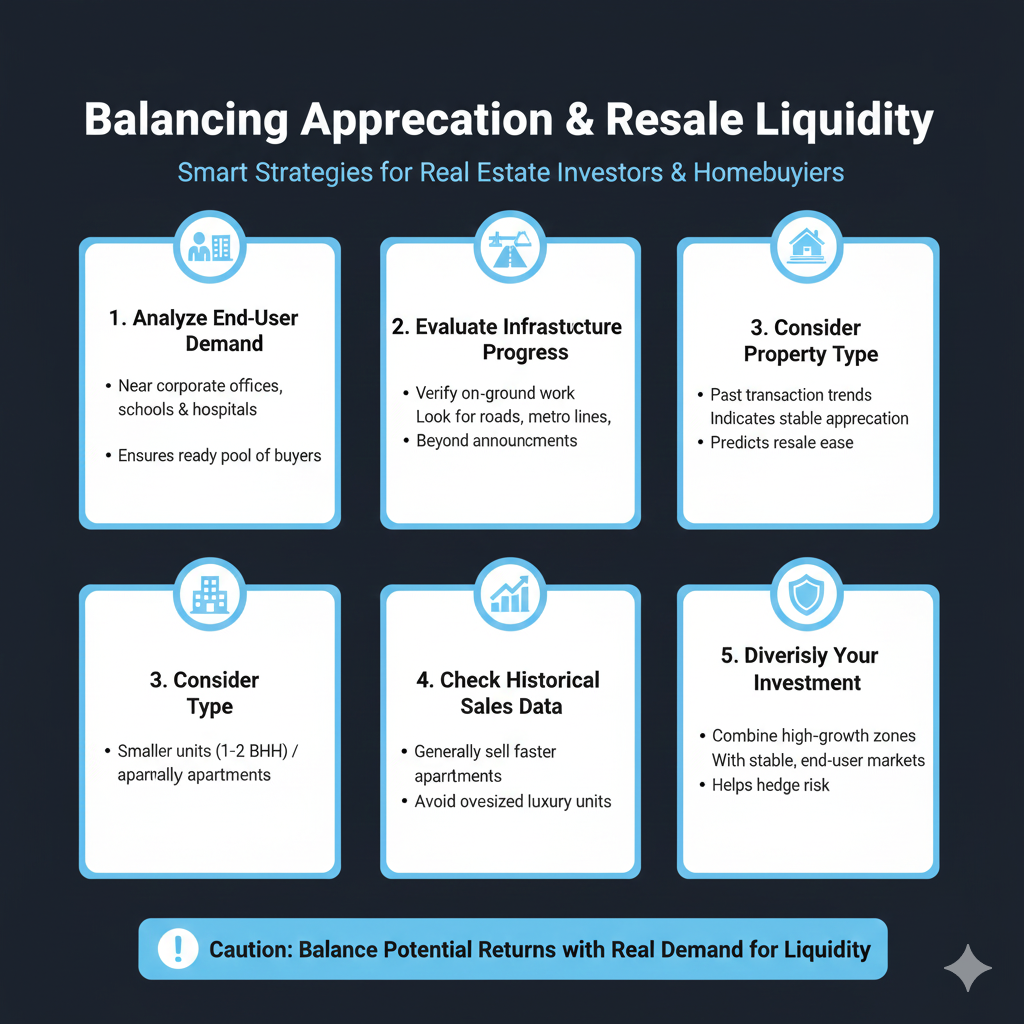
Investors and homebuyers should adopt a balanced approach that considers both potential appreciation and resale liquidity:
Analyze end-user demand: Focus on areas with robust rental markets, corporate presence, schools, and hospitals. These factors ensure a ready pool of buyers when reselling.
Evaluate infrastructure progress: Look beyond announcements; verify on-ground progress of roads, metro lines, and amenities.
Consider property type: Smaller units or apartments generally sell faster than luxury or oversized units in speculative areas.
Check historical sales data: Past transaction trends indicate which areas provide a balance between appreciation and resale ease.
Diversify your investment: Combine high-growth speculative zones with stable, end-user-driven markets to hedge risk.
By balancing appreciation potential with real demand, buyers can secure investments that offer both returns and liquidity.
FAQ Section
Q1: Why do some rapidly appreciating areas struggle with resale?
A1: Rapid growth driven by speculation rather than end-user demand can limit the pool of buyers when you try to resell.
Q2: What is the difference between appreciation and liquidity?
A2: Appreciation refers to price increase over time, while liquidity is how easily a property can be sold at the market value.
Q3: How can I identify locations with both good appreciation and resale potential?
A3: Focus on areas with strong end-user demand, active rental markets, and completed infrastructure.
Q4: Do luxury units face more resale challenges?
A4: Yes, especially in speculative zones, because the buyer pool for high-end properties is smaller than for standard apartments.
Q5: Should I avoid speculative areas entirely?
A5: Not necessarily. Speculative areas can offer high returns if combined with careful evaluation of end-user demand and infrastructure progress.
Conclusion

While fast-appreciating locations may promise quick gains, they do not guarantee easy resale. Speculative growth without end-user demand can reduce liquidity, making it harder to convert the property into cash when needed. Buyers who evaluate both appreciation and real market demand, verify infrastructure, and choose the right property type are more likely to enjoy returns without facing resale hurdles.
At Relai – For right home, we guide buyers to balance growth potential with liquidity, ensuring investments are both profitable and practical.
Let’s Join Together to Bring Change to the World of Real Estate.
Thinking about your next home?
relai scores every project on data, not paid placements, and it's free for buyers.