Why Some Flats Stay Unsold for Years in Otherwise Good Projects
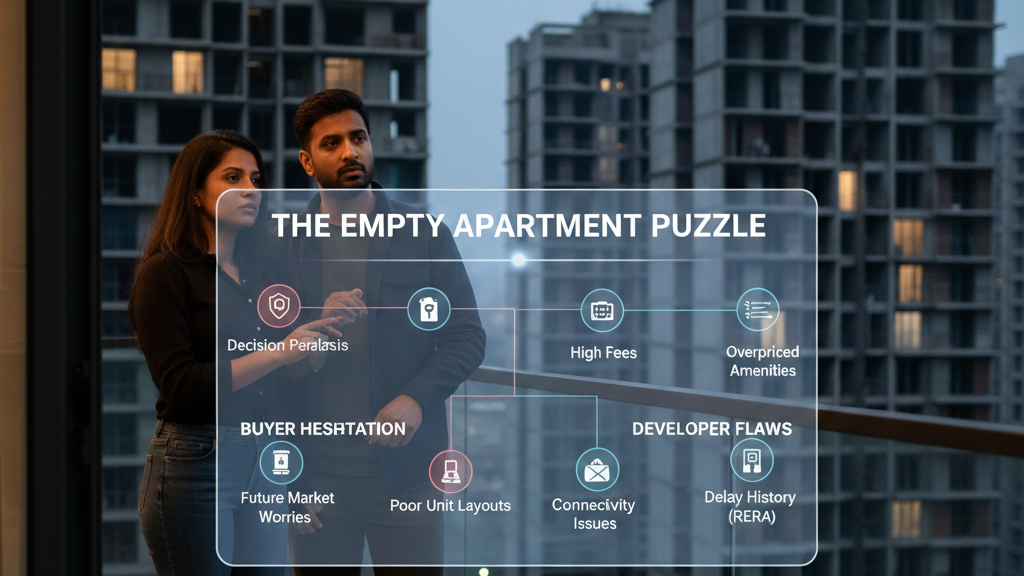
In many Hyderabad projects, buyers often notice a strange pattern. Most units sell out quickly, yet a few flats remain unsold for years. This happens even in projects with good builders, strong locations, and decent demand.
These unsold units are usually labelled as “problem flats.” But the reasons are rarely dramatic. In most cases, the issue is not the project or the market. It is a mix of unit-level design choices, pricing psychology, and how buyers read signals from unsold inventory.
Understanding why this happens helps homebuyers avoid costly compromises and helps sellers correct mistakes before time works against them.
1. Unit Positioning and Internal Layout Issues
Not all flats within a project are equal. Even in a well-planned community, certain units naturally attract lower demand.
Poor Orientation and Light
Flats with limited natural light or ventilation tend to stay unsold longer. Buyers may not always articulate this clearly, but dark living rooms, awkward window placement, or blocked views create an immediate emotional resistance.
Units facing service roads, transformers, garbage areas, or internal ramps often face similar challenges. These factors reduce everyday comfort, which matters more to end-users than brochure features.
Inefficient Layouts
Small design decisions can significantly impact buyer interest. Examples include:
• Long, wasted corridors
• Bedrooms opening directly into living spaces
• Kitchens without utility space
• Irregular room shapes that limit furniture placement
Even if the total square footage looks attractive on paper, poor internal flow reduces livability. Buyers compare these units with better-designed alternatives in the same project and walk away.
Floor-Level Challenges
Very low floors facing roads or very high floors with excessive heat exposure can struggle, especially in dense developments. Noise, privacy, and heat gain quietly push buyers toward other options.
2. Price Anchoring Mistakes by Sellers
Pricing is one of the most common reasons flats remain unsold long after a project is delivered.
Anchoring to Peak Market Prices
Some sellers anchor their expectations to peak launch prices or past market highs. Even when surrounding transactions soften slightly, they hold firm, expecting buyers to match historical benchmarks.
Buyers, however, compare across multiple projects and recent deals. If a unit is priced above comparable options, demand drops sharply.
Ignoring Unit-Specific Discounts
Not all flats deserve the same price per square foot. Units with disadvantages need pricing adjustments. Sellers who ignore this reality often see their flats become stagnant inventory.
Overconfidence in Project Reputation
A strong builder name does not automatically justify premium pricing for every unit. Buyers evaluate value at the unit level, not just the project level.
3. How Buyers Interpret “Stale Inventory”
Time itself becomes a signal in real estate.
Perception of Hidden Problems
When a flat remains unsold for a long time, buyers assume something must be wrong. Even if the issue is minor, uncertainty increases hesitation.
Buyers start asking:
• Why did others reject this unit?
• Is there a legal or structural issue?
• Will resale be difficult later?
This perception grows stronger with time, even if no real defect exists.
Negotiation Expectations Shift
Stale inventory invites aggressive negotiation. Buyers expect meaningful discounts, not marginal reductions. Sellers who resist this often see further delays.
Resale Liquidity Concerns
End-users think long-term. If a unit struggled to sell once, buyers worry it may struggle again during resale. This fear alone can kill interest.
4. Builder-Held Inventory vs Resale Units
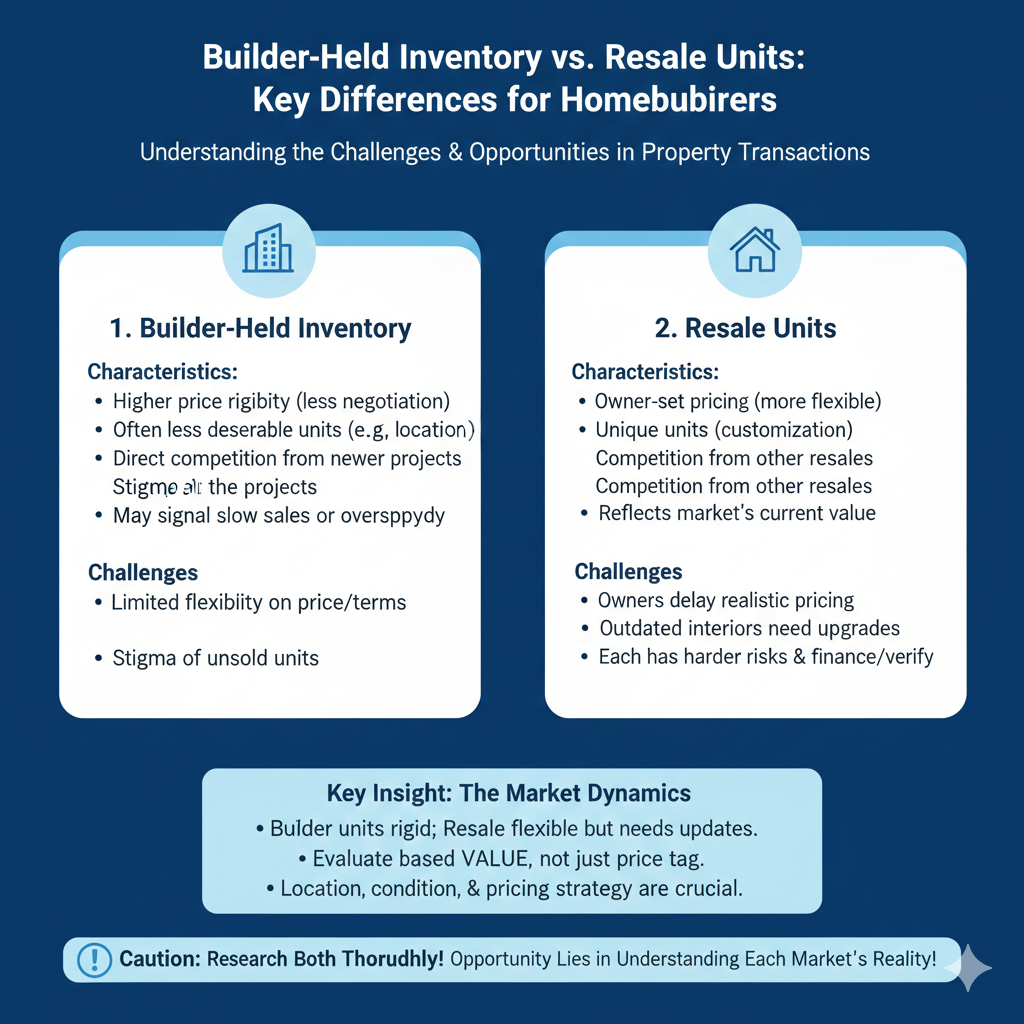
Flats held by builders after project completion face different challenges than resale units.
Builder-held inventory may:
• Carry higher price rigidity
• Include less desirable unit positions
• Face competition from newer launches
Resale units, on the other hand, may suffer if owners delay realistic pricing or fail to upgrade interiors to match current buyer expectations.
5. What Buyers Should Learn From Unsold Flats
For buyers, unsold units are not always bad opportunities. They simply require sharper evaluation.
A smart buyer should:
• Inspect light, ventilation, and noise at different times of day
• Compare pricing with similar units, not project averages
• Understand why the unit remained unsold
• Factor future resale perception into today’s decision
Sometimes, a genuine discount compensates for a real drawback. Other times, the compromise is permanent.
FAQ Section
Are unsold flats always risky to buy?
No. Some remain unsold due to pricing or minor positioning issues. Risk depends on whether the drawback is temporary or permanent.
Can price discounts make a bad unit worth buying?
Only if the discount realistically compensates for livability and future resale challenges.
Do buyers avoid such flats during resale?
Yes, unless pricing and usability clearly outweigh the negatives. Perception plays a big role.
Should first-time buyers avoid unsold inventory?
First-time buyers should be extra cautious and focus on long-term comfort and resale ease.
Conclusion

Flats remain unsold not because markets fail, but because buyers make choices at the unit level. Layout inefficiencies, wrong pricing, and negative perception compound over time.
For sellers, early price correction and honest assessment are critical. For buyers, understanding why a flat stayed unsold is more important than spotting a discount.
Real estate rewards clarity. Ignoring small signals today often leads to bigger compromises tomorrow.
Let’s Join Together to Bring Change to the World of Real Estate.
Thinking about your next home?
relai scores every project on data, not paid placements, and it's free for buyers.