Why “Rental Yield” Is Often Misunderstood by Indian Homebuyers

Rental yield is one of the most cited metrics in real estate investment discussions, but it is also one of the most misunderstood. Many homebuyers in India evaluate properties based on gross rental yield, only to be surprised later by lower-than-expected returns. Understanding the nuances of rental yield, including hidden costs and occupancy realities, is essential for making sound investment decisions.
Gross vs Net Yield Confusion
Gross rental yield is calculated by dividing the expected annual rent by the property’s purchase price. For example, if a flat costs ₹50 lakh and generates ₹3 lakh per year in rent, the gross yield is 6%. While this figure seems straightforward, it doesn’t account for essential costs such as property tax, maintenance, management fees, or periodic repairs.
Net yield, on the other hand, subtracts these expenses, giving a more realistic picture of the income a property generates. Many buyers focus only on gross yield, assuming that advertised rental figures translate directly into cash flow. In reality, net rental yields in Indian cities like Hyderabad often fall 1–2% lower than gross yields after accounting for costs.
Vacancy and Maintenance Realities
Another overlooked factor is vacancy periods. Properties rarely stay rented 100% of the year. Even short gaps between tenants can significantly impact overall returns. Additionally, tenants may require regular maintenance or repairs, which further reduces net rental income.
Maintenance is particularly relevant in gated communities or high-rise buildings with shared amenities. Service charges, elevator upkeep, landscaping, and security costs must be factored in when calculating real returns. Buyers who ignore these costs may overestimate their income potential and face disappointment when actual earnings are lower.
When Rental Income Truly Works
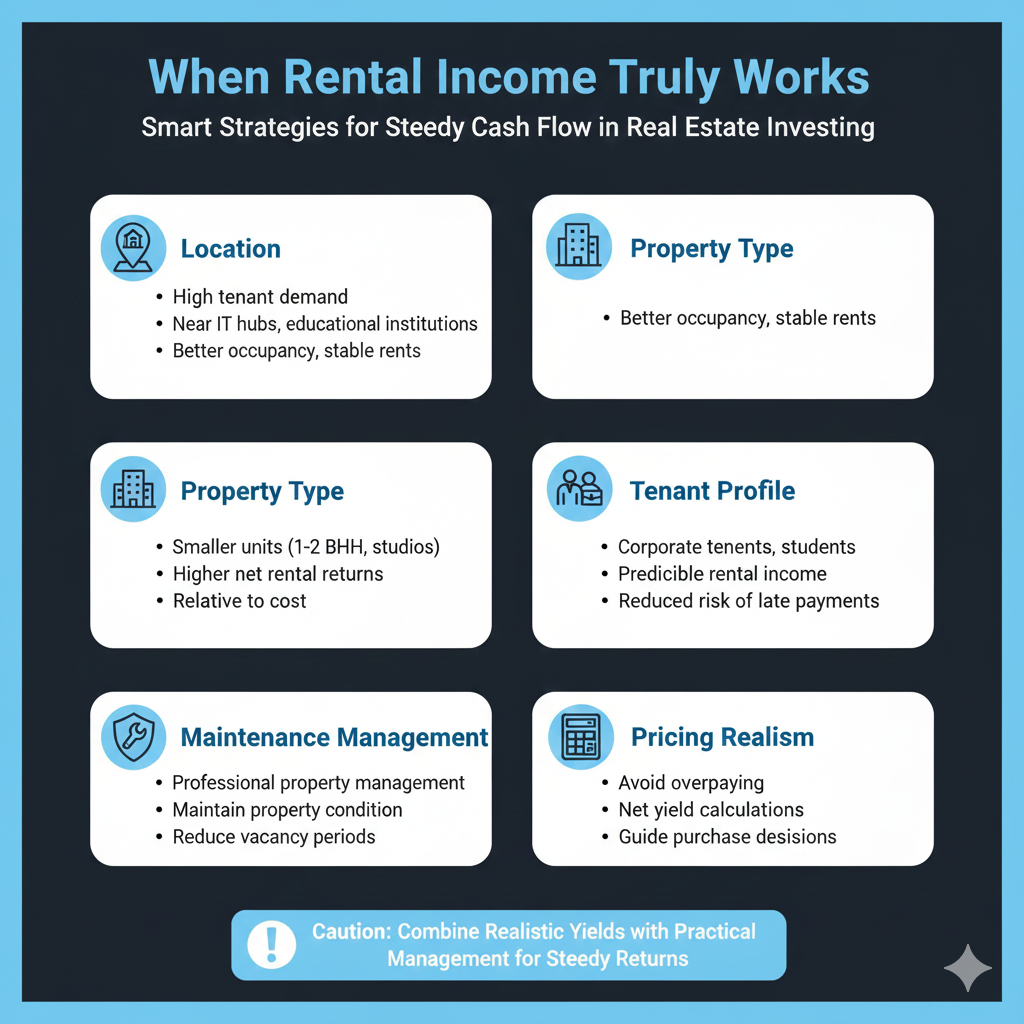
Despite these challenges, rental income can be a solid source of cash flow if approached wisely. Key considerations include:
Location: Areas with high tenant demand, such as near IT hubs or educational institutions, typically offer better occupancy and stable rents.
Property Type: Smaller units, like 1–2 BHK apartments or studio flats, often yield higher net rental returns relative to cost than larger luxury units.
Tenant Profile: Corporate tenants or students provide predictable rental income and reduce risk of late payments.
Maintenance Management: Professional property management can help maintain property condition and reduce vacancy periods.
Pricing Realism: Avoid overpaying for a property based on expected rental income alone. Net yield calculations should guide purchase decisions, not gross figures or hype.
By combining realistic yield calculations with practical management, investors can benefit from steady cash flow without facing unpleasant surprises.
FAQ Section
Q1: What is the difference between gross and net rental yield?
A1: Gross yield is the annual rent divided by property price, ignoring expenses. Net yield accounts for taxes, maintenance, vacancies, and management fees, providing a realistic income picture.
Q2: Why do actual rental returns often fall short of expectations?
A2: Vacancies, tenant turnover, maintenance, and service charges reduce net income, lowering overall rental returns compared to gross yield.
Q3: Which properties typically give higher net rental yields?
A3: Smaller units like 1–2 BHK apartments near employment hubs or educational institutions generally provide higher, more stable net rental income.
Q4: How can property management affect rental returns?
A4: Professional management reduces vacancy periods, ensures timely maintenance, and helps retain tenants, directly improving net rental income.
Q5: Should rental yield guide my buying decision?
A5: Yes, but only net yield should be considered, alongside location, tenant demand, and maintenance costs, rather than just advertised rent or gross yield.
Conclusion

Rental yield remains an essential metric for property investment, but misunderstanding its nuances can lead to disappointment. Gross yield figures can be misleading, while vacancy periods, maintenance, and management costs often reduce net income. Buyers who evaluate net rental yield, focus on high-demand locations, and adopt realistic maintenance and tenant strategies are far more likely to benefit from rental income in Hyderabad.
At Relai – For right home, we help investors and homebuyers understand the real economics of rental returns, ensuring smarter property decisions that maximize long-term value.
Let’s Join Together to Bring Change to the World of Real Estate.
Thinking about your next home?
relai scores every project on data, not paid placements, and it's free for buyers.