Why Pre-Launch Prices Rarely Create Wealth Anymore
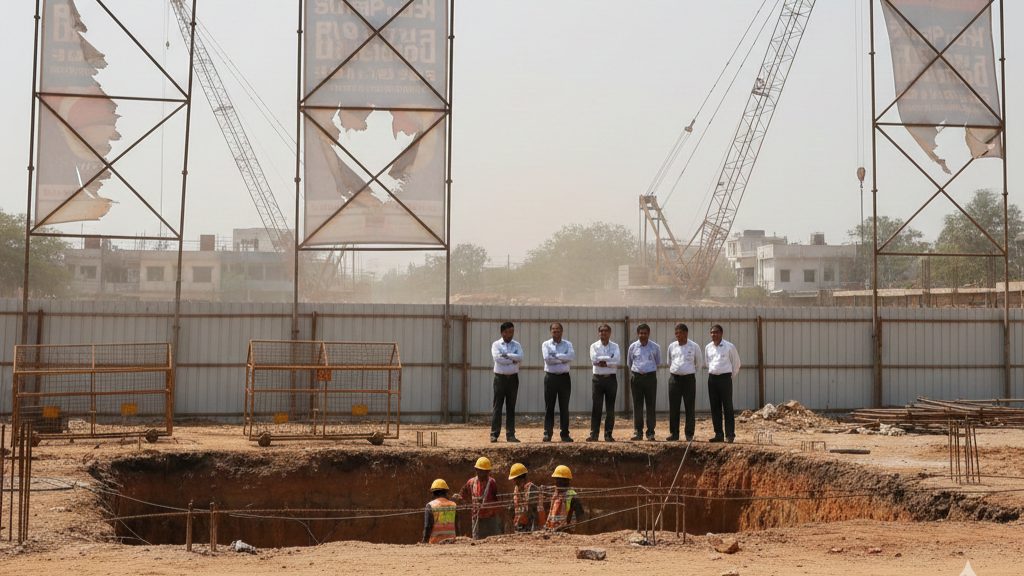
Buying at pre-launch was once considered the smartest move in Indian real estate. Enter early, get the lowest price, and ride the appreciation until possession. For years, this logic worked—especially in fast-growing cities like Hyderabad and Bengaluru.
But that playbook is quietly breaking.
Today, pre-launch prices rarely create meaningful wealth for most buyers. Not because real estate is underperforming, but because the structure of launches, pricing, and supply has fundamentally changed.
This blog explains why pre-launch no longer guarantees upside, when early entry can still make sense, and what safer appreciation strategies look like in the current market.
Risk Pricing Is Already Built Into Launch Prices
Earlier, pre-launch discounts compensated buyers for construction risk, approval uncertainty, and long waiting periods. Developers needed early cash flow, so they priced projects conservatively.
That gap has narrowed sharply.
Today, most reputed developers launch projects only after securing key approvals and arranging project finance. This reduces their dependency on early buyers. As a result, the so-called “pre-launch price” often already includes a premium for future expectations.
In many cases, launch prices are benchmarked against:
Nearby ready-to-move inventory
Future infrastructure announcements
Projected demand two to three years ahead
This means buyers are no longer buying risk cheaply. They are paying for optimism upfront.
When risk is already priced in, the room for outsized appreciation disappears.
Supply Glut Has Changed the Math
One of the biggest reasons pre-launch worked earlier was limited supply. Fewer projects, fewer options, and strong absorption created natural price momentum.
That is no longer the case in most urban micro-markets.
Cities like Hyderabad, Bengaluru, and Pune now see multiple launches every quarter within the same zone. Buyers can compare floor plans, amenities, pricing, and possession timelines across several projects at once.
This abundance creates two problems for pre-launch investors:
First, price caps form quickly. If one project pushes prices up, buyers simply shift to a nearby launch.
Second, absorption slows. Slower sales mean developers are less aggressive on price hikes during construction.
Even if headline prices increase on paper, real negotiated prices often remain flat once offers, subvention schemes, and inventory pressure are considered.
Slower Absorption Cycles Delay Wealth Creation

Earlier, projects would sell out 60–70% of inventory within the first year. That velocity itself created price appreciation.
Today, absorption cycles are longer.
Projects often take two to three years to reach healthy occupancy levels.
During this period:
Developers focus on closing volume, not pushing prices
Secondary resale demand remains weak
Early buyers struggle to exit without discounts
Wealth creation in real estate depends on liquidity, not just price appreciation. When exit options are limited, paper gains mean very little.
Many pre-launch buyers realise this only when they try to resell before possession and discover that newer launches nearby are priced similarly—or sometimes lower.
When Early Entry Still Works
This does not mean pre-launch buying is always a bad idea. It means it needs sharper filters.
Early entry can still work when:
The project is in a genuinely supply-constrained micro-market
Infrastructure delivery is already underway, not just announced
The developer has a strong track record of timely delivery
Ticket sizes are within the dominant end-user budget for that area
In such cases, demand builds organically during construction, and resale liquidity improves.
However, these opportunities are fewer today and require deep local understanding. Blindly assuming “early is cheaper” is no longer a strategy.
The Illusion of Discounts and Schemes
Many buyers are drawn to pre-launch through attractive schemes—early-bird pricing, flexible payment plans, or assured returns.
These often create an illusion of value rather than real upside.
Discounts are frequently offset by:
Higher base prices
Premium-loaded floor plans
Delayed handovers that extend holding costs
Flexible payment plans help cash flow but do not increase asset value. Appreciation depends on what the next buyer is willing to pay, not on how easy it was for you to enter.
Smart buyers separate purchase convenience from investment performance.
Safer Alternatives for Appreciation
If the goal is wealth creation rather than just ownership, buyers need to rethink where appreciation actually comes from.
More reliable appreciation often comes from:
Near-Completion Projects
Projects nearing possession carry lower execution risk and clearer pricing signals. Demand rises as uncertainty drops, improving resale liquidity.
Ready-to-Move in Improving Micro-Markets
Buying into areas where livability is improving—schools, road access, job clusters—often delivers steadier appreciation than speculative launches.
Low-Density or Differentiated Projects
Unique layouts, lower density, and strong community quality age better than large, commodity-style developments.
Time Arbitrage, Not Price Arbitrage
Buying when others hesitate—due to sentiment, not fundamentals—often works better than buying early purely for discounts.
FAQ Section
Are pre-launch properties riskier than ready-to-move homes?
Yes. Pre-launch carries construction, delay, and execution risk. Ready-to-move homes reduce these risks but may come at a higher upfront price.
Do pre-launch prices always rise by possession?
No. In many markets, prices stagnate due to oversupply, competing launches, or slower demand absorption.
Can end-users still consider pre-launch purchases?
Yes, if the intention is long-term self-use and the developer and location are carefully vetted. Investment-led expectations should be realistic.
Is resale easier before or after possession?
Resale liquidity usually improves after possession, once uncertainty reduces and end-user demand increases.
Conclusion

Pre-launch buying is no longer a shortcut to wealth in Indian real estate. The market has matured, information is widely available, and risk is priced far earlier than before.
Today, wealth is created not by entering first, but by entering right—into projects with genuine demand, execution clarity, and long-term livability.
For buyers, this means shifting focus from discounts and launch hype to data, absorption patterns, and exit realism. Real estate still rewards patience and discipline, but only when decisions are grounded in how markets actually behave.
Thinking about your next home?
relai scores every project on data, not paid placements, and it's free for buyers.