Why Large Communities Are Losing Buyer Preference Quietly
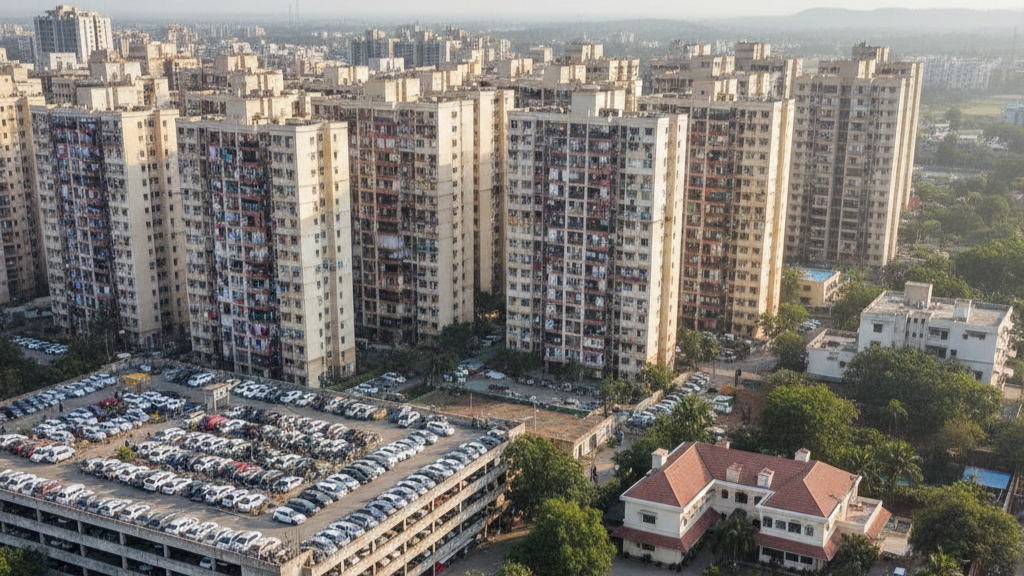
For years, large gated communities were positioned as the safest and smartest housing choice. Bigger meant better amenities, stronger security, and higher resale value. Thousands of units sharing pools, clubhouses, gyms, and landscaped spaces felt like progress.
But quietly, buyer preferences are shifting.
Across cities like Hyderabad and Bengaluru, many end users are stepping back from very large, high-density communities and moving toward smaller, lower-density formats. This is not a sudden rejection. It’s a slow, lived realization — shaped by daily experience rather than brochures.
Density Fatigue Is Real and Growing
Large communities solve one problem and create another.
While they offer shared amenities, they also bring constant density exposure:
Crowded lifts during peak hours
Parking conflicts despite “allocated” spaces
Overused clubhouses and gyms
Noise spillovers from common areas
Long internal walking distances for basic movement
What feels vibrant during a site visit can feel exhausting in daily life.
Buyers are discovering that density doesn’t end at the gate. It shows up every morning, every evening, every weekend. Over time, this creates density fatigue — a sense of constant crowding even inside a gated space.
As hybrid work keeps people home longer, tolerance for this fatigue drops sharply.
Shared Infrastructure Strain Over Time
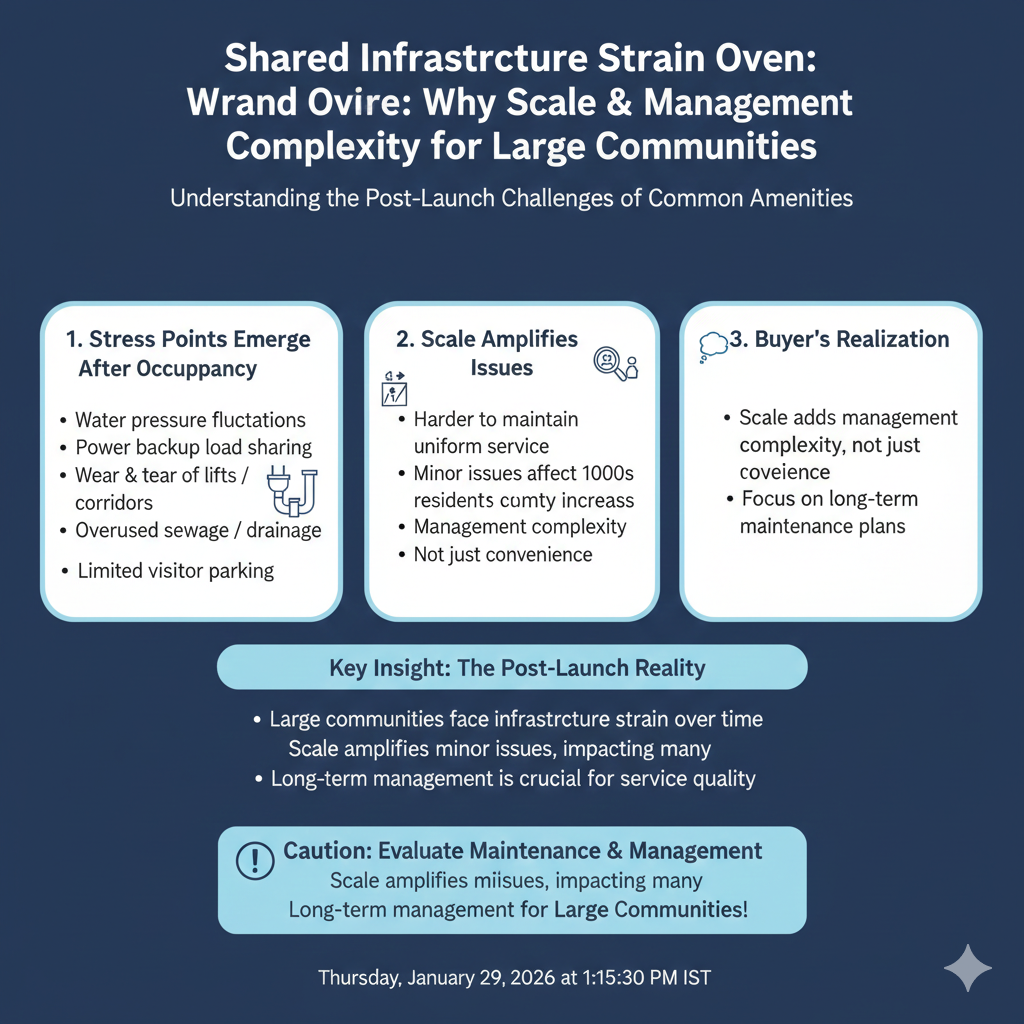
Large communities depend heavily on shared infrastructure. The problem is not at launch. It appears after occupancy stabilizes.
Common stress points include:
Water pressure fluctuations
Power backup load sharing
Wear and tear of lifts and corridors
Overused sewage and drainage systems
Limited visitor parking despite scale
The larger the community, the harder it becomes to maintain uniform service quality. Minor issues multiply because they affect hundreds or thousands of residents at once.
Buyers increasingly realize that scale adds management complexity, not just convenience.
Maintenance Escalation Is Inevitable
Low maintenance at launch is often a temporary illusion.
As large communities age:
Vendor costs rise
Equipment replacement becomes unavoidable
Staffing needs increase
Energy costs inflate
Repairs become collective, not optional
The result is steady maintenance escalation.
In many large projects, residents eventually pay:
For amenities they rarely use
For inefficiencies caused by scale
For decisions they cannot influence individually
What started as “shared cost advantage” slowly turns into shared financial burden.
This hits end users harder than investors, because maintenance is a lifelong expense, not a one-time cost.
Privacy Is Becoming a Premium, Not a Luxury
Modern buyers value privacy differently than before.
Privacy today means:
Fewer shared walls
Lower noise transfer
Predictable daily movement
Personal outdoor space
Control over one’s immediate environment
Large communities, by design, reduce privacy:
More neighbors per floor
Thinner margins between units
Higher chance of disruption
Less personal ownership of space
As incomes rise and lifestyle expectations mature, buyers increasingly see privacy as a core livability factor, not an upgrade.
This is quietly reshaping demand.
Livability Is Beating Amenity Count
Buyers are reassessing what actually improves daily life.
Many now prefer:
Calm surroundings over massive clubhouses
Walkable layouts over grand entrances
Fewer amenities used often instead of many used rarely
Human-scale design over landmark scale
Large communities often optimize for visual impact and marketing, not lived comfort.
Smaller communities, by contrast, tend to:
Feel quieter
Be easier to manage
Have clearer accountability
Offer more predictable daily experiences
Livability is winning over spectacle.
How Demand Is Shifting Toward Low-Density Formats
This shift doesn’t mean buyers are rejecting gated living entirely. They are refining it.
Rising demand is visible in:
Smaller gated communities
Low-rise apartments
Villament formats
Row houses and duplex clusters
Boutique developments with limited units
These formats offer:
Better space-to-resident ratios
Lower infrastructure strain
More privacy
Easier association governance
Slower maintenance inflation
Importantly, they align better with end-user priorities, not just investor logic.
Why This Shift Is Quiet, Not Loud
Large communities still sell. Marketing remains strong. Inventory moves.
But buyer sentiment changes before sales data reflects it.
Many buyers:
Avoid very large projects without announcing it
Shortlist fewer-unit developments first
Ask more questions about density and maintenance
Prioritize calm over convenience
This is not a trend driven by headlines. It’s driven by lived experience and peer learning.
What This Means for Future Resale
As preferences evolve, resale dynamics change.
Homes in:
Overcrowded communities
High-maintenance projects
Poorly managed large developments
May face:
Slower resale
Price negotiation pressure
Tenant churn
Meanwhile, well-located low-density projects often retain:
Stable end-user demand
Better rental quality
Stronger long-term appeal
Density itself isn’t bad. Unmanaged density is.
FAQ Section
Are large communities becoming a bad investment?
Not necessarily. But they require closer evaluation of density, maintenance structure, and governance.
Do smaller communities lack amenities?
They usually offer fewer amenities, but ones that are used more consistently.
Is low density always better?
No. It works best when combined with good location, connectivity, and build quality.
Why are end users driving this shift more than investors?
Because end users experience density daily, while investors focus on entry and exit metrics.
Conclusion

Large communities are not failing. But they are no longer the default preference.
As buyers spend more time at home and value daily comfort over brochure features, density fatigue, maintenance escalation, and privacy concerns are reshaping choices. Demand is quietly moving toward lower-density formats that offer calmer living and better control over long-term costs.
For buyers, the lesson is simple:
Bigger isn’t always better.
Better living often comes from fewer people, not more amenities.
Choosing the right density today can define how comfortable — and valuable — your home feels tomorrow.
Let’s Join Together to Bring Change to the World of Real Estate.
Thinking about your next home?
relai scores every project on data, not paid placements, and it's free for buyers.