Why Corner Flats Are Not Always the Best Investment

When buying an apartment in a gated community or high-rise project, corner flats are often marketed as premium units. Developers highlight their extra ventilation, expansive views, and supposedly higher resale value. Many buyers assume that corner units are automatically superior to middle units. However, while corner flats do have some advantages, they also come with trade-offs that can impact comfort, maintenance costs, and long-term investment returns.
Understanding both the pros and cons of corner flats is essential before making a purchase decision.
Heat, Noise, and Layout Challenges
One of the most overlooked aspects of corner flats is their exposure. Being on the periphery, these units often face two open sides, which can significantly increase sunlight exposure. In Hyderabad’s warm climate, this can lead to higher cooling costs and discomfort during summer months.
Noise is another factor. Corner units located along main roads or near community entrances are more exposed to traffic and pedestrian noise. Unlike middle units, which are shielded on most sides, corner flats may require additional soundproofing or landscaping buffers.
The layout of corner flats can also present challenges. While developers often emphasize larger windows and extended balconies, the actual usable space inside may be less efficient. Irregular layouts can make furniture placement difficult and reduce practical living space.
Resale Myths vs Real Demand
A common belief among buyers is that corner flats command higher resale value due to their perceived premium status. In reality, resale demand depends on multiple factors beyond location within a building. Buyers often prioritize floor level, view, accessibility, and overall maintenance charges.
Data from Hyderabad resale markets indicates that middle units in well-planned projects often sell as quickly—or faster—than corner flats. This is because middle units are more shielded from heat, noise, and dust, offering a more comfortable living experience. In other words, a corner unit may carry a higher price, but it does not always guarantee quicker resale or better returns.
When Corner Units Actually Make Sense
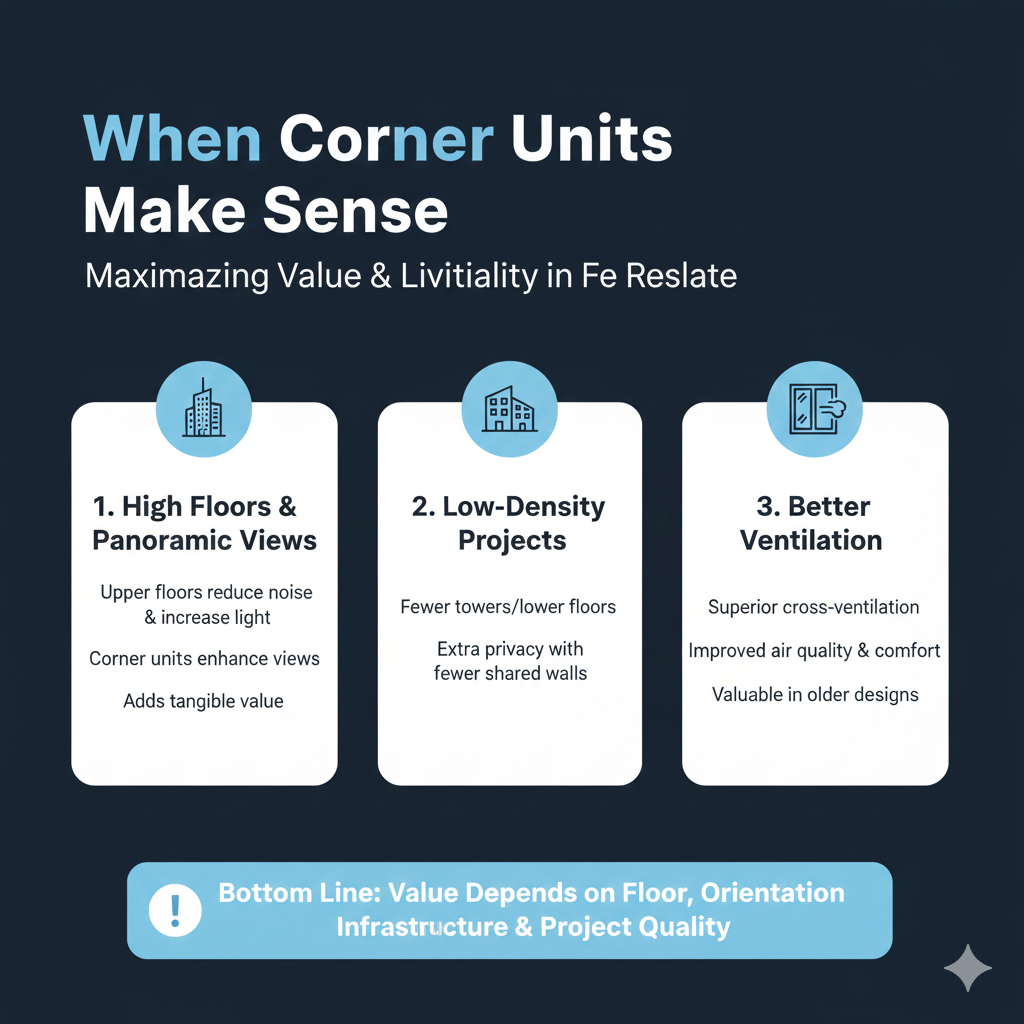
Corner flats are not without merit. They can make sense in specific scenarios:
High floors with panoramic views: If the corner unit is on an upper floor, exposure to sunlight and noise is less of an issue, and views can add tangible value.
Low-density projects: In projects with fewer towers or lower floors, corner units provide extra privacy and fewer shared walls.
Better ventilation in older or poorly designed projects: In some buildings, corner flats receive superior cross-ventilation, which enhances indoor air quality and comfort.
Ultimately, the value of a corner flat depends on the combination of floor, orientation, surrounding infrastructure, and project quality.
How Buyers Can Decide
To make a sound investment in corner flats, buyers should:
Compare actual prices vs benefits: Ensure the premium for a corner unit is justified by its advantages in layout, view, or ventilation.
Check resale trends: Study previous sales in the same project or similar buildings to assess real demand.
Evaluate exposure: Consider sunlight, noise, and proximity to roads or community entrances.
Review layout efficiency: Inspect how the flat’s shape and balcony placements affect practical living space.
Consider maintenance costs: Higher exposure may lead to increased wear and tear on windows, walls, and cooling systems.
By carefully weighing these factors, buyers can avoid overpaying for perceived benefits that do not translate into tangible comfort or investment gains.
FAQ Section
Q1: Are corner flats always more expensive than middle units?
A1: Usually yes, but the premium may not always be justified, depending on heat, noise, and layout disadvantages.
Q2: Do corner flats have higher resale value?
A2: Not necessarily. Resale depends more on floor, view, accessibility, and overall living experience than on corner status alone.
Q3: When should I consider buying a corner flat?
A3: They make sense on higher floors with good views, in low-density projects, or where cross-ventilation improves comfort.
Q4: Do corner flats require more maintenance?
A4: Often yes, due to higher exposure to sunlight, dust, and noise, which can affect cooling costs and upkeep over time.
Q5: Can corner flats be better for investment in specific cases?
A5: Yes, if the location, floor, and layout align with demand trends and offer tangible lifestyle benefits that buyers prioritize.
Conclusion

Corner flats are often marketed as premium units, but buyers should approach them with a balanced perspective. While they offer advantages like better ventilation, additional windows, and potentially superior views, they also come with downsides such as higher heat exposure, noise, irregular layouts, and maintenance costs. Resale value does not automatically favor corner flats and depends heavily on actual demand, project quality, and location.
By carefully evaluating floor, layout, and exposure, buyers can make informed decisions that maximize comfort and long-term investment returns.
At Relai – For right home, we guide buyers to weigh lifestyle benefits against hidden costs, ensuring property decisions are logical, verified, and aligned with real market trends.
Let’s Join Together to Bring Change to the World of Real Estate.
Thinking about your next home?
relai scores every project on data, not paid placements, and it's free for buyers.