Why Bigger Developers Sometimes Delay Projects More Than Smaller Ones
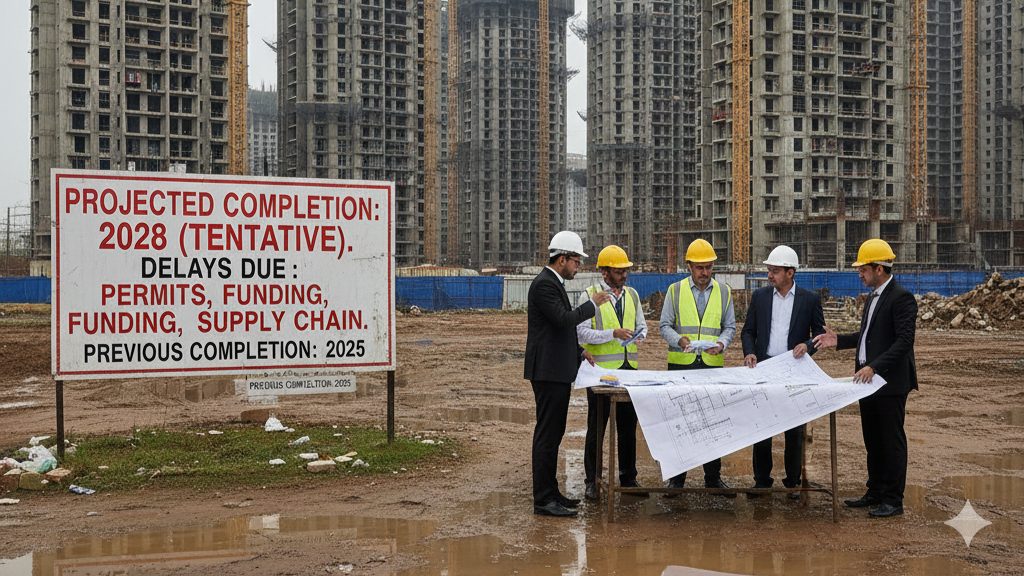
When buying a property, many buyers assume that large, well-known developers are the safest bet for timely delivery. After all, their brand, reputation, and capital strength should guarantee that projects finish on schedule. Surprisingly, this is not always the case. In Hyderabad and other major cities, some of the biggest delays in real estate projects come from developers with strong brand names. Understanding why this happens requires looking beyond perception and into the operational and financial realities of large-scale development.
Cash Flow Management Across Multiple Projects
One of the primary reasons bigger developers delay projects is the complexity of managing multiple ongoing projects simultaneously. Unlike smaller developers who focus on one or two projects, large developers often juggle construction, approvals, and sales across dozens of properties. This requires careful cash flow management.
Even when a project is fully sold on paper, the actual cash inflow may be spread over months or tied up in other projects. Construction schedules can be affected if funds are temporarily diverted to higher-priority projects that promise faster returns or are under more scrutiny from investors. For buyers, this means that brand size alone is not a guarantee of timely completion.
Land Banking vs Execution Focus
Large developers often engage in land banking—acquiring prime plots in anticipation of future urban expansion. While land banking is a strategic investment, it can stretch resources and attention away from active construction. Projects that are part of a developer’s long-term portfolio may not receive the same execution focus as those needed to meet immediate sales targets or financial goals.
In contrast, smaller developers, especially those working in a single city or neighborhood, are typically more execution-focused. Their reputation is tied closely to the timely completion of every project, so delays have a direct impact on their business survival.
Complex Approvals and Regulatory Dependencies
Bigger developers often take on larger, more complex projects, including high-rise towers, integrated townships, or gated communities with extensive amenities. These projects require multiple approvals from various authorities, including environmental clearances, RERA registrations, and local municipal permits.
Smaller projects, like mid-rise buildings or standalone apartments, typically face fewer regulatory hurdles. A delay in approvals for a multi-crore, multi-acre project can cascade into construction delays that are often unavoidable, regardless of how efficient the developer is.
Brand Perception vs Practical Safety
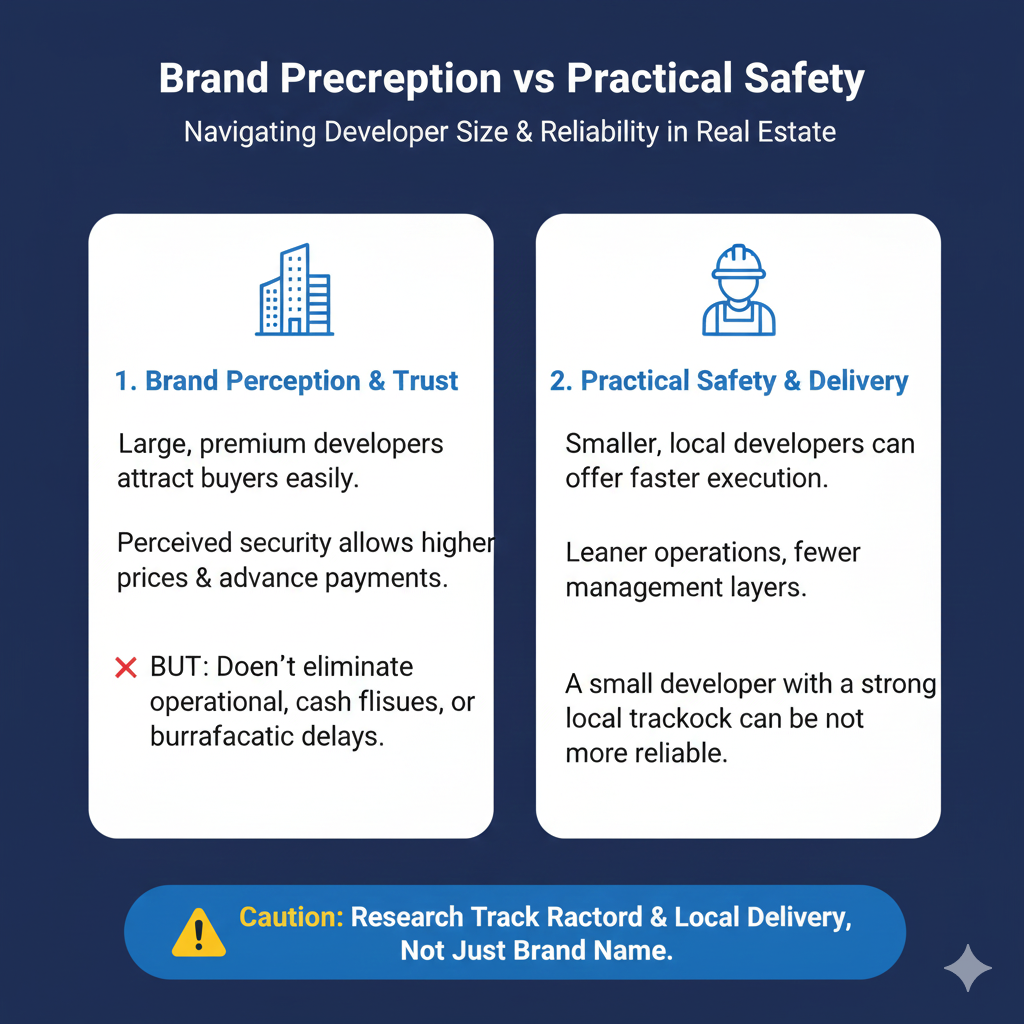
Brand name often gives buyers a sense of security, which is why premium developers can charge higher prices and collect advance payments more easily. However, brand perception does not eliminate operational challenges, cash flow constraints, or bureaucratic delays.
Smaller developers may offer faster execution because their operations are leaner, with fewer layers of management and a sharper focus on delivery timelines. In other words, a smaller developer with a strong local track record can sometimes deliver faster and more reliably than a larger national brand.
Risk Management for Buyers
For buyers looking to reduce the risk of delays, several strategies can help:
Check past project delivery records: Look for historical performance in terms of delivery timelines and quality.
Understand financial health: Large developers may be profitable overall but can still juggle cash flow in ways that delay certain projects.
Verify approvals and RERA registration: Confirm that all legal and regulatory requirements are in place before booking.
Consider project size: Smaller, mid-rise developments may offer faster execution than multi-tower or integrated townships.
Talk to existing residents: Feedback from buyers in completed projects can highlight recurring issues in execution.
By combining these checks with personal risk assessment, buyers can make informed decisions regardless of the developer’s brand name.
FAQ Section
Q1: Does a bigger developer always mean faster project delivery?
A1: No. Large developers often manage multiple projects and face regulatory complexities, which can cause delays despite their brand strength.
Q2: Are smaller developers more reliable?
A2: Smaller developers often focus on fewer projects, which can lead to faster execution, but their track record and financial stability must still be verified.
Q3: Why do bigger developers take on land banking?
A3: Land banking is a strategic move to secure future growth areas. While it can be profitable, it can also divert attention and resources from active projects.
Q4: How can buyers assess delay risk before booking?
A4: Check past project delivery timelines, RERA approvals, financial health, and speak to existing residents for practical insights.
Q5: Does project size impact the likelihood of delays?
A5: Yes. Larger, multi-tower or integrated township projects face more approvals, cash flow requirements, and coordination challenges than smaller developments.
Conclusion

While it is natural to assume that bigger developers are safer bets, delays are not uncommon even among the most reputed brands. Factors like cash flow management, project complexity, land banking, and regulatory approvals often play a bigger role than the brand itself. Smart buyers should evaluate developers based on historical delivery records, financial transparency, and project complexity rather than relying solely on brand perception.
Understanding these hidden risks can save buyers time, money, and frustration, ensuring they make better decisions in Hyderabad’s dynamic real estate market.
Let’s Join Together to Bring Change to the World of Real Estate.
Thinking about your next home?
relai scores every project on data, not paid placements, and it's free for buyers.