Why Approval-Clean Projects Still Turn Risky for Buyers
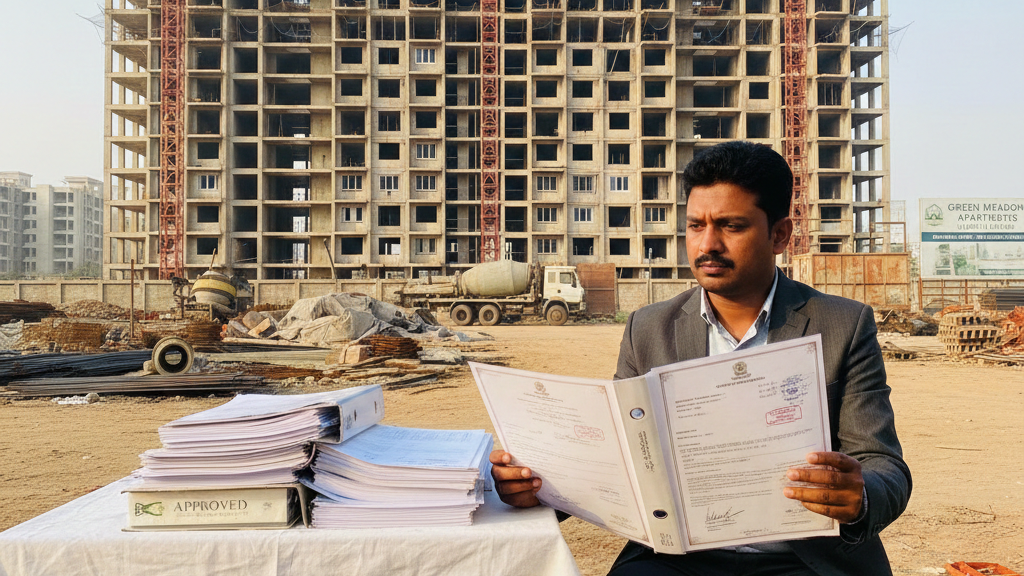
Many homebuyers feel relieved once a project is labeled “approval-clean.” RERA registration is in place. Layout approvals are sanctioned. Environmental clearance exists. On paper, everything looks safe.
Yet, time and again, buyers in Indian cities discover that approval-clean does not always mean risk-free. Projects get delayed, quality slips, possession dates move endlessly, and promised amenities remain incomplete — all despite having the right paperwork.
This gap between approvals and outcomes is where most buyers get caught. Understanding why this happens is crucial, especially for first-time buyers and end users who assume approvals equal certainty.
Legal Approval vs Execution Risk: The Core Difference
Legal approval simply means the project has received permission to be built. It does not guarantee how well, how fast, or even if it will be completed as promised.
Think of approvals as a driving license. It allows someone to drive, but it does not ensure they will drive safely, responsibly, or reach the destination on time.
Execution risk, on the other hand, includes:
Whether the builder has enough capital
Whether contractors are paid on time
Whether construction quality is maintained
Whether timelines are realistically planned
Whether the developer prioritizes delivery over expansion
Buyers often confuse permission to build with capability to deliver. That confusion is expensive.
How Delays Creep In Even After Clear Sanctions
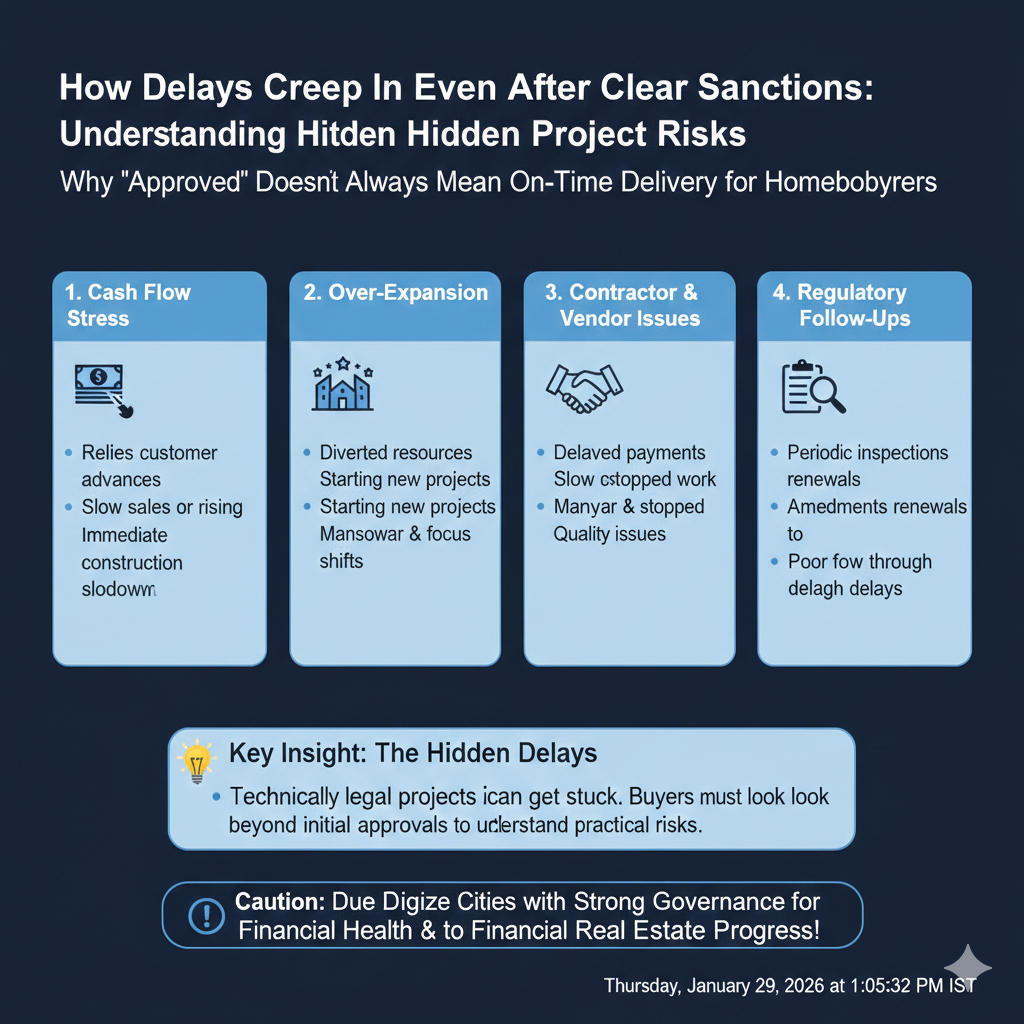
Even fully approved projects face delays due to reasons buyers rarely evaluate early.
Cash Flow Stress
Many developers launch projects with approvals but rely heavily on customer advances or future sales to fund construction. If sales slow down or costs rise, construction speed drops immediately.
Over-Expansion
Some builders divert resources from one project to start another. Approvals remain intact, but manpower, funds, and focus shift elsewhere.
Contractor and Vendor Issues
Delayed payments to contractors lead to slow work, poor quality, or repeated stoppages. This rarely shows up in approval documents but directly impacts possession.
Regulatory Follow-Ups
Initial approvals do not end compliance. Periodic inspections, amendments, and renewed permissions are needed. Poor follow-through causes invisible but serious delays.
The result is a project that is technically legal but practically stuck.
Builder Intent vs Paperwork Reality
This is where buyer judgment matters most.
Approvals are static. Intent is dynamic.
A builder may have:
Clean paperwork
RERA registration
Sanctioned plans
Yet still lack:
Financial discipline
Long-term commitment to the project
A track record of timely delivery
Some red flags buyers miss:
Frequent changes in possession timelines
Aggressive discounts mid-construction
Constant sales pressure despite slow site progress
Multiple ongoing projects with similar delays
Paperwork reflects what can be done. Builder intent determines what will be done.
Why RERA Alone Doesn’t Eliminate Risk
RERA has improved transparency, but it is not a delivery guarantee.
What RERA ensures:
Project disclosure
Defined timelines
Buyer grievance mechanisms
What it cannot ensure:
Construction speed
Quality of workmanship
Builder financial discipline
Priority of your project over others
Even RERA-registered projects can stall if the builder mismanages funds or overextends. Legal remedies exist, but they take time — often years. For an end-user, that delay is already a loss.
What Buyers Should Verify Beyond Approvals
Smart buyers go beyond checking certificates. They evaluate execution strength.
1. Track Record of Delivery
Look at:
Past projects and actual delivery dates
Occupancy status of completed projects
Feedback from existing residents
A builder who delivers consistently is less likely to fail you, even during market slowdowns.
2. Construction Progress vs Timeline
Compare:
Current construction stage
Promised possession date
Work pace on site
If progress does not match the timeline, approvals won’t save you.
3. Financial Discipline Signals
While exact finances are hard to access, indicators include:
Heavy discounting
Delayed vendor payments visible on site
Frequent scheme changes
High inventory despite approvals
These often signal cash stress.
4. Project Focus
Check how many projects the builder is running simultaneously. Fewer, well-managed projects usually mean better execution focus.
5. Post-Handover Reputation
Builders who maintain properties well after handover usually care about long-term credibility, not just sales.
Why End-Users Are More Exposed Than Investors
Investors can exit. End-users wait.
Delays affect:
Rent outflow
School admissions
Job relocation
Family planning
Loan EMIs running without possession
Approval-clean but execution-weak projects hurt end-users the most because the cost is emotional, financial, and time-based.
FAQ Section
Is an approval-clean project always safer than an unapproved one?
Yes, but safety is relative. Approvals reduce legal risk, not execution risk.
Does checking RERA registration fully protect buyers?
No. RERA improves transparency but cannot prevent delays or quality issues.
Can a project lose approvals after launch?
Yes, if follow-up compliances are ignored or if deviations occur during construction.
Should buyers avoid under-construction projects entirely?
Not necessarily. Buyers should avoid projects where execution strength is weaker than paperwork strength.
Conclusion

Approvals are necessary, but they are not sufficient.
Approval-clean projects still turn risky when execution discipline, financial health, and builder intent are weak. Buyers who stop their due diligence at paperwork often pay the highest price — in delays, stress, and compromised living conditions.
The safest real estate decisions come from balancing legal clarity with execution reality. Buyers who look beyond certificates and evaluate how a project is actually being built protect not just their money, but their time and peace of mind.
In real estate, delivery matters more than declarations.
Let’s Join Together to Bring Change to the World of Real Estate.
Thinking about your next home?
relai scores every project on data, not paid placements, and it's free for buyers.