What Happens When a Project Changes Builders Midway
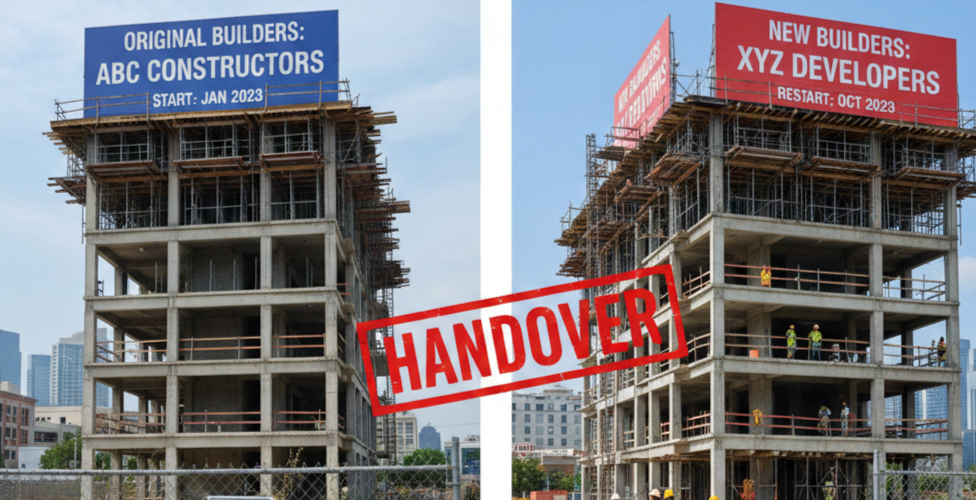
For homebuyers, few situations create as much anxiety as hearing that a real estate project has changed builders midway. What was once marketed with confidence suddenly becomes uncertain. Questions around delivery, quality, legality, and future value start surfacing immediately.
In Indian real estate, builder takeovers do happen. Some result in successful project revival, while others lead to prolonged delays and buyer distress. Understanding what a mid-project builder change really means helps buyers separate genuine recovery stories from high-risk situations.
This article explains the legal, construction, and value-related implications when a project changes hands, and how buyers can spot early warning signs.
1. Why Projects Change Builders
Builder changes usually occur due to financial or execution stress. Common triggers include:
• Cash flow problems and mounting debt
• Inability to meet construction timelines
• Disputes between landowners and developers
• Regulatory non-compliance or stalled approvals
In some cases, a stronger developer steps in to revive a stalled project. In others, the change reflects deeper structural problems that are not easily fixed.
For buyers, the reason behind the change matters more than the change itself.
2. Legal Risks for Existing Buyers
Legal continuity is the biggest concern when a new builder takes over.
Contract Validity
Buyers’ original agreements are signed with the initial developer. Unless these contracts are formally assigned or novated, legal enforceability can become unclear.
Buyers should verify:
• Whether the new developer has legally assumed all past obligations
• Whether sale agreements remain valid without amendments
• Whether any new terms are being introduced
Title and Approval Risks
If the original builder faced approval or land-title issues, these do not automatically disappear after takeover. In fact, unresolved legal gaps often delay project restart.
Buyers must check updated approvals, RERA filings, and land ownership clarity under the new structure.
3. Delivery Timelines and Possession Risk
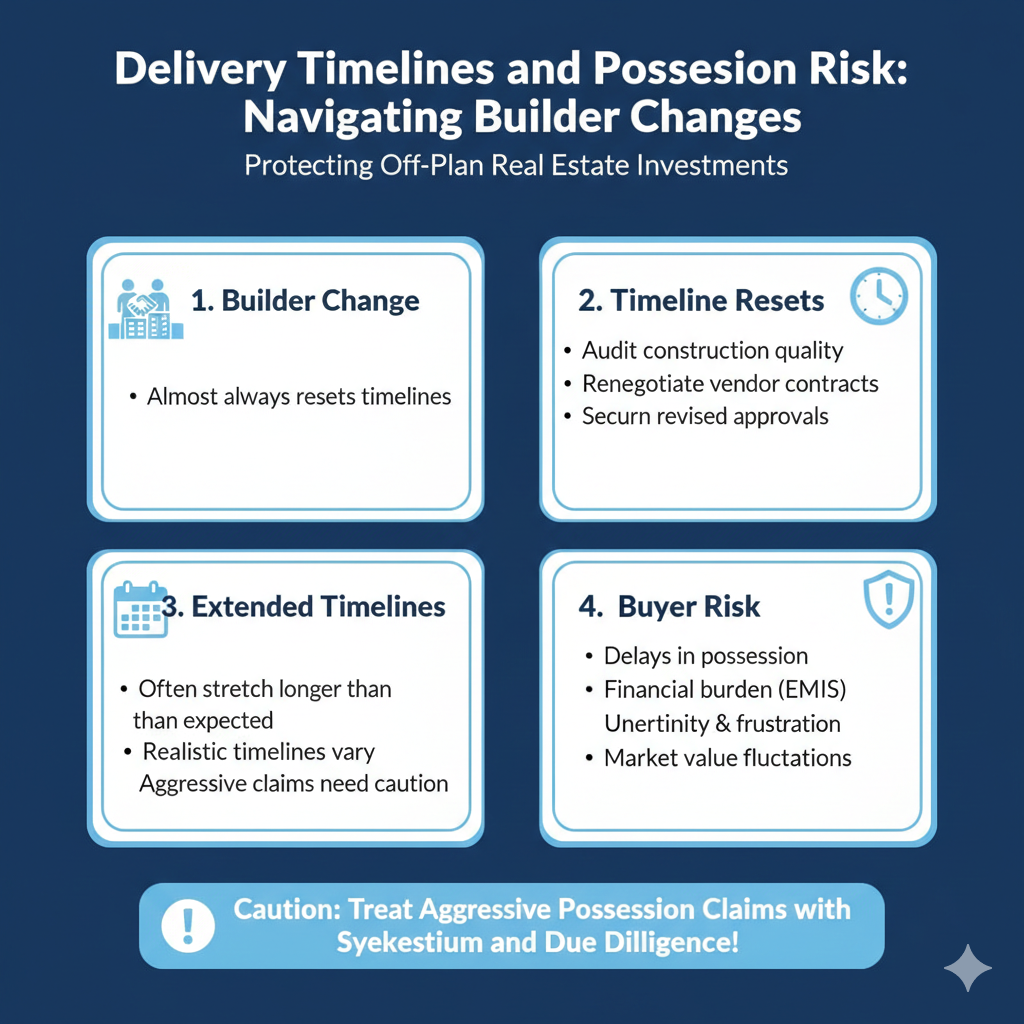
A builder change almost always resets timelines.
Even well-intentioned developers need time to:
• Audit existing construction quality
• Renegotiate vendor contracts
• Secure fresh funding
• Obtain revised approvals if plans change
While marketing may promise quick delivery, realistic timelines often stretch longer than expected. Buyers should treat aggressive possession claims with caution.
4. Quality Mismatch After Takeover
One of the most common post-takeover issues is quality inconsistency.
Specification Changes
New builders may revise specifications to control costs or align with their standards. This can lead to:
• Downgraded fittings or finishes
• Changes in common amenities
• Reduced landscaping or open areas
Unless changes are transparently communicated and legally documented, buyers may feel short-changed.
Construction Integration Challenges
Matching new construction with existing structures is technically complex. Differences in materials, workmanship, and execution standards can show up over time.
Quality audits become critical in such projects.
5. Financial Stress Signals Buyers Should Watch
Certain warning signs often appear before or during a builder change.
These include:
• Long gaps between construction milestones
• Frequent changes in senior project staff
• Aggressive discounting to raise cash
• Delays in statutory filings or RERA updates
Early detection allows buyers to reassess risk before committing further funds.
6. How Buyers Should Evaluate a Takeover Project
Not all takeovers are bad. Some result in timely completion and value recovery.
Buyers should assess:
• Track record of the incoming developer in completing stalled projects
• Financial strength and funding visibility
• Transparency in communication with existing buyers
• Willingness to legally honour past commitments
Projects revived by strong, credible developers with clean legal transfer often stabilise better than those patched together for short-term sales.
FAQ Section
Is it safe to stay invested after a builder change?
It depends on the incoming developer’s credibility, legal clarity, and financial strength. Each case must be evaluated independently.
Can buyers exit if a project changes builders?
Exit options depend on agreement terms, RERA provisions, and whether delays cross defined thresholds.
Do takeover projects usually face delays?
Yes. Even well-managed takeovers involve transition delays. Buyers should plan for extended timelines.
Does resale value suffer after a builder change?
Often yes, especially in the short term. Long-term value depends on completion quality and project reputation recovery.
Conclusion

A mid-project builder change is a major inflection point, not a minor update. It introduces legal, delivery, and quality risks that buyers must evaluate carefully.
While some projects recover under stronger developers, others continue to struggle under unresolved legacy issues. Buyers who rely only on promises risk prolonged uncertainty.
In real estate, continuity matters. When it breaks, due diligence must double.
Let’s Join Together to Bring Change to the World of Real Estate.
Thinking about your next home?
relai scores every project on data, not paid placements, and it's free for buyers.