What Happens to Gated Communities When the Original Buyers Exit

Gated communities are often marketed as premium, secure, and low-maintenance living environments. Early buyers enjoy well-maintained amenities, attentive management, and a strong sense of community. However, over time, as the original owners sell their units and new residents move in—often tenants rather than owners—the dynamics of the community can change significantly.
Understanding what happens when original buyers exit is crucial for anyone considering buying or investing in a gated community in Hyderabad.
Shift from Owners to Tenants
Original buyers are usually invested in the long-term upkeep of the community. They are more likely to participate in resident associations, enforce rules, and ensure timely payments of maintenance charges.
As these owners begin to exit and units are sold to tenants or investors, the ownership-to-tenant ratio changes. Tenants often prioritize convenience and affordability over community management, which can lead to less active participation in resident forums or delayed payment of maintenance fees. This shift can gradually alter the culture and upkeep of the community, especially in larger developments.
Maintenance Quality Over Time
One of the first signs of a changing dynamic is the impact on maintenance quality. In gated communities, common areas such as landscaping, elevators, parking, and swimming pools require ongoing funding and management.
Original owners often ensure that maintenance standards remain high, both for comfort and to protect property value. Once the proportion of tenants increases, maintenance funding can become inconsistent. Service quality may decline if the management struggles to collect fees or if residents are less engaged. Over time, this can affect amenities, cleanliness, and overall satisfaction.
Impact on Long-Term Property Value
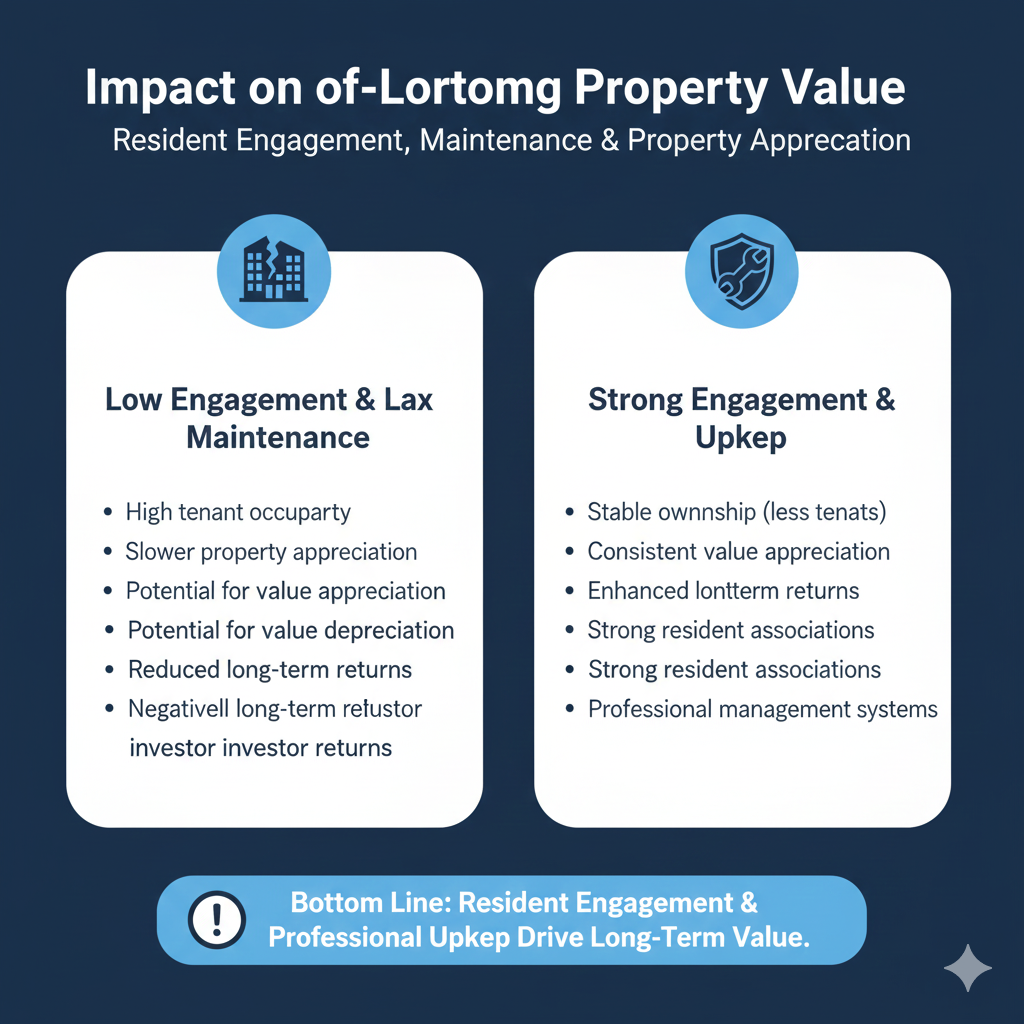
Changes in ownership and maintenance quality have a direct effect on property value. Properties in communities with high tenant occupancy and lax maintenance often see slower appreciation or even depreciation compared to projects with stable ownership.
For investors, this is particularly important to consider. A gated community may appear attractive due to its amenities, security, and initial reputation, but long-term returns are influenced by resident engagement and upkeep. Projects with strong resident associations and professionally managed maintenance systems tend to retain value better, even as ownership changes.
How Buyers Can Mitigate Risk
To protect their investment and lifestyle, buyers should evaluate gated communities with a long-term perspective:
Check occupancy patterns: Ask about the ratio of owner-occupied units versus rented units.
Review maintenance records: Understand historical maintenance collection rates and spending on common amenities.
Assess management systems: Communities with professional property management firms tend to maintain standards regardless of ownership changes.
Observe existing residents: A visit can reveal the level of engagement, activity, and upkeep in the community.
Long-term planning: Consider potential future developments in the area and how they may affect the desirability of the gated community.
By analyzing these factors, buyers can choose projects where the transition from original owners to new residents is less likely to compromise lifestyle or property value.
FAQ Section
Q1: Why does the shift from owners to tenants matter?
A1: Tenants are generally less invested in community management, which can affect maintenance quality and overall satisfaction.
Q2: How does maintenance quality change over time?
A2: As more tenants occupy the units, fee collection and participation in upkeep often decline, leading to potential deterioration of amenities and common areas.
Q3: Does a higher tenant ratio reduce property value?
A3: Yes. Properties in communities with a large proportion of tenants tend to appreciate slower and may have lower resale appeal.
Q4: How can I evaluate the long-term management of a gated community?
A4: Check occupancy patterns, maintenance records, management systems, and visit the site to observe current upkeep standards.
Q5: Can professionally managed communities resist the effects of owner exits?
A5: Yes. Projects with experienced property management firms maintain amenities and services regardless of changing ownership patterns.
Conclusion

The long-term health of a gated community is closely linked to the engagement of its residents and the quality of management. When original buyers exit, a shift toward tenant occupancy can influence maintenance standards, community culture, and property value.
For prospective buyers and investors in Hyderabad, understanding these dynamics is essential. By evaluating occupancy ratios, maintenance history, and management systems, buyers can make informed decisions and protect both lifestyle and investment potential.
At Relai – For right home, we help buyers assess these subtleties to ensure gated community investments remain rewarding over the long term.
Let’s Join Together to Bring Change to the World of Real Estate.
Thinking about your next home?
relai scores every project on data, not paid placements, and it's free for buyers.