Voice-Controlled and Unified Smart Home Ecosystems: The Future of Connected Living
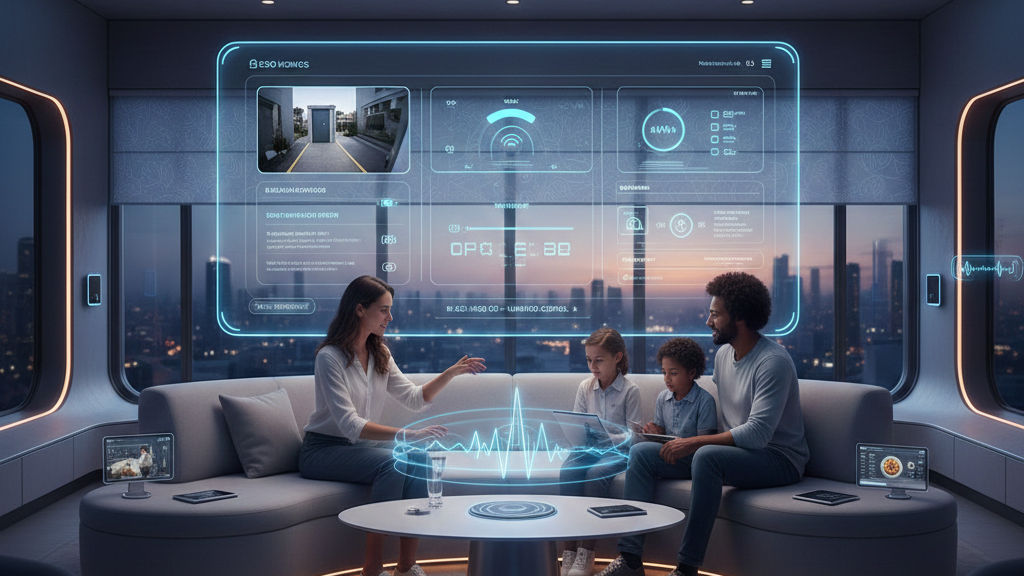
Smart homes have existed for years, but until recently they were often fragmented, confusing, and siloed. Lighting, HVAC, security, and access control lived in separate apps or hubs, forcing users to juggle interfaces to make their homes “smart.” That’s changing rapidly as voice control and unified smart home ecosystems mature into seamless, reliable, daily-use systems.
Today’s smart technology is not just about remote apps on phones. It’s about speaking naturally to your home and having everything respond in sync — lighting, climate, safety, energy systems, and access — without endless tapping. CES 2026 highlighted just how quickly this shift is taking hold across devices and platforms, and why it matters for residents, property managers, and developers alike. (tuya.com)
From Fragmentation to Unified Voice Control
Historically, smart home adoption was hindered by fragmentation. Different brands used proprietary protocols, forcing buyers to choose between multiple platforms and apps. Managing lighting from one interface, temperature from another, and security from a third was common — and exhausting.
At CES 2026, industry innovations showed that unified and voice-activated smart living is gaining real traction. Platforms powered by open ecosystems and cross-brand standards like Matter are enabling devices from different manufacturers to work together more seamlessly than ever before. (matter-smarthome)
Voice assistants are moving beyond simple commands (“turn on lights”) to context-aware interaction that feels more like talking to a companion than typing in an app. Technologies demonstrated at the show, including on-device voice AI that understands natural speech in real environments, point toward smart homes that are responsive even in noisy, complex environments without always relying on the cloud. (TWICE)
This matters for real estate because the easier it is for occupants to interact with their home, the more likely they are to use and appreciate its smart features. Voice control becomes the interface of convenience, not just a gimmick.
Unified Platforms Reduce Management Friction
At CES 2026, manufacturers and platform providers showed that the future of smart homes lies in unified ecosystems, not disconnected gadgets. The key principles are:
Interoperability: Devices from multiple brands speaking the same language and responding to a single voice command source. (Samsung Global Newsroom)
Consistent user experience: One familiar voice interface replacing multiple apps and dashboards.
Integrated automation: Commands like “Good night” can now dim lights, lock doors, adjust thermostats, and arm security systems — all from one interaction.
Samsung, among others at CES, emphasised how open ecosystems unlock real, everyday benefits by allowing appliances, climate systems, and safety devices to work in concert and deliver measurable savings and convenience rather than isolated features. (Samsung Global Newsroom)
For property management, this reduces friction in onboarding residents to smart systems and cuts support overhead. When a tenant can use one natural voice command instead of learning three apps, adoption and satisfaction increase.
Enhancing Tenant Appeal Through Voice and Unified Control
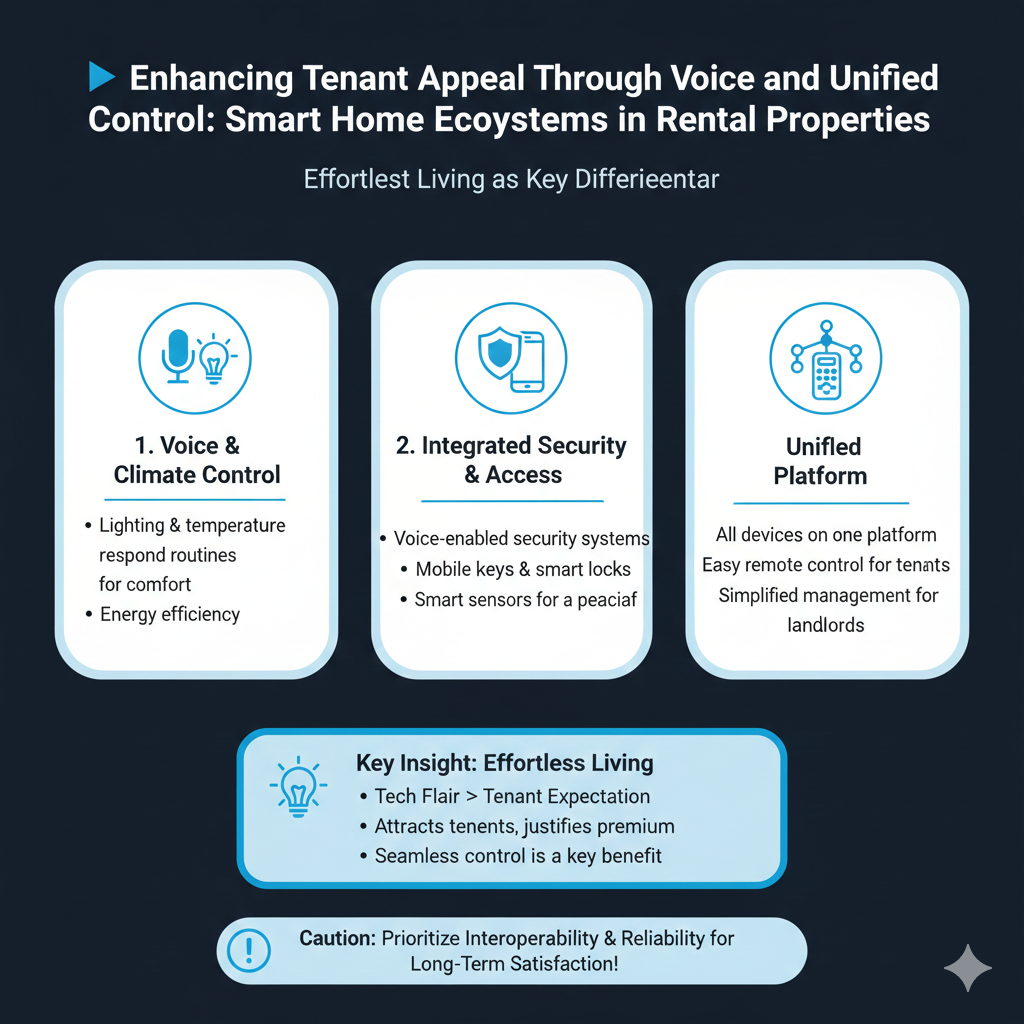
What was once considered optional “tech flair” is quickly becoming tenant expectation. Listings with voice-enabled smart ecosystems are attracting attention because they promise a life that feels effortless:
Lighting and climate that respond to voice or routines
Security systems that integrate with voice assistants and mobile keys
Access control (locks, gates, sensors) that tie back to the same platform
Ease of remote control for tenants and property managers alike
Innovations at CES 2026 demonstrated how spatial intelligence and adaptive systems can automatically adjust environmental conditions based on detected activity and preferences — making occupancies feel more intuitive and comfortable. (afp.com)
This adds value not just for end users, but also for multifamily and residential properties looking to differentiate in competitive rental and resale markets. A home that “just works” without app juggling becomes a major selling point.
Real-World Examples from CES 2026
Several highlights from CES 2026 show where voice control and unified smart ecosystems are heading:
Tuya Smart’s AI Life Assistant, Hey Tuya, showcased voice-driven control across security, energy, and comfort systems, illustrating how voice can become the hub of intelligent living. (tuya.com)
Next-generation spatial intelligence devices from companies like Aqara combined multiple sensors and automation hubs that respond naturally to residents and environmental changes. (afp.com)
Platforms emphasising cross-brand interoperability and open ecosystems demonstrated how homes can transition from siloed systems to cohesive, voice-enabled living environments. (Samsung Global Newsroom)
These innovations show that smart home ecosystems are moving from fragmented automation to unified living platforms, making voice control a practical daily interface rather than a niche feature.
What This Means for Property Management
Unified smart home ecosystems benefit not just residents, but operators:
Reduced support overhead: fewer platform issues and easier tenant onboarding.
Better data for preventative operations: centralized systems provide insights for maintenance and energy usage.
Scalability across properties: standardized ecosystems lower training and integration costs.
Future-proofing: open, voice-enabled standards mean longevity as devices evolve.
This shift also supports sustainability goals, because unified systems can optimize energy use more effectively than disjointed controls.
FAQ Section
Do voice-controlled smart homes require high tech expertise?
No. The latest systems showcased at CES 2026 emphasise natural voice interaction and simplified interfaces, reducing the learning curve for residents and managers alike. (TWICE)
Can different brands work together in a unified ecosystem?
Yes. Major platforms and emerging standards like Matter are enabling interoperability across brands and device categories. (Z-Wave Alliance)
Is voice control secure?
Security depends on platform design and authentication methods. Leading systems emphasise privacy and secure voice processing, including on-device processing for faster, safer interaction. (TWICE)
Do these technologies increase property value?
Homes with reliable, intuitive smart ecosystems tend to attract more attention and higher appeal in rental and resale markets because they reduce daily friction and improve living comfort.
Conclusion

The smart home is no longer a collection of disconnected gadgets. With advances showcased at CES 2026, voice-controlled and unified ecosystems are rapidly becoming practical, reliable, and design-forward solutions that enhance tenant appeal and reduce management friction.
Today’s voice interfaces are maturing into natural, context-aware controls, and unified ecosystems are removing the hassles of app overload. For developers, property managers, and buyers, this means smarter living that just works — a clear value add in a competitive real estate landscape.
Let’s Join Together to Bring Change to the World of Real Estate.
Thinking about your next home?
relai scores every project on data, not paid placements, and it's free for buyers.