The Real Reason Many “Ready-to-Move” Homes Still Feel Risky
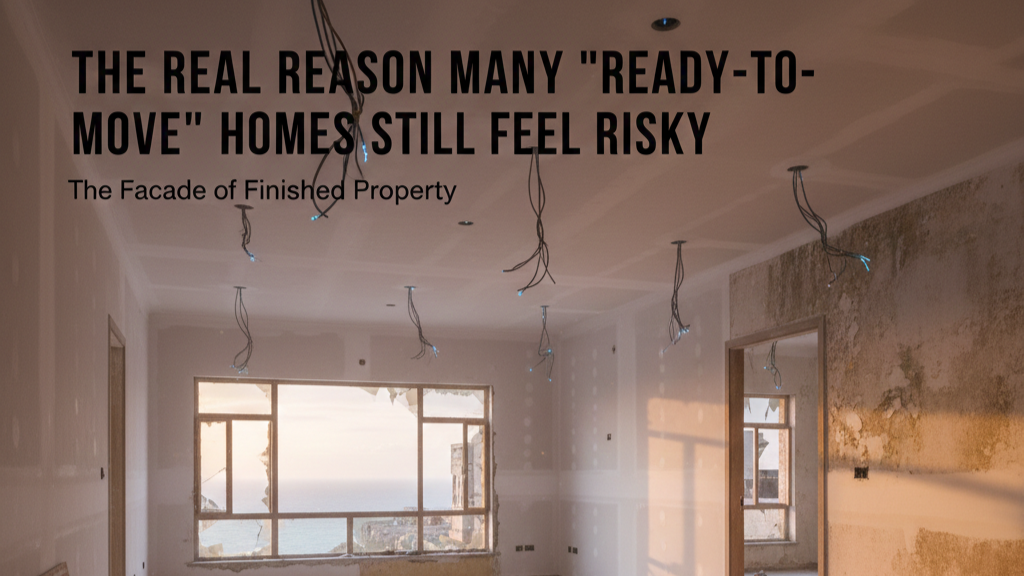
For many homebuyers, the term “ready-to-move” signals safety. No construction risk, no waiting period, and no uncertainty around possession. Yet, in reality, many buyers discover that even ready-to-move homes can carry hidden risks.
These risks rarely come from unfinished walls or missing tiles. They usually stem from approvals, compliances, and documentation gaps that buyers assume are already in place.
Understanding why some ready-to-move homes still feel risky helps buyers avoid last-minute shocks and long-term legal trouble.
1. Partial Approvals and Missing Compliances
A home can look complete and still lack critical approvals.
In many projects, builders complete construction but delay or stagger statutory compliances. Buyers often assume that physical completion automatically means legal completion. That is not always true.
Common missing or partial approvals include:
• Occupancy Certificate for specific blocks or floors
• Fire safety clearance renewals
• Environmental compliance updates
• Completion Certificate discrepancies
Without full approvals, buyers may face difficulties with home loans, utilities, or resale later. Banks may approve loans initially, but legal gaps can surface during resale scrutiny.
2. OC vs Physical Completion: A Common Confusion
One of the biggest misunderstandings in Indian real estate is equating physical completion with Occupancy Certificate (OC).
What Physical Completion Means
Physical completion refers to the building being structurally finished and habitable. Flats may have power, water, and basic amenities.
What OC Actually Means
An Occupancy Certificate confirms that the project has been built according to approved plans and complies with local laws. It is a legal validation, not a construction milestone.
A project without OC may still allow residents to move in, but such occupation is technically unauthorised.
For buyers, the absence of OC increases legal and resale risk, even if the home appears fully ready.
3. Why Builders Still Sell Without Full OC
Builders may market homes as ready-to-move even when OC is pending due to:
• Minor deviations awaiting regularisation
• Delays in inspection by authorities
• Phased approvals for large projects
• Cash flow pressures pushing early sales
While some delays are procedural, others signal deeper compliance issues. Buyers must distinguish between the two.
4. Risks Buyers Face Without Full Compliance
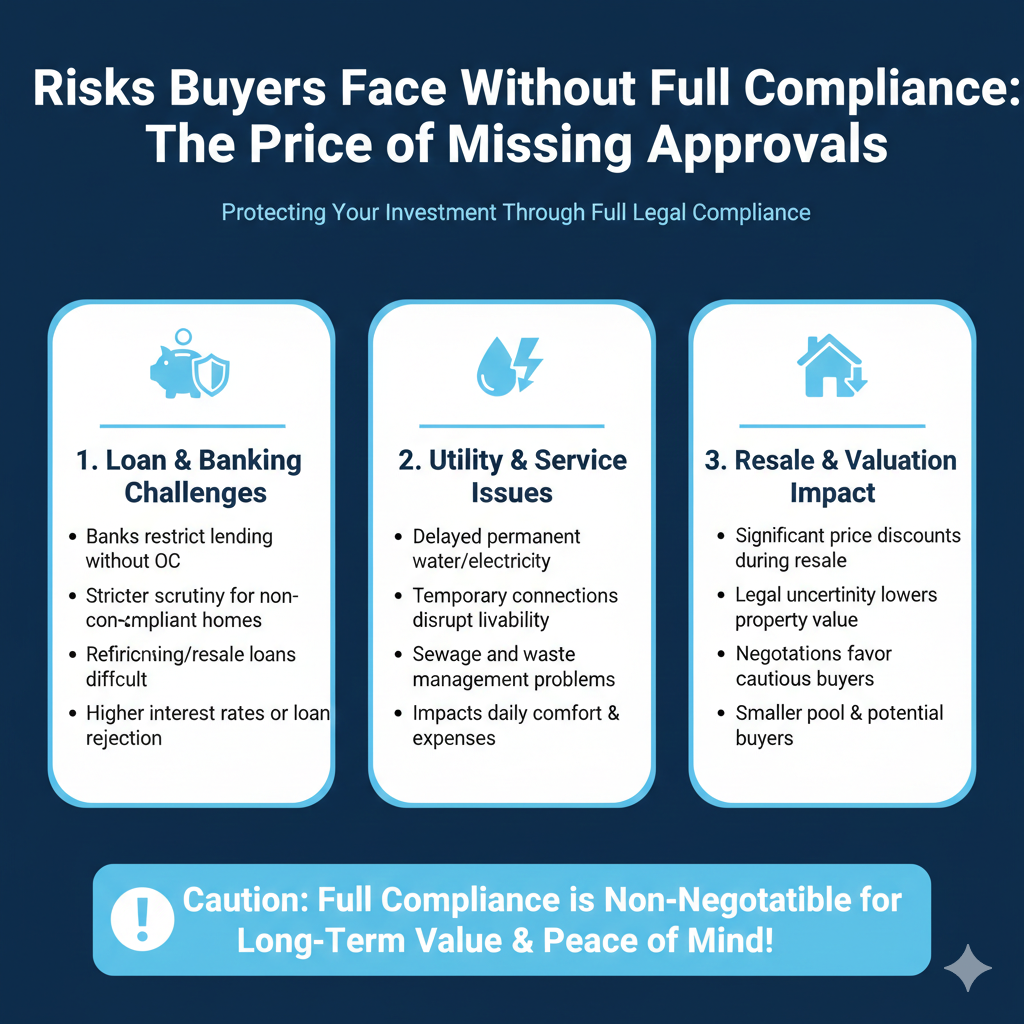
Loan and Banking Challenges
Some banks restrict lending or apply stricter scrutiny for homes without OC. Refinancing or resale loans may become difficult later.
Utility and Service Issues
Permanent water, electricity, or sewage connections may be delayed or provided temporarily. This affects long-term livability.
Resale and Valuation Impact
Homes without clear approvals often face price discounts during resale. Buyers factor legal uncertainty into negotiations.
5. What Buyers Must Verify Before Making Full Payment
Before releasing final payments or registering the property, buyers should verify:
• Occupancy Certificate for the specific unit or block
• Completion Certificate consistency with approved plans
• Updated RERA filings reflecting project status
• Local authority tax assessments
• Utility connection approvals
Relying only on possession letters or verbal assurances exposes buyers to unnecessary risk.
6. How to Assess Risk in Ready-to-Move Homes
Not all ready-to-move homes without OC are equally risky.
Lower-risk situations include:
• OC issued for earlier phases
• Minor procedural delays with documented progress
• Clear builder track record of compliance
Higher-risk situations involve repeated delays, vague timelines, or reluctance to share documents.
FAQ Section
Is it safe to buy a ready-to-move home without OC?
It carries higher legal and resale risk. Buyers should proceed only after understanding implications and consulting experts.
Can OC be obtained after possession?
Yes, but delays and complications are common. There is no fixed timeline guarantee.
Does possession mean all approvals are in place?
No. Possession is not a substitute for statutory certificates.
Will resale be difficult without OC?
Yes. Many buyers and banks avoid such properties or demand price discounts.
Conclusion

Ready-to-move does not automatically mean risk-free. The real safety of a home lies in its approvals, not just its physical readiness.
Buyers who look beyond paint, flooring, and amenities and focus on compliance make more secure decisions. In real estate, paperwork protects value long after construction ends.
Let’s Join Together to Bring Change to the World of Real Estate.
Thinking about your next home?
relai scores every project on data, not paid placements, and it's free for buyers.