The Psychology Behind “Only 2 Units Left” in Property Sales
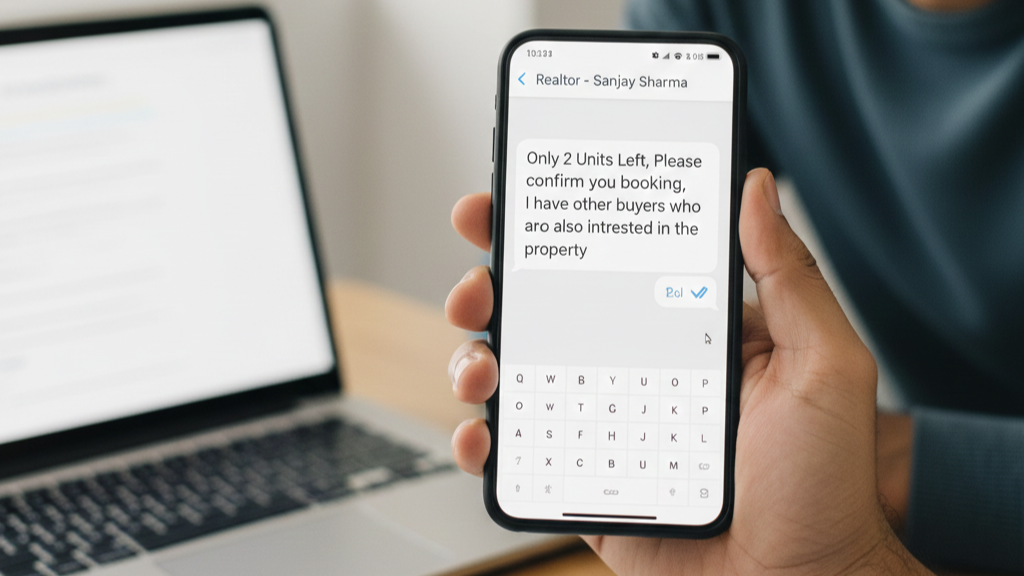
If you have ever looked at a property listing in Hyderabad, you may have noticed phrases like “Only 2 units left!” or “Hurry, limited inventory available.” Such statements are everywhere, and while they create a sense of urgency, they are not always what they seem. Developers and brokers often use scarcity tactics to accelerate sales, and buyers who act purely on these claims can end up making rushed decisions that may not align with their best interests.
Understanding the psychology behind scarcity-driven marketing and knowing how to verify actual availability can help buyers make smarter choices.
Scarcity Tactics in Real Estate
Scarcity is a well-known psychological trigger that pushes people to act quickly. In real estate, developers use this tactic to create a perception of high demand and limited supply. Even if a project has dozens of units remaining, marketing materials may highlight just a few available apartments to encourage immediate bookings.
This approach works because humans are wired to fear missing out. When buyers see “Only 2 units left,” they often feel that hesitation could cost them their dream home. Consequently, buyers may overlook due diligence, comparisons, or even financial planning.
Why Inventory Rarely Matches Claims
In many cases, the claimed scarcity does not reflect reality. Some of the reasons include:
Multiple listings: A single unit may appear in different sales channels or portals, giving the illusion of fewer units.
Blocking units: Developers sometimes hold back a portion of inventory for promotions, VIP clients, or internal sales, which can make it seem like only a few units remain.
Pending approvals or registrations: Units may be “booked” but not yet transferred, creating temporary shortages.
Staggered release: Developers often release units in phases. Earlier phases may be marketed as almost sold out to generate interest in the next phase.
The result is that the actual availability often differs from what marketing materials claim.
How Buyers Can Verify True Availability
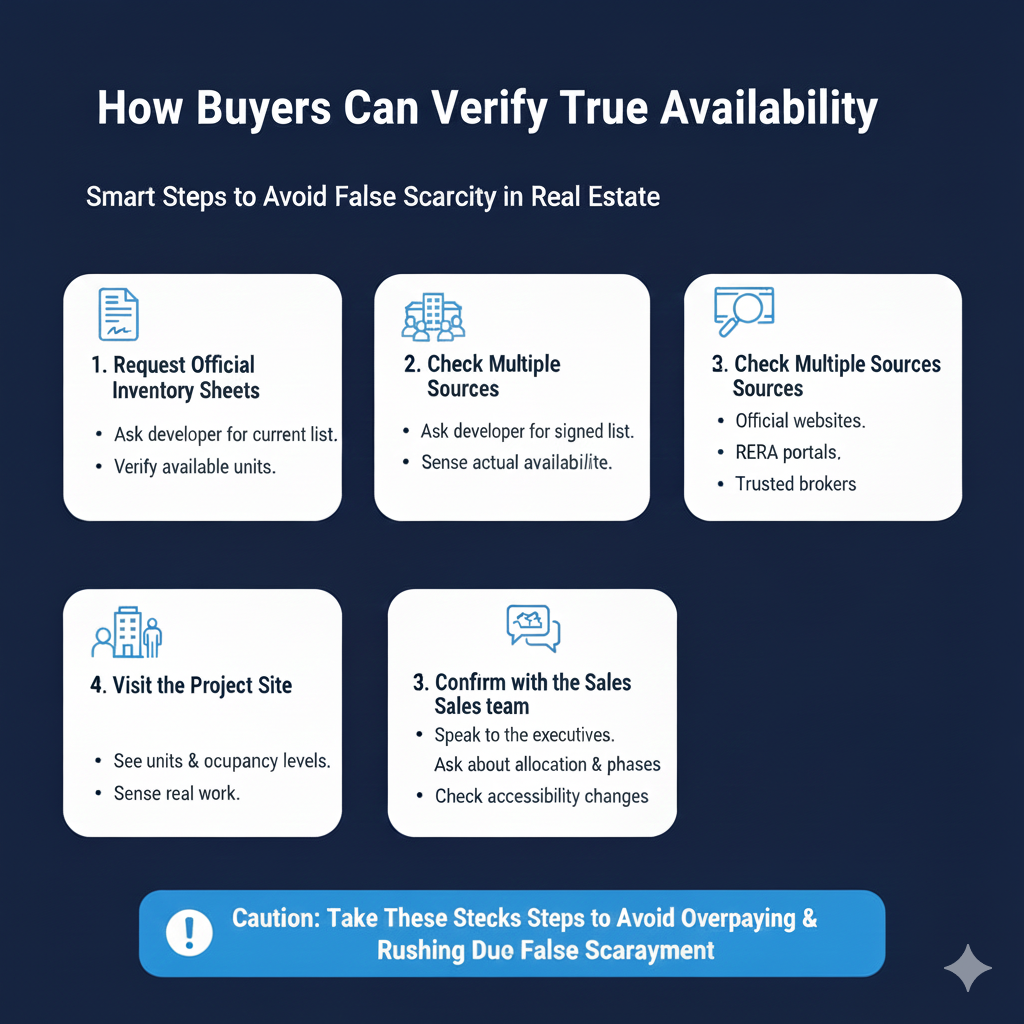
Savvy buyers do not rely solely on marketing messages. There are several practical steps to verify real inventory:
Request official inventory sheets: Ask the developer for a current, signed list of available units.
Check multiple sources: Cross-reference listings on official websites, RERA portals, and trusted brokers.
Visit the project site: Seeing the units and the occupancy levels firsthand can give a better sense of actual availability.
Confirm with the sales team: Speak with sales executives about unit allocation policies and phase-wise release schedules.
Review documentation: Check RERA approvals and project registration documents for the exact number of sanctioned units.
By taking these steps, buyers can avoid overpaying or rushing into a decision based on false scarcity.
The Risk of Acting on Scarcity Alone
Making a decision purely because of a “limited units” claim can lead to multiple risks:
Overpaying: Buyers may accept a higher price to secure a unit they think is rare.
Compromising on choice: They may pick a less desirable floor, facing, or unit type under pressure.
Delayed verification: Important checks like approvals, legal due diligence, and financing may be rushed or skipped.
Scarcity messaging is meant to influence emotions, but long-term satisfaction depends on logical evaluation and verification.
Using Scarcity Wisely
While scarcity tactics can be misleading, they can also be useful if interpreted correctly. Genuine limited availability does exist, especially in high-demand projects or smaller premium developments. Buyers should combine urgency with diligence by:
Confirming the actual number of units available.
Checking whether the claimed units are of the type, floor, and facing they prefer.
Evaluating the overall value and cost, rather than acting solely on urgency.
This approach allows buyers to make quick yet informed decisions without falling prey to psychological manipulation.
FAQ Section
Q1: Do all “Only 2 Units Left” claims reflect reality?
A1: No. Developers often use scarcity messaging as a marketing tactic, and the actual inventory may be higher.
Q2: How can I verify unit availability?
A2: Request official inventory sheets, check RERA records, visit the site, and confirm with the sales team.
Q3: Is acting on scarcity ever a good strategy?
A3: Yes, but only when combined with verification of actual availability, unit type, and approvals.
Q4: Why do developers create false scarcity?
A4: To trigger urgency and fear of missing out, which can accelerate bookings and increase perceived demand.
Q5: Can scarcity claims affect resale value?
A5: Not directly. Resale depends on location, amenities, maintenance, and market conditions rather than initial scarcity marketing.
Conclusion

The “Only 2 Units Left” claim is a powerful psychological tool in real estate marketing, but it can be misleading. While it may push buyers to act quickly, making a decision solely based on scarcity without verification can lead to overpayment or poor unit selection. Understanding the tactics behind these claims, checking actual availability, and combining urgency with due diligence ensures that buyers make informed decisions that align with both their financial and lifestyle goals.
At Relai – For right home, we guide buyers to separate marketing hype from reality, ensuring their property investment decisions are logical, verified, and future-proof.
Let’s Join Together to Bring Change to the World of Real Estate.
Thinking about your next home?
relai scores every project on data, not paid placements, and it's free for buyers.