The Less Talked About Downsides of Living in Gated Communities
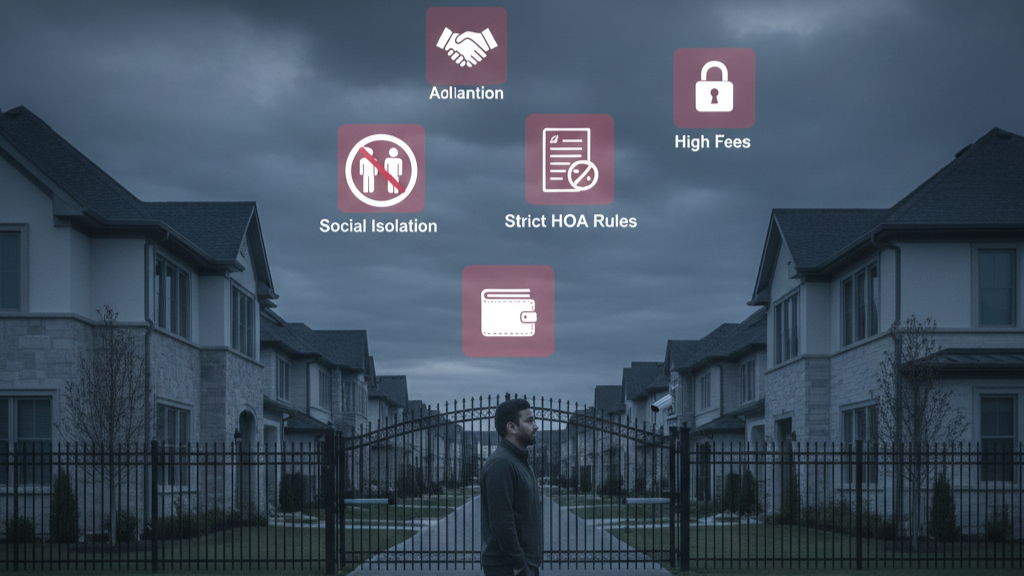
Gated communities are often marketed as the ideal urban lifestyle. Security, amenities, organised living, and a sense of exclusivity make them highly attractive to modern homebuyers. For many, especially first-time buyers, gated living feels like the safest and most future-ready choice.
However, beyond brochures and sample flats, gated communities come with trade-offs that are rarely discussed openly. These are not deal-breakers for everyone, but they do shape daily life, costs, and long-term satisfaction.
This article looks at the less talked about downsides of living in gated communities, focusing on rules, recurring costs, lifestyle compromises, and who this form of living truly suits.
Rules, Costs, and Lifestyle Trade-Offs
Gated communities operate on collective rules. These rules are necessary to manage shared spaces, but they also limit individual flexibility.
Renovations often require prior approvals. Simple changes like installing grills, modifying balconies, or placing name boards can need association consent. For buyers used to independent decision-making, this adjustment can feel restrictive.
Pet policies are another friction point. While most gated communities allow pets, rules around common area usage, lifts, and designated zones can create daily inconvenience for owners.
Costs are the most visible trade-off. Monthly maintenance charges cover security, housekeeping, landscaping, clubhouse staff, power backup, and common utilities. In premium projects, these costs can run into several rupees per square foot every month.
Over time, these expenses rise. Inflation, ageing infrastructure, and higher staffing costs are passed on to residents through maintenance revisions.
According to industry estimates by Knight Frank, maintenance costs in large gated communities typically increase every 3 to 5 years as projects mature (Knight Frank India Residential Insights).
Maintenance vs Actual Usage Reality
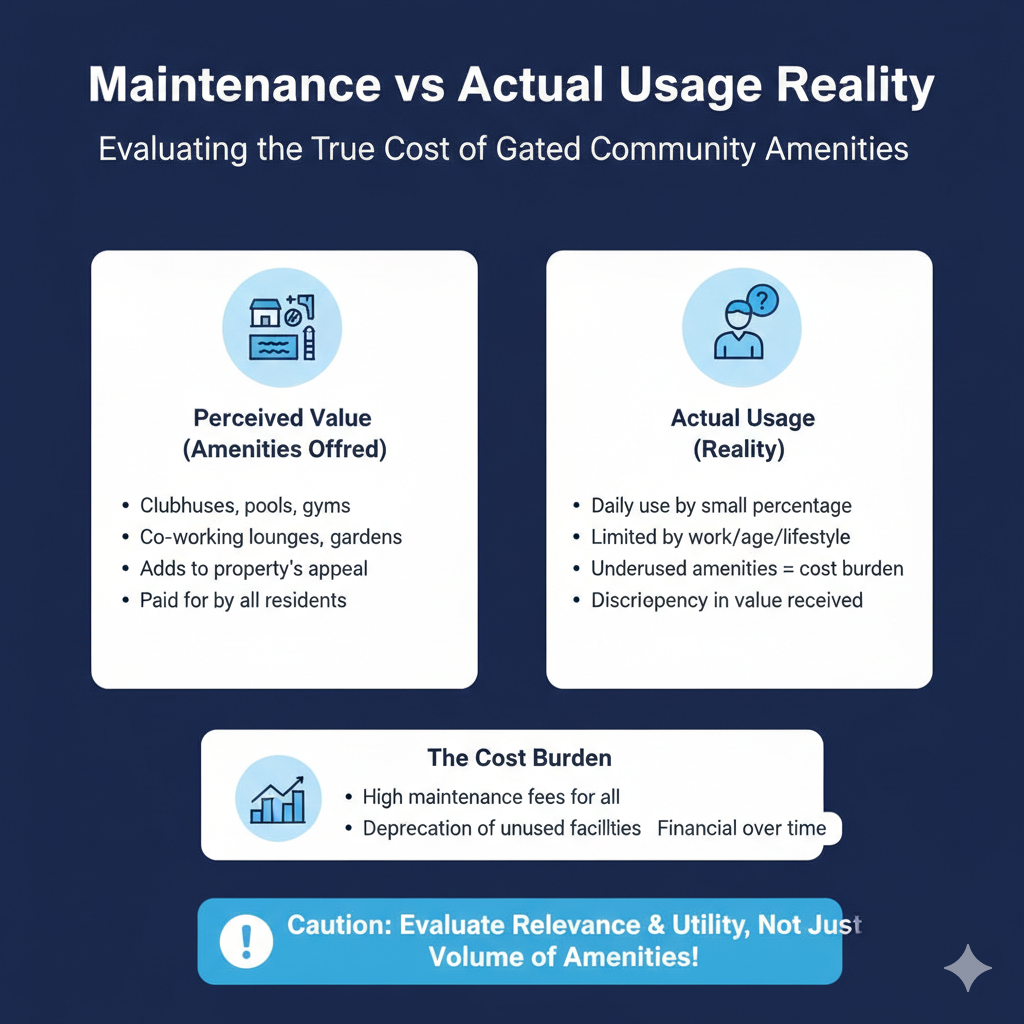
One of the biggest gaps in gated living is the difference between amenities paid for and amenities actually used.
Most projects offer clubhouses, swimming pools, gyms, indoor games, co-working lounges, and landscaped zones. While these add to perceived value, daily usage is often limited to a small percentage of residents.
Working professionals may not have time to use multiple amenities regularly. Senior residents may avoid certain facilities altogether. Yet, everyone pays equally for upkeep.
Over the years, maintenance of underused amenities becomes a cost burden rather than a benefit.
This does not mean amenities are useless. It means buyers should evaluate relevance, not volume.
Privacy and Community Dynamics
Gated communities promise privacy but also introduce structured social living.
Shared walls, common corridors, and frequent association interactions reduce personal anonymity. Disputes over noise, parking, renovations, or pets are common in dense communities.
Decision-making is collective. Budget approvals, rule changes, and vendor selections depend on association consensus, which can be slow and occasionally political.
For some residents, this sense of community is comforting. For others, it feels intrusive.
Exit and Resale Considerations
Resale in gated communities is usually liquid in strong urban locations. However, there are limitations.
Buyers compare multiple similar units within the same project. This creates internal competition and limits price differentiation.
Older gated communities also face a perception challenge. As newer projects launch with upgraded amenities, older ones may need price corrections unless location demand remains very strong.
Maintenance history and association management quality directly influence resale appeal.
Who Gated Living Really Suits
Gated communities work well for buyers who value security, predictability, and managed environments.
Families with children often benefit from controlled play areas, internal roads, and community activities. Working professionals appreciate organised facilities and low involvement in daily maintenance decisions.
NRIs and buyers who travel frequently find gated communities easier to manage due to security and professional upkeep.
However, buyers who prioritise independence, lower recurring costs, or customisation freedom may feel constrained over time.
FAQ Section
Are maintenance costs in gated communities high?
They are higher than standalone buildings due to amenities, security, and staffing. Costs also increase as the project ages.
Do residents have flexibility to modify their homes?
Limited flexibility exists. Most modifications require association approvals to maintain uniformity and safety.
Are amenities worth paying for?
They are valuable only if they align with your lifestyle. Underused amenities still add to monthly costs.
Is resale easy in gated communities?
Resale is generally easier in demand-driven locations, but pricing is influenced by internal competition and maintenance quality.
Conclusion
Gated communities are not universally good or bad. They offer structure, safety, and convenience, but demand compromises in cost, flexibility, and privacy.
The key is alignment. Buyers who understand these trade-offs and choose gated living consciously tend to be satisfied. Those who enter based only on marketing promises often discover the downsides later.
A good home is not defined by gates or amenities, but by how well it fits your lifestyle and long-term priorities.
Let’s Join Together to Bring Change to the World of Real Estate
Thinking about your next home?
relai scores every project on data, not paid placements, and it's free for buyers.