The Hidden Cost of “Free” Car Parking in Gated Communities
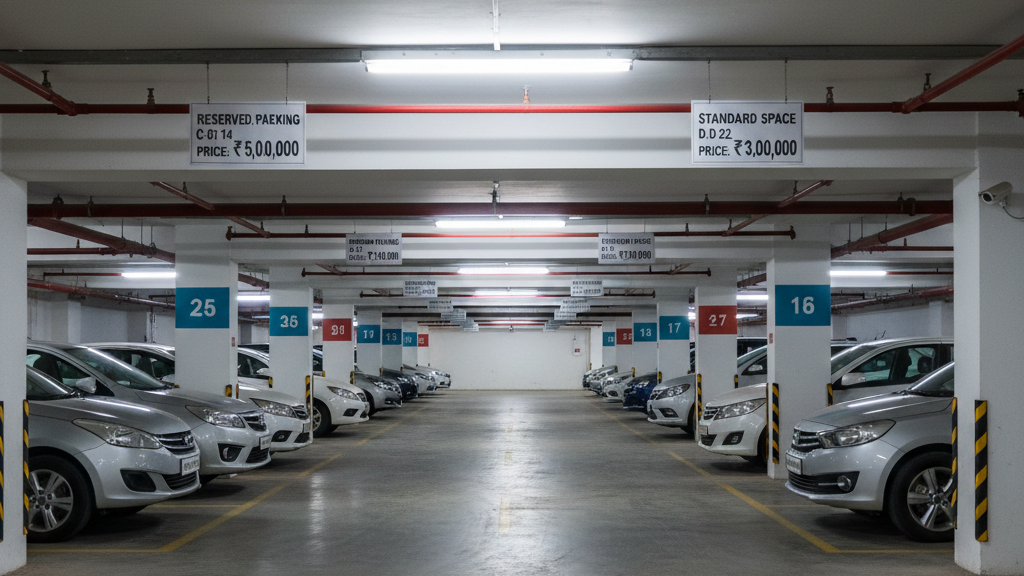
When buying an apartment in a gated community, one phrase buyers hear almost everywhere is “free car parking.” Builders often present parking as a complimentary feature, making it sound like an added benefit that comes at no extra cost. For many buyers, this feels like a small win in an otherwise expensive purchase. However, the truth is far more complex. Car parking in gated communities is rarely free. Its cost is simply concealed within the overall pricing structure of the project.
Understanding how parking costs are embedded into apartment prices, the differences between parking types, and their long-term impact can help buyers make more informed and financially sound decisions.
What “Free Parking” Really Means
In most gated communities, parking is not listed as a separate charge because regulations in many states restrict the outright sale of parking spaces. To work around this, developers usually bundle the cost of parking construction into the price per square foot of the apartment.
This means every buyer pays for parking indirectly, whether they need it or not. Even households with no car end up absorbing part of this cost. In projects with multiple basement levels or advanced parking infrastructure, the construction expense can be substantial, often running into several crores for the entire development. That cost does not disappear. It is distributed across all units through a higher PSF.
As a result, two projects in similar locations with similar specifications can have noticeably different prices, simply because one has more expensive parking infrastructure than the other.
How Parking Infrastructure Drives Up Project Cost
Parking construction is not cheap, especially in dense urban developments. Basement parking requires deep excavation, soil stabilization, waterproofing, ventilation systems, fire safety equipment, and continuous drainage solutions to prevent water seepage. Each of these elements adds both construction and long-term operational costs.
Stilt parking is comparatively cheaper, but it still requires structural support and compliance with safety norms. Open parking is the least expensive option, but even that involves land allocation and basic surface development.
When developers include these costs in the PSF, buyers may feel they are paying only for their apartment. In reality, a portion of that price is going toward parking infrastructure that they will continue to maintain through monthly charges.
Open, Stilt, and Basement Parking: Not All Are Equal
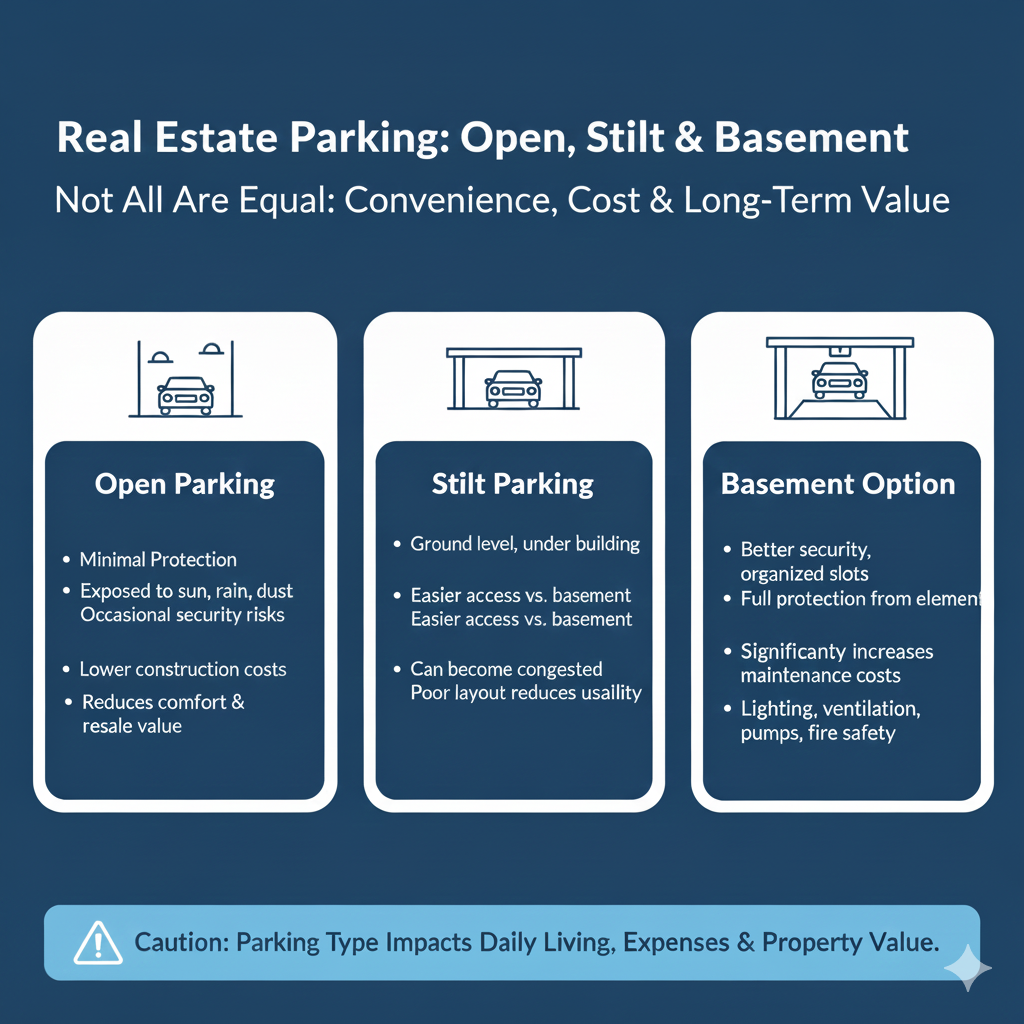
The type of parking provided makes a significant difference in both daily convenience and long-term expenses.
Open parking is the most basic option and offers minimal protection. Vehicles are exposed to sun, rain, dust, and occasional security risks. While this keeps construction costs lower, it reduces overall comfort and can become a drawback during resale.
Stilt parking, located under the building at ground level, offers better protection from weather and is easier to access than basements. However, stilt areas can become congested over time, especially in communities where families own multiple vehicles. Poor layout planning can further reduce usability.
Basement parking is often seen as the most premium option. It provides better security, organized parking slots, and protection from external elements. However, basement parking significantly increases maintenance costs. Lighting, ventilation fans, water pumps, fire safety systems, and security monitoring operate continuously and are paid for by residents every month.
Many buyers appreciate the convenience of basement parking but overlook the long-term financial impact of maintaining it.
The Long-Term Cost Through Maintenance Charges
One of the most overlooked aspects of parking is its effect on monthly maintenance fees. Projects with extensive basement parking typically have higher common area electricity consumption and maintenance requirements. Over time, these recurring costs add up and can make a noticeable difference in annual expenses.
Buyers often compare only the purchase price between projects and ignore ongoing costs. A slightly cheaper apartment with lower maintenance can sometimes be a better financial decision than a premium-priced unit with expensive infrastructure that offers limited additional value.
Parking and Its Impact on Resale Value
Parking plays a critical role in resale, but not always in the way buyers expect. As car ownership increases, covered and secure parking has become a basic expectation, not a luxury. Flats with poorly designed parking layouts, difficult ramps, or inconvenient slot locations often face slower resale or lower demand.
At the same time, the resale market does not always reward the original premium paid for expensive parking infrastructure. Buyers focus more on usability than on construction cost. If two flats are similar in size and layout, but one carries higher maintenance charges due to basement parking, resale buyers may prefer the lower-cost option.
This is one reason why identical flats within the same gated community can sell at different prices based on parking allocation, access ease, and overall convenience.
What Buyers Should Check Before Buying
Before assuming parking is a free benefit, buyers should ask specific questions. It is important to confirm the type of parking allotted, whether the slot is exclusive or subject to reassignment, and if additional parking will be charged in the future. Buyers should also check how parking areas are defined in the agreement and whether they are part of common areas.
Understanding how parking affects monthly maintenance, long-term usability, and resale demand can prevent unpleasant surprises later. Parking should be evaluated with the same seriousness as location, floor plan, and builder reputation.
Conclusion

In gated communities, car parking is not a bonus feature. It is a built-in cost that quietly influences the price you pay, the maintenance you incur, and the resale value you eventually receive. What is marketed as “free” is often one of the most misunderstood components of apartment pricing.
Buyers who take the time to understand parking economics are better positioned to judge whether a project is genuinely worth its asking price. In real estate, clarity always costs less than assumptions.
Thinking about your next home?
relai scores every project on data, not paid placements, and it's free for buyers.