Tenant Rights Every Residential Property Investor Must Understand
Residential rental income is often seen as “passive,” but in reality, it is governed by clear legal boundaries. Many property investors in Hyderabad and across India run into trouble not because tenants are difficult, but because tenant rights are misunderstood or ignored. In 2026, with rising rental demand and tighter regulations, understanding tenant rights is no longer optional for landlords. It is a risk-management requirement.
This guide explains the key legal rights tenants have under current laws and how landlords can protect their interests without creating conflict or legal exposure.
Why Tenant Rights Matter for Property Investors
Most disputes between landlords and tenants do not start with bad intentions. They start with unclear expectations. Investors often assume ownership gives them full control over the property, while tenants assume rent payment gives them full freedom. The law sits somewhere in the middle.
Tenant rights are designed to prevent harassment, ensure basic living dignity, and create balance. When landlords understand these rights clearly, they can structure agreements, pricing, and exit clauses in a way that protects income without legal friction.
Ignoring tenant rights does not strengthen a landlord’s position. It weakens it.
The Legal Framework Governing Tenant Rights
In most Indian states, including Telangana, tenant rights are governed by a combination of:
State Rent Acts
The Model Tenancy Act (where adopted)
Indian Contract Act
Transfer of Property Act
Even if a rental agreement is privately drafted, these laws override unfair clauses. This means a landlord cannot contractually remove basic tenant protections, even if the tenant signs the agreement.
Right to Peaceful Possession
Once a tenant occupies a property legally, they have the right to peaceful and uninterrupted use of the premises for the duration of the agreement.
This means:
The landlord cannot enter the property without prior notice
Utilities like water, power, or parking cannot be cut off
Threats, pressure, or forced eviction is illegal
Many investors make the mistake of treating the property like an extension of their personal space. Legally, once rented, it becomes the tenant’s home until the agreement ends.
For landlords, respecting this right avoids criminal complaints and civil disputes.
Right to Fair Rent and Transparency
Tenants have the right to know:
The agreed rent
Any escalation terms
Maintenance responsibilities
Security deposit amount and refund terms
Sudden rent hikes without contractual backing are not legally enforceable. If rent escalation is not clearly written into the agreement, landlords cannot impose it later.
Investors should remember that verbal promises have little value in court. Clear documentation protects both sides.
Right to Basic Habitability
A tenant has the right to live in a property that is structurally safe and fit for living.
This includes:
Safe electrical wiring
Functional water supply
Proper sanitation
Structural stability
If a property develops serious defects not caused by tenant misuse, the landlord is responsible for fixing them. Ignoring habitability issues can allow tenants to withhold rent legally in some cases.
For investors, routine maintenance is not an expense. It is legal protection.
Protection Against Arbitrary Eviction
A tenant cannot be evicted just because the landlord wants the property back suddenly.
Eviction must follow:
Notice period mentioned in the agreement
Valid legal grounds
Proper legal process if disputed
Lockouts, intimidation, or removing tenant belongings are illegal, even if rent is overdue.
This is where many investors panic and make costly mistakes. The correct route is always notice, documentation, and legal procedure.
Right to Security Deposit Refund
Security deposits exist to cover damages, not as a profit tool.
Tenants have the right to:
Clear explanation of deductions
Refund within a reasonable timeframe
Proof of damage where deductions are made
Unjustified withholding of deposits is one of the most common causes of rental disputes and online complaints against landlords.
Smart investors maintain move-in and move-out condition records to avoid disputes.
Right to Privacy
Even if the landlord owns the property, tenants have the right to privacy.
This includes:
No surprise visits
No interference with personal life
No monitoring without consent
Landlords can inspect the property, but only with reasonable notice and during acceptable hours.
Respecting privacy builds trust and reduces tenant turnover.
How Landlords Can Protect Themselves Without Conflict
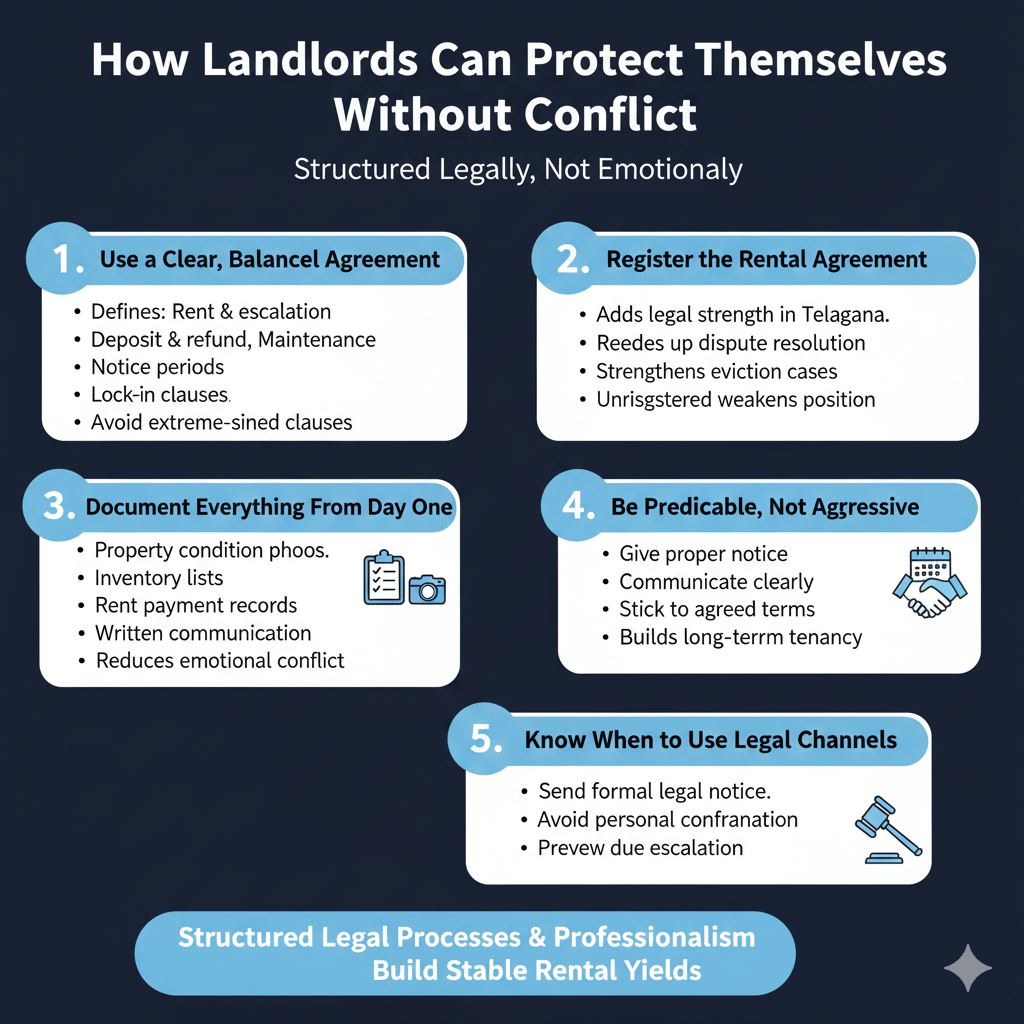
Understanding tenant rights does not mean landlords lose control. It means control must be structured legally, not emotionally.
Use a Clear, Balanced Rental Agreement
A well-drafted rental agreement is the strongest protection for both parties.
It should clearly define:
Rent amount and escalation
Deposit and refund process
Maintenance responsibilities
Notice periods for exit
Lock-in clauses if any
Avoid extreme one-sided clauses. Courts tend to strike them down, leaving landlords exposed.
Register the Rental Agreement
In Telangana, registering the rental agreement adds legal strength.
Registered agreements:
Reduce false claims
Speed up dispute resolution
Strengthen eviction cases if needed
Unregistered agreements often weaken a landlord’s legal position, even if terms are fair.
Document Everything From Day One
Professional landlords treat renting like a system, not a favor.
Maintain:
Property condition photos
Inventory lists
Rent payment records
Communication via written channels
Documentation reduces emotional conflict and protects rental income.
Be Predictable, Not Aggressive
Most tenant disputes escalate due to tone, not money.
Giving proper notice, communicating clearly, and sticking to agreed terms often resolves issues without legal involvement. Tenants are more cooperative when landlords are consistent and professional.
Predictability builds long-term tenancy, which improves rental yield stability.
Know When to Use Legal Channels
If a dispute escalates, landlords should:
Send formal legal notice
Avoid personal confrontation
Follow due process
Using the legal route early prevents matters from becoming criminal complaints or social media reputational issues.
Why Tenant-Friendly Landlords Win Long Term
In Hyderabad’s evolving rental market, good tenants have choices. Investors who respect tenant rights experience:
Lower vacancy periods
Better tenant quality
Fewer disputes
Stable long-term returns
Tenant rights are not obstacles. They are guardrails that keep rental income predictable.
FAQ
Q1: What are the key rights tenants have under Indian law?
A1: Tenants are entitled to safe and habitable housing, protection from unlawful eviction, fair notice periods, and dispute resolution under state tenancy laws.
Q2: How can landlords protect themselves legally?
A2: Draft clear rental agreements, register the lease as required, maintain records of rent payments, and adhere to notice and eviction procedures.
Q3: Can tenants refuse rent increases?
A3: State-specific laws regulate rent revisions; tenants may challenge excessive hikes if agreements or local rules are violated.
Q4: What should investors check before renting a property?
A4: Verify tenant history, draft a legally sound lease, check occupancy limits, and include maintenance responsibilities in the agreement.
Q5: How can disputes be minimized between landlords and tenants?
A5: Transparent agreements, regular communication, and adherence to legal procedures reduce conflicts and ensure smoother property management.
Conclusion

Residential property investment is not just about buying the right asset. It is about managing people, expectations, and laws. Understanding tenant rights protects landlords from disputes, legal exposure, and income disruption.
The strongest landlords are not the toughest ones. They are the most informed ones.
At Relai – For right home, we help investors structure rental ownership the right way, balancing legal safety with long-term returns.
Let’s Join Together to Bring Change to the World of Real Estate.
Thinking about your next home?
relai scores every project on data, not paid placements, and it's free for buyers.