Stamp Duty in India 2025: Latest Rates, Rules, and How It Affects Property Buyers
Stamp Duty in India 2025: Latest Rates, Rules, and How It Affects Property Buyers

Introduction
Buying property in India involves more than just paying the price of the land or flat. Among the essential legal payments, stamp duty plays a key role. It’s the government’s way of validating ownership and recording the transaction. Yet, many buyers either overlook or misunderstand its importance — leading to penalties or disputes later.
In 2025, several states have revised their stamp duty rates and registration processes to promote digital efficiency and transparency. Whether you’re an NRI investor or a first-time buyer, understanding how stamp duty works can help you plan better, avoid surprises, and legally secure your property.
What is Stamp Duty?
Stamp duty is a tax levied by the state government on legal documents that record property transactions. It acts as proof of ownership and ensures that the buyer’s rights over the property are officially recognized.
Think of it as a legal stamp that validates your sale deed. Without it, your ownership may not be enforceable in court.
How Stamp Duty Works
When a property is bought or transferred, the buyer must pay a percentage of the property’s value as stamp duty. This percentage varies by:
State (each has its own rates)
Type of property (residential, commercial, agricultural)
Ownership type (individual, joint, female ownership)
Property location (urban or rural area)
Once paid, the sale deed is registered with the Sub-Registrar of Assurances, making it legally valid.
Stamp Duty Rates in 2025 (Major States)
Here’s a quick look at the updated stamp duty rates for 2025 across major states in India:
State | Standard Rate | Female Owner Rate | Registration Charges |
Telangana | 4% | 4% | 1% |
Maharashtra | 5% (Mumbai), 6% (rest of state) | 4% (Mumbai), 5% (rest) | 1% |
Karnataka | 5% | 4% | 1% |
Tamil Nadu | 7% | 7% | 1% |
Delhi | 6% (men), 4% (women) | 4% | 1% |
Uttar Pradesh | 7% | 6% | 1% |
Source: State Government Notifications 2025
How Stamp Duty is Calculated
Stamp duty is usually calculated on the higher of:
The property’s market value, as assessed by the government’s ready reckoner or circle rate, or
The transaction value mentioned in the sale deed.
Example:
If the circle rate of a property in Hyderabad is ₹80 lakh, but the sale deed mentions ₹75 lakh, the stamp duty will be calculated on ₹80 lakh.
So, for a 4% stamp duty:
→ ₹80,00,000 × 4% = ₹3,20,000
Why Stamp Duty Matters
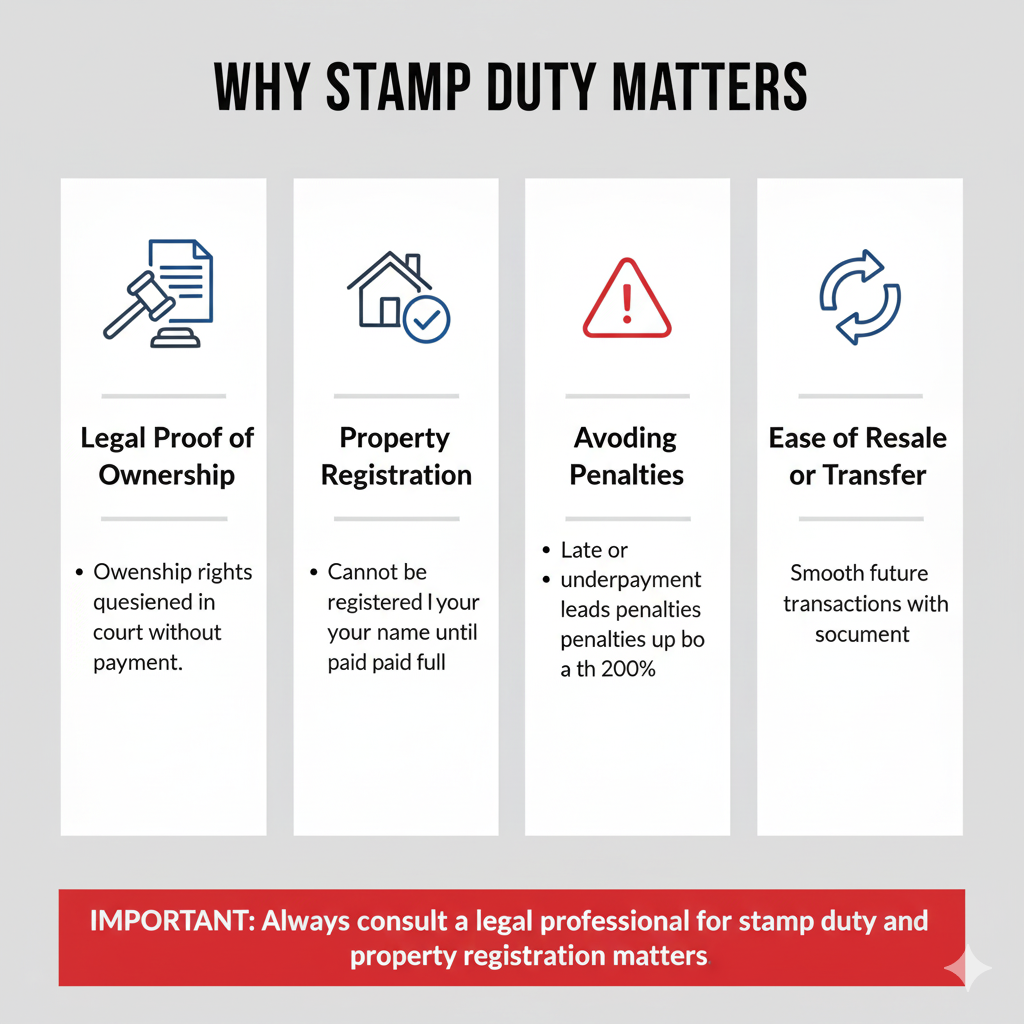
Legal Proof of Ownership
Without proper stamp duty payment, your ownership rights may be questioned in court.Property Registration
The property cannot be registered in your name unless the stamp duty is paid in full.Avoiding Penalties
Late or underpayment can lead to penalties up to 200% of the original duty.Ease of Resale or Transfer
A properly stamped and registered document makes future transactions smooth and legally clear.
Digital Payment and E-Stamping in 2025
With digital transformation in governance, most states now allow online stamp duty payment through e-stamping portals such as:
Stock Holding Corporation of India Limited (SHCIL)
State property registration websites (like Telangana IGRS, MahaOnline, etc.)
This not only eliminates the risk of fake stamp papers but also enables instant verification and record access.
Process for e-stamping:
Visit the official SHCIL or state registration website.
Enter property and buyer details.
Generate challan or e-stamp certificate.
Submit proof at the sub-registrar’s office during registration.
Impact of Stamp Duty on Property Buyers
Stamp duty can add 4–8% to the total property cost, so it’s crucial to budget it early. For example:
Property Value | Stamp Duty (4%) | Registration Fee (1%) | Total Extra Cost |
₹50 lakh | ₹2 lakh | ₹50,000 | ₹2.5 lakh |
₹1 crore | ₹4 lakh | ₹1 lakh | ₹5 lakh |
Many states also offer rebates for female ownership, first-time buyers, or green-certified buildings — helping reduce costs.
Stamp Duty in Real Estate Investments
For NRIs and investors, stamp duty directly affects:
ROI calculations (since it adds to acquisition cost)
Capital gains computation during resale
Rental yields, as higher initial costs may affect breakeven points
Some investors prefer commercial properties or REITs to avoid paying stamp duty altogether — since those are unit-based investments, not physical property transactions.
Common Mistakes to Avoid
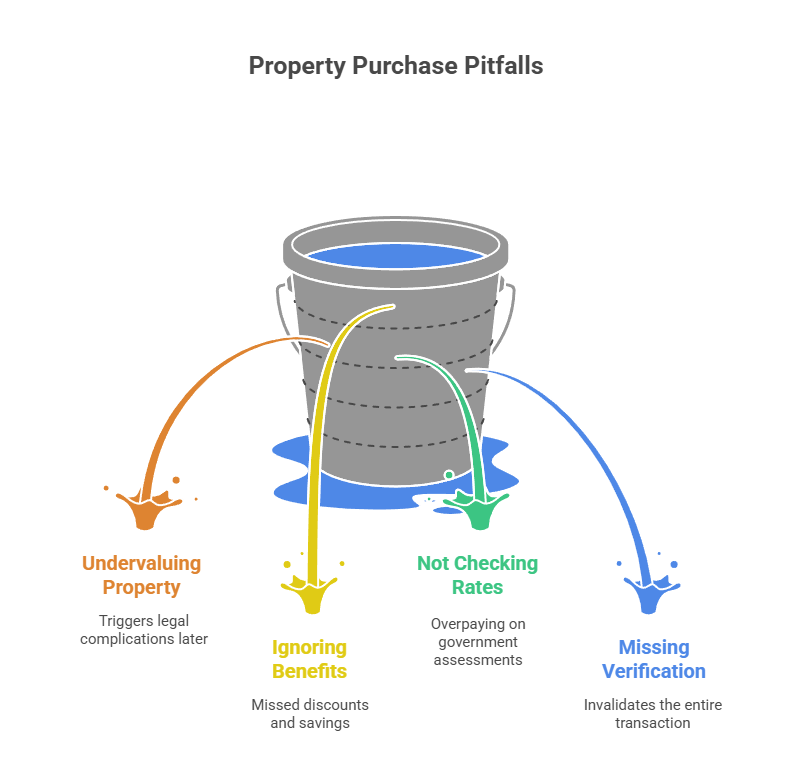
Undervaluing property to save on duty — can trigger legal issues.
Ignoring gender or location benefits — some discounts apply only when the property is solely in a woman’s name.
Not checking circle rates — always verify the government-assessed value before paying.
Missing e-stamp verification — fake or unverified papers can nullify the transaction.
FAQ Section
1. Who is responsible for paying stamp duty — buyer or seller?
Typically, the buyer pays the stamp duty unless stated otherwise in the sale agreement.
2. Can I claim tax benefits on stamp duty payments?
Yes, under Section 80C of the Income Tax Act, you can claim up to ₹1.5 lakh for stamp duty and registration charges, applicable only for residential property purchases.
3. What happens if I don’t pay stamp duty?
The document becomes inadmissible in court, and you may face penalties up to 200% of the unpaid amount.
4. Are e-stamp papers valid across states?
No. E-stamps are state-specific, and the certificate must be generated from the respective state’s authorized portal.
5. Can stamp duty rates change mid-year?
Yes, state governments periodically revise rates through budget announcements or notifications, depending on market conditions.
Conclusion

Stamp duty might seem like just another expense, but it’s one of the most critical steps in establishing your legal ownership. As India’s real estate market matures and digitizes, transparency in payments and registration is becoming the new norm.
If you’re planning to buy property in 2025, factor in stamp duty early — and always verify the rates and rules applicable in your state. It’s a small step that ensures peace of mind for years to come.
Let’s Join Together to Bring Change to the World of Real Estate.
Thinking about your next home?
relai scores every project on data, not paid placements, and it's free for buyers.