Small Property Issues That Often Turn Into Big Legal Disputes
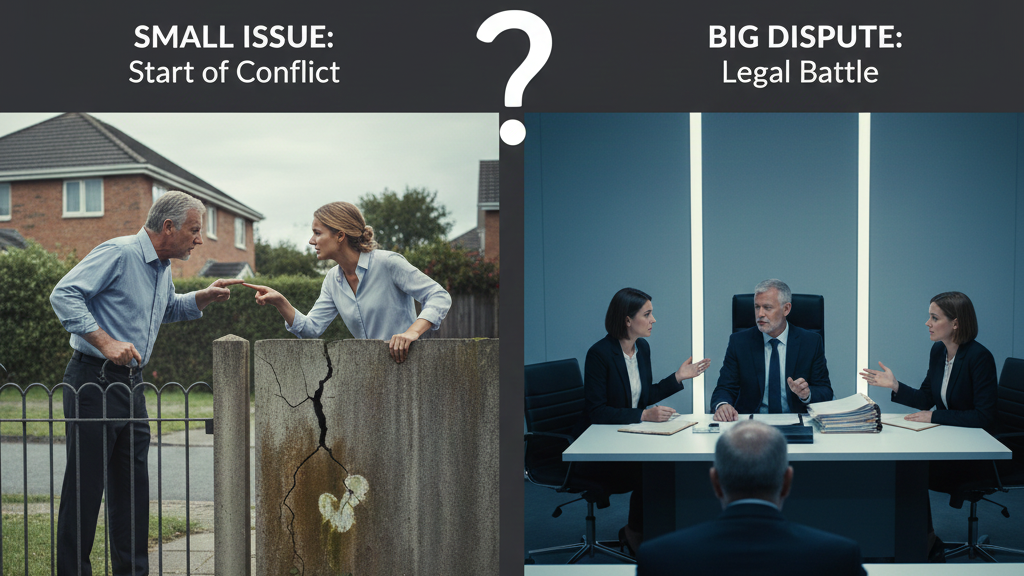
Most property disputes do not begin with fraud or dramatic conflicts. They start with small issues that buyers ignore, postpone, or assume will “get sorted later.” In Indian real estate, these minor gaps often grow into long legal battles that drain time, money, and peace of mind.
This article explains the common small property issues buyers overlook, how documentation gaps slowly turn into serious disputes, and the simple checks that can prevent years of litigation. The focus is practical awareness, not fear.
Common Disputes Buyers Ignore Early
Many legal disputes begin with access and boundary assumptions. Buyers assume the approach road is legally approved or that common areas are clearly demarcated. Years later, neighbours or authorities dispute these assumptions, leading to access restrictions or litigation.
Another frequent issue is parking. Verbal assurances about exclusive parking, visitor slots, or future allocations often have no legal backing. When associations form or ownership changes, these verbal commitments carry no weight.
Undivided share of land (UDS) is also widely ignored. Buyers focus on carpet area and amenities but fail to verify whether the UDS mentioned in documents matches the project layout and approvals. This becomes critical during redevelopment or resale.
Even minor deviations between sanctioned plans and actual construction can cause problems. What seems like a harmless layout change may later attract penalties or block occupancy certificates.
How Documentation Gaps Create Long-Term Problems
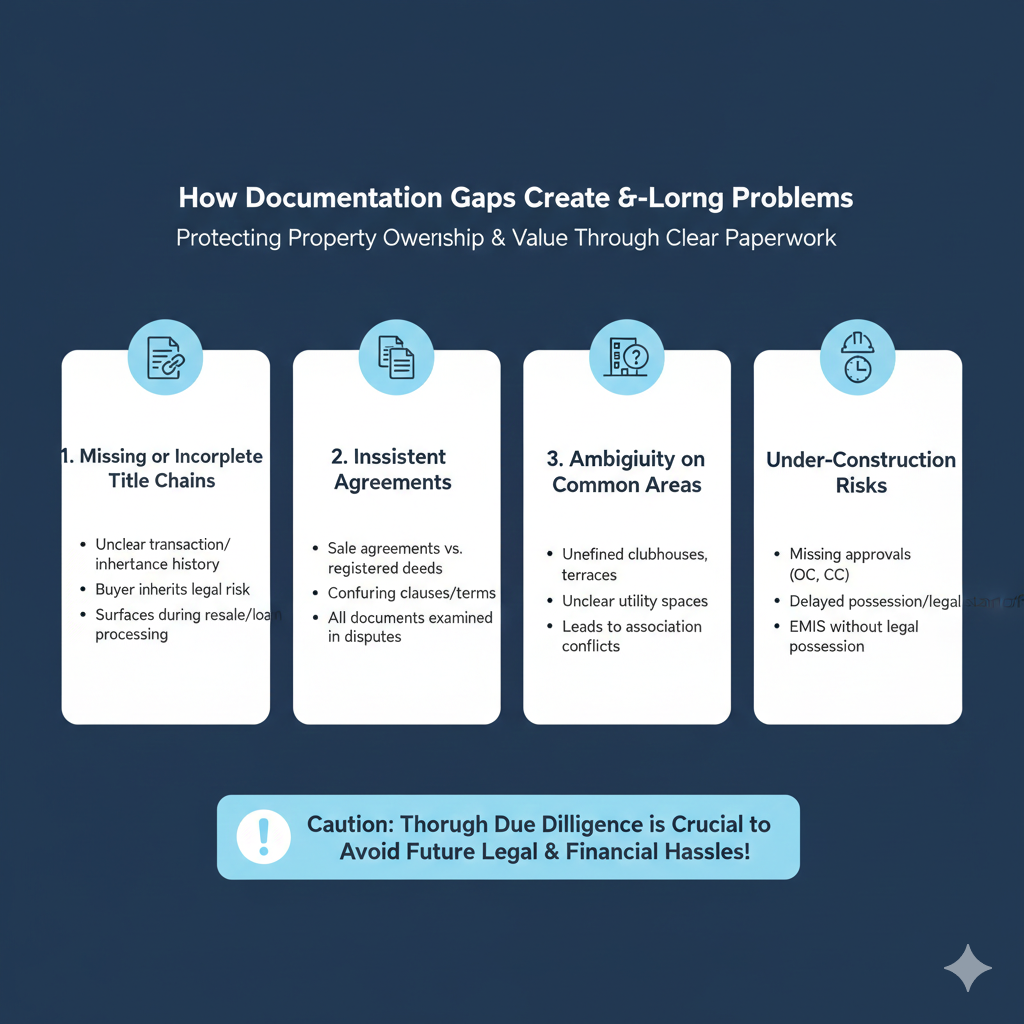
Property ownership is proven on paper, not intent.
Missing or incomplete title chains are a major source of disputes. If earlier transactions, inheritance records, or land conversions are unclear, the current buyer inherits the risk. These issues often surface during resale or loan processing.
Sale agreements that differ from registered deeds create confusion. Buyers sometimes sign multiple documents with varying clauses, assuming the final registration overrides earlier terms. In disputes, all documents are examined together.
Lack of clarity on common areas and facilities is another issue. Clubhouses, terraces, and utility spaces must be clearly defined in approved plans and sale deeds. Ambiguity here leads to association-level conflicts.
For under-construction properties, missing approvals or delayed occupancy certificates can turn possession into a legal standoff. Banks may stop disbursements, and buyers are left servicing EMIs without legal possession (Real Estate Regulatory Authority – India).
Disputes That Surface During Resale
Many buyers believe disputes end once possession is taken. In reality, resale is when dormant issues emerge.
Capital gains tax calculations, mismatched registered values, or past under-registration can trigger scrutiny. Buyers may also discover easements, rights of way, or utility access claims that were never disclosed earlier.
According to the National Judicial Data Grid, property-related cases form a significant portion of long-pending civil litigation in India, often stretching over several years (National Judicial Data Grid).
What appeared to be a small oversight becomes a negotiation breaker.
Simple Checks That Prevent Big Legal Battles
Many disputes are avoidable with basic diligence.
Buyers should verify the complete title chain for at least 20 to 30 years, ensuring continuity and legal transfers. This includes checking for mortgages, litigation, or acquisition notices.
Approved layout plans and building permissions should match the actual project. Any deviation should be questioned before purchase.
All promises related to parking, storage, or exclusive rights must be recorded in the registered sale deed, not just brochures or emails.
For apartments, verifying UDS allocation and common area definitions protects long-term value.
Engaging a competent property lawyer before signing is not an expense. It is risk insurance.
Why Buyers Still Ignore These Issues
Most buyers focus on price negotiation and possession timelines. Legal diligence feels abstract until a problem arises.
Developers and sellers often downplay concerns to maintain deal momentum. Buyers, eager to close, accept explanations without written confirmation.
Unfortunately, courts rely on documents, not assurances.
FAQ Section
What is the most common cause of property disputes?
Incomplete or unclear documentation is the most common cause, especially gaps in title chain and approvals.
Do verbal promises have legal value in property deals?
No. Only what is documented in registered agreements and sale deeds carries legal weight.
Can small plan deviations really cause legal trouble?
Yes. Even minor deviations can block occupancy certificates or invite penalties and disputes later.
Is legal due diligence necessary for ready properties?
Yes. Disputes can exist even in occupied or resale properties. Due diligence is essential in all cases.
Conclusion
Big property disputes rarely start big. They grow silently from small ignored issues, missing documents, and verbal assumptions. In Indian real estate, prevention is far easier and cheaper than legal correction.
Buyers who invest time in basic checks protect not just their money, but their long-term peace of mind. A property bought right is one that never needs a courtroom.
Let’s Join Together to Bring Change to the World of Real Estate
Thinking about your next home?
relai scores every project on data, not paid placements, and it's free for buyers.