Redevelopment Risks & Buyer Warnings: What Homebuyers Must Know in 2025
Redevelopment Risks & Buyer Warnings: What Homebuyers Must Know in 2025
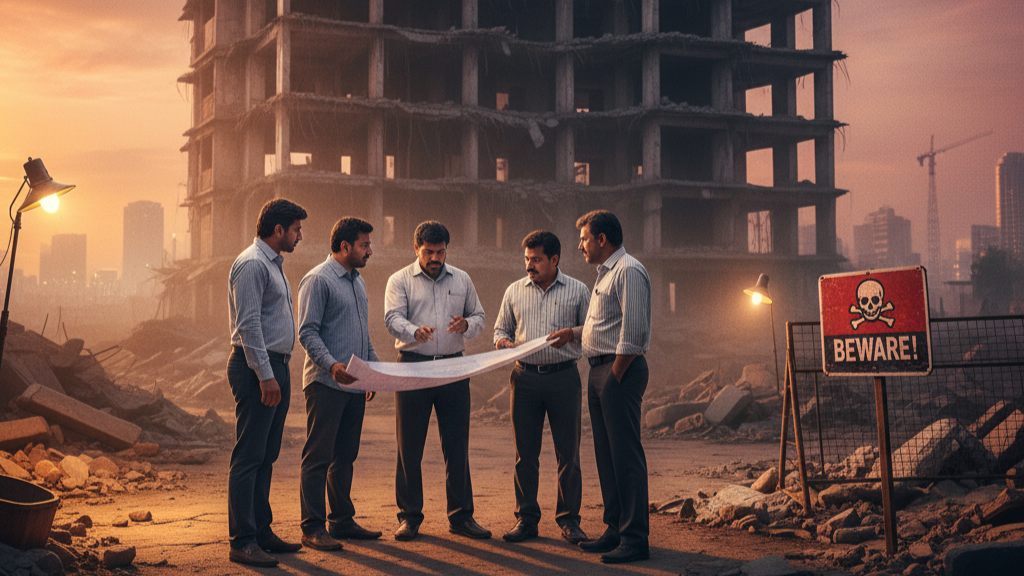
Redevelopment has become one of the most active segments of India’s real estate market, especially in land-scarce cities like Mumbai, Delhi, and Pune. As old buildings age and land values rise, redevelopments promise modern homes, better amenities, and more secure living environments. But this fast-growing segment comes with serious risks that many homebuyers overlook.
Across major cities, disputes, stalled projects, and legal battles are rising. This has triggered strong public warnings from former officials and regulatory experts, especially after repeated cases of buyers losing money or facing long delays. The concerns may have started in Mumbai, but they now hold national relevance because under-construction redevelopments are increasing everywhere, including Tier-1.5 and Tier-2 cities.
A recent alert from a former MahaRERA conciliation forum member, covered widely in industry discussions and news reports (such as Moneycontrol – Housing Redevelopment Concerns, 2024), highlighted the growing legal pitfalls facing redeveloped projects. Buyers are being advised to exercise caution because protections remain weak, and developers often overpromise or take on projects they cannot complete.
Why Redevelopments Are Rising
Redevelopment is growing because:
– Land in metro cores is limited
– Many buildings constructed before 1990 are no longer structurally reliable
– Homeowners want modern amenities without buying new land
– Developers find it profitable due to higher FSI and premium locations
But this rush to launch new redevelopment projects has created a larger problem—too many proposals with too little regulatory scrutiny.
Stalled Redevelopments Are Increasing
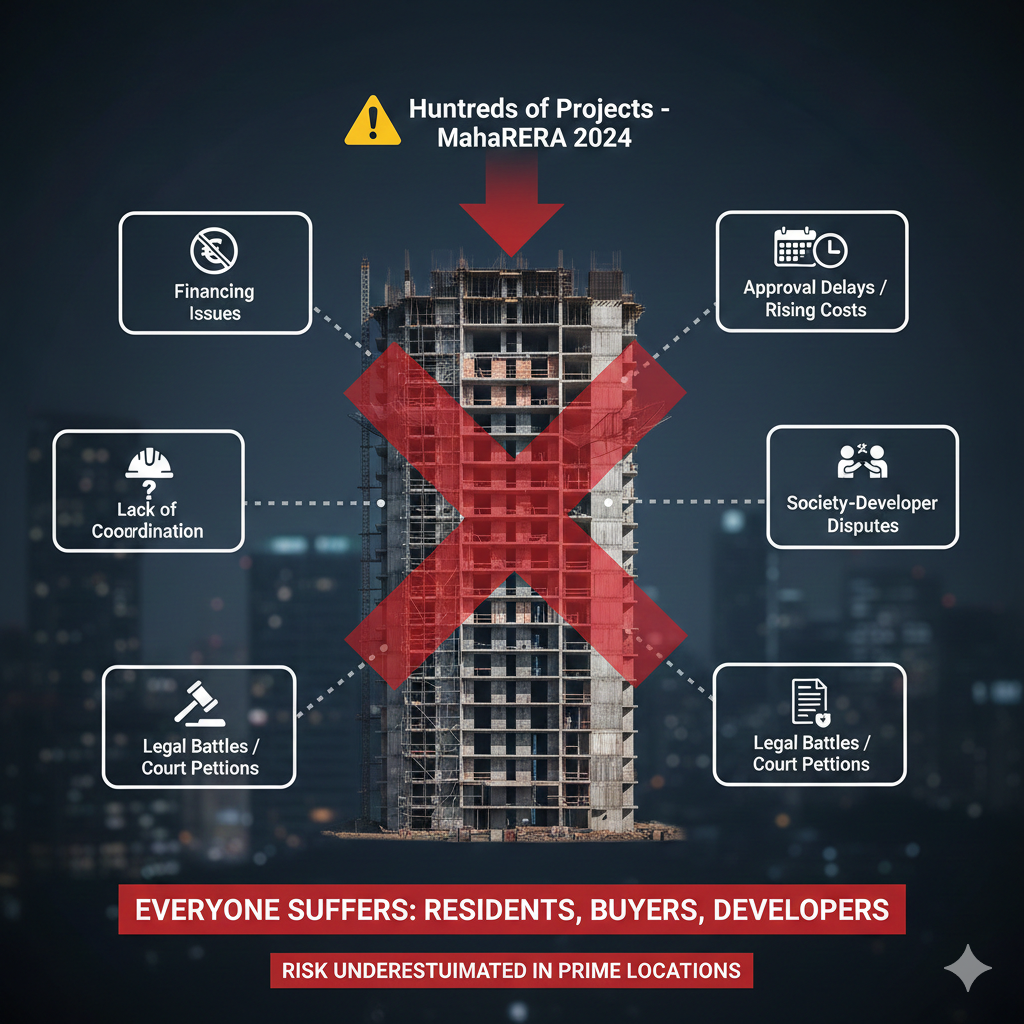
India has seen a clear rise in stalled and terminated redevelopment projects. According to MahaRERA Project Status Reports 2024, hundreds of redevelopment proposals have either slowed down or entered dispute resolution due to:
– Financing issues
– Disputes between societies and developers
– Delays in approvals
– Rising construction costs
– Lack of coordination between tenants and builders
When a redevelopment gets stuck, every stakeholder suffers:
– Displaced residents struggle with rent
– Buyers of new flats lose time and money
– Developers accumulate debt
– Courts get flooded with petitions
This risk is often underestimated because redevelopments are marketed aggressively and located in prime city pockets.
Buyer Protections Are Still Weak
While authorities like RERA have improved accountability, redevelopment buyers often have fewer protections than standard under-construction buyers.
This gap exists because:
– Multiple parties are involved (societies, tenants, developers, lenders)
– Agreements may not be fully transparent
– Timelines depend on external approvals
– Many redevelopment contracts are not aligned with homebuyer rights
Former officials have warned that buyers should not assume RERA will automatically protect them. RERA acts as a safety net, not a guarantee.
Calls to Boycott Under-Construction Redevelopments
Over the last year, real estate analysts and legal experts have issued public advisories urging buyers to avoid risky under-construction redevelopment projects.
These warnings are growing louder because:
– Court cases related to redevelopment disputes have risen
– Several high-profile projects were terminated mid-way
– Many developers lack financial backing for large-scale redevelopment
– Buyers often enter projects based on brand value, not due diligence
Media outlets such as The Indian Express – Redevelopment Disputes 2024 and Hindustan Times – Stalled Projects Data have reported how frequent terminations have left both societies and buyers stranded.
Why the Risk Is High for Buyers
When you buy into a redevelopment project, you are not just buying a home—you are betting on a chain of events working smoothly. Any break in that chain can halt the entire project.
The major risks include:
– Delays caused by society disputes
– Developer insolvency
– Changes in government policies
– Court stays due to challenges
– Tenants refusing to vacate
– Cost escalations leading to redesigns
Buyers often underestimate these risks because marketing material presents only the upside—prime location, new layout, modern amenities, and expected appreciation.
Transparency Is the Biggest Demand Today
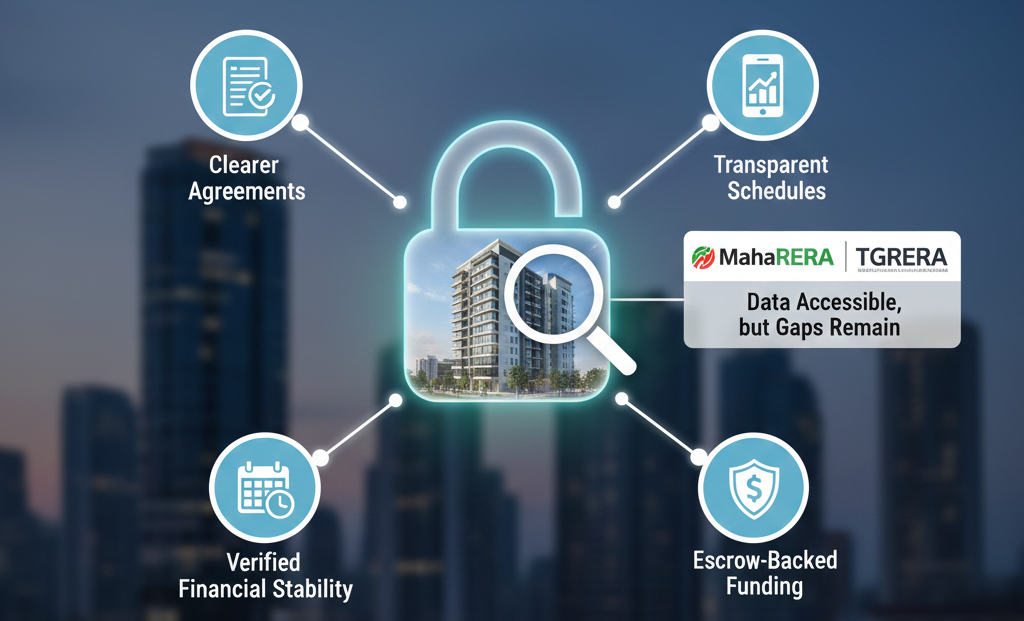
Across cities, buyers are demanding greater transparency in redevelopment:
– Clearer agreements
– Verified financial stability of developers
– Transparent schedules
– Escrow-backed funding plans
– Digital updates on building status
Platforms like MahaRERA in Maharashtra and TGRERA in Telangana have made data more accessible, but redevelopment-specific disclosures still lag behind.
Why This Has National Resonance
Although Mumbai remains the epicentre of redevelopment challenges, the trend is now spreading to:
– Hyderabad (older clusters in core urban zones)
– Bengaluru (aging societies in the early IT belts)
– Delhi NCR (Dilapidated DDA flats and older group housing)
– Pune (camp areas and older cooperative societies)
– Chennai (aging apartments in core corridors)
This is why buyer warnings matter across India, not just in Mumbai. As more cities adopt redevelopment policies, risks are becoming widespread.
How Buyers Can Protect Themselves
1. Verify all approvals
Check RERA registration, redevelopment rights, and development permissions from local authorities.
2. Check developer’s financial capability
Redevelopment requires stronger cash flow than normal projects.
3. Avoid projects with pending disputes
Even small disputes can halt construction for months.
4. Demand stage-wise construction-linked plans
Avoid paying upfront lumpsum amounts.
5. Review rent/compensation guarantees
If it’s a society-led redevelopment, verify who funds the tenant rent.
6. Prefer projects that have already begun construction
The best risk reduction tool is entering after excavation or podium completion.
FAQ Section
1. Why are redevelopment risks increasing?
Because many projects start without full financial and legal preparedness, leading to disputes and delays.
2. Are redevelopment projects safe to invest in?
They can be, but only when approvals, finances, and developer history are thoroughly verified.
3. Who is most affected when a redevelopment stalls?
Tenants, existing residents, and new buyers all get stuck in legal and financial uncertainty.
4. Should buyers avoid under-construction redevelopments?
Experts advise caution. Enter only when construction and approvals are clearly progressing.
5. Do RERA rules fully protect redevelopment buyers?
RERA helps, but it does not eliminate risks linked to society disputes or developer insolvency.
Conclusion

Redevelopment can transform aging city zones, but it carries higher risk than most people realise. With rising court cases, stalled projects, and buyer complaints, authorities and experts are urging stronger due diligence. What began as a Mumbai issue now affects buyers across India as more cities adopt redevelopment policies. Before investing, buyers must verify approvals, check developer capability, and ensure the project is financially secure.
Relai – For right home.
Let’s join together to bring change to the world of real estate.
Thinking about your next home?
relai scores every project on data, not paid placements, and it's free for buyers.