Mega Residential Projects: India vs USA – Scale & Design
Mega Residential Projects: India vs USA – Scale & Design
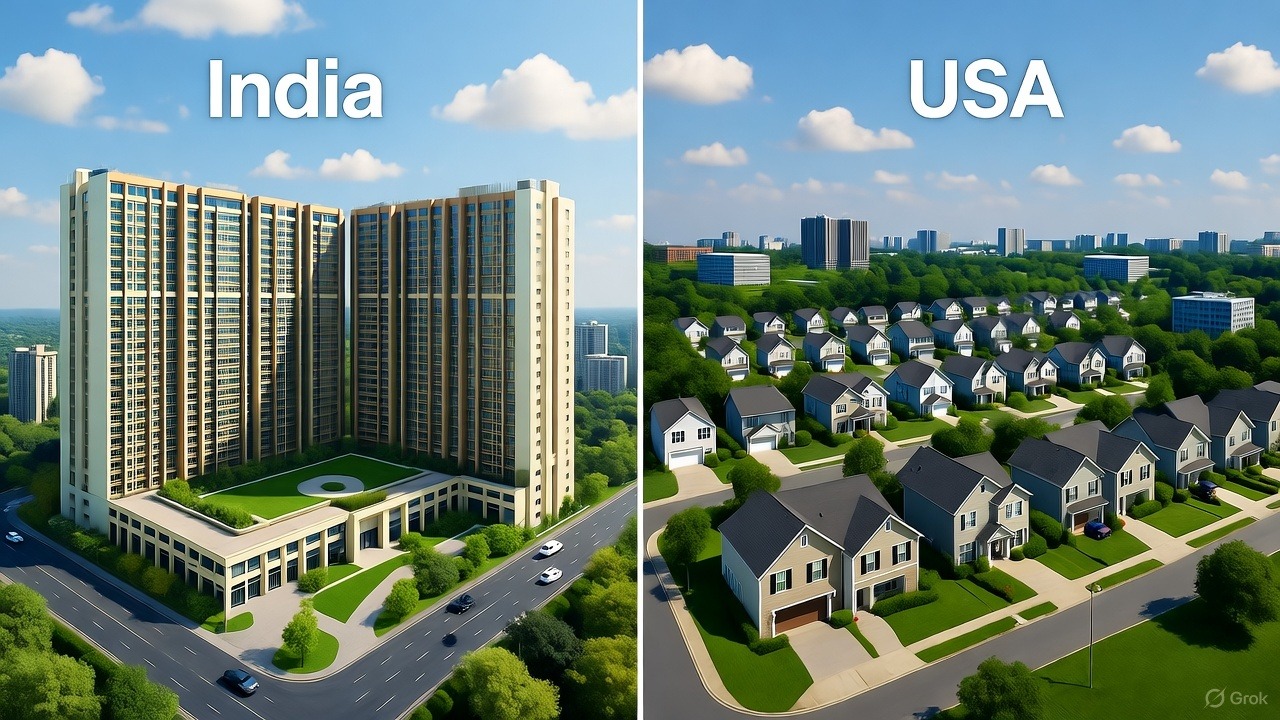
When it comes to housing, India and the USA stand on opposite ends of the spectrum. Both countries have delivered mega residential projects, but their scale, design philosophy, and community integration differ significantly. For investors, buyers, and developers, understanding these differences is more than academic—it reveals how markets function, what buyers prioritize, and where global real estate is heading.
The Scale of Mega Projects
India: Vertical Growth for Urban Needs
Indian metro cities like Hyderabad, Mumbai, and Bengaluru are land-constrained, pushing developers toward vertical, high-rise solutions.
Projects like Lodha World One (Mumbai) and My Home Bhooja (Hyderabad) stretch across dozens of towers, often housing 3,000–6,000 families in one integrated township.
The focus is on creating “mini-cities” with schools, shopping complexes, parks, and workspaces within the gated community.
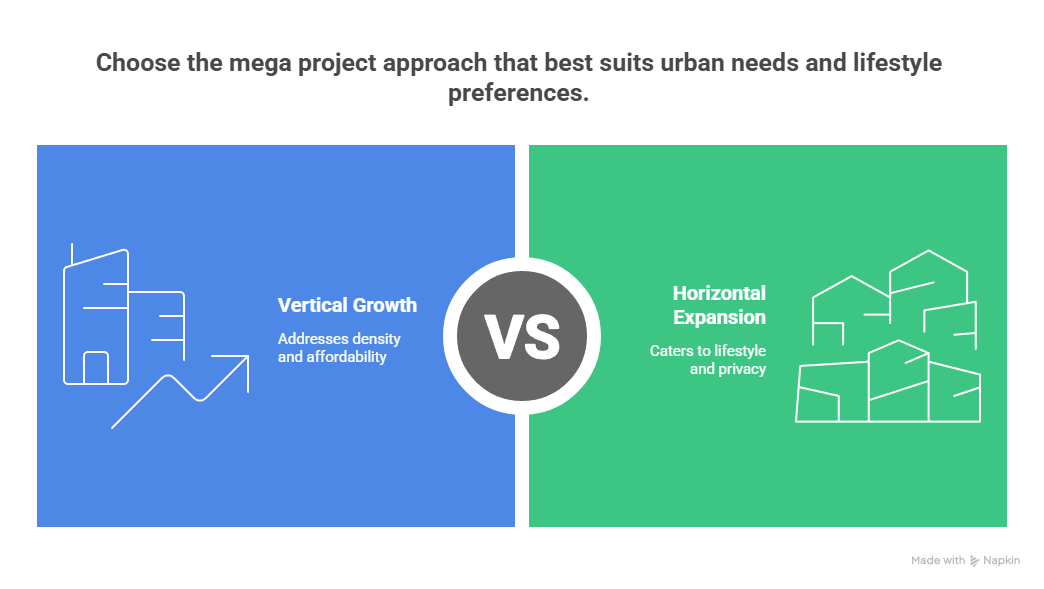
USA: Horizontal Expansion for Space & Lifestyle
In contrast, the USA leans heavily toward horizontal projects, thanks to abundant land.
Mega projects such as The Woodlands (Texas) span over 28,000 acres and host more than 100,000 residents.
These aren’t just residential complexes—they evolve into full-fledged cities with commercial districts, hospitals, and golf courses.
Key Difference:
India’s mega projects solve density and affordability challenges, while the USA’s cater to lifestyle, privacy, and suburban sprawl.
Design Philosophy
India: Efficiency + Luxury Layers
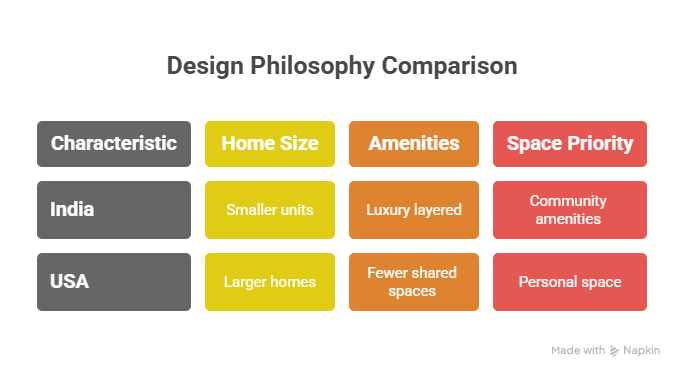
Indian developers often design smaller units (2BHK/3BHK averaging 800–1500 sq. ft.) to appeal to nuclear families.
Luxury is layered in via amenities—clubhouses, infinity pools, landscaped gardens, and smart home tech.
The emphasis is on maximizing utility within compact living spaces.
USA: Larger Homes, Fewer Shared Spaces
The American market leans toward detached or semi-detached homes, often 2,000–3,500 sq. ft. in size.
Community-level amenities exist, but the focus remains on private lawns, garages, and backyard living.
Design is more spacious, with open-plan kitchens, walk-in closets, and high ceilings.
Key Difference:
Indian homes prioritize community amenities, while American homes emphasize personal space.
Community Building & Lifestyle
India: Self-Sufficient Townships
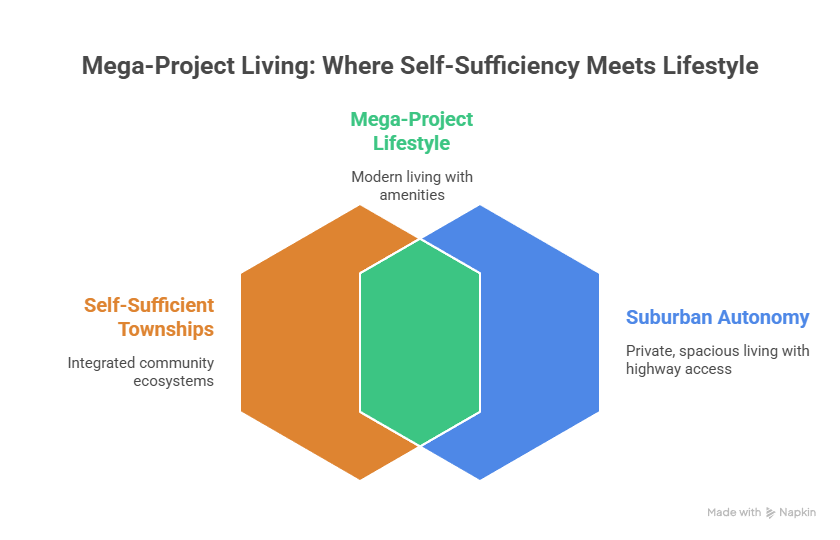
With traffic and commuting concerns, Indian mega projects aim to be self-contained ecosystems.
Developers integrate office parks, retail malls, and schools within the community.
This makes them attractive for both working professionals and investors seeking rental income.
USA: Suburban Autonomy
US mega projects are designed around suburban ideals—quiet neighborhoods with easy access to highways.
They rely more on city infrastructure outside the development rather than being entirely self-sufficient.
Lifestyle is centered on privacy and space, not community density.
Investment Perspective
India:
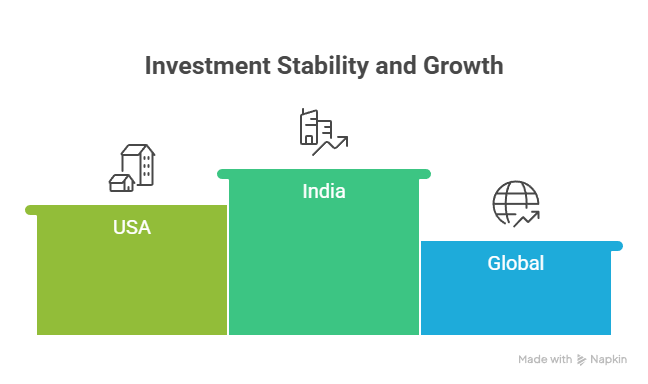
High rental demand due to urban job growth.
Projects often see 8–12% appreciation annually in metros like Hyderabad.
NRIs and local investors both view mega projects as stable, long-term bets.
USA:
Appreciation is steadier but slower (3–5% in many suburban markets).
The real draw is stability and resale liquidity.
Rental yields are lower compared to Indian metros but backed by stronger tenant rights and legal frameworks.
The Future of Mega Projects
India will continue its vertical push, with smart cities and green townships becoming central to urban development. Expect more integration of renewable energy, electric vehicle hubs, and AI-based building management.
USA will likely push toward mixed-use suburban expansions, balancing residential with commercial and recreational spaces. Sustainability and eco-friendly designs are becoming key.
Final Takeaway

Mega residential projects in India and the USA reflect two very different realities: one tackling population density and affordability through high-rises, the other maximizing lifestyle and space through sprawling townships.
For investors, this comparison highlights a clear insight:
India = higher growth + compact luxury
USA = stability + space
Both approaches have their strengths, but the right choice depends on whether you’re chasing returns or long-term stability.
Thinking about your next home?
relai scores every project on data, not paid placements, and it's free for buyers.