Immersive Technologies (VR, AR, MR & Virtual Tours) in Real Estate
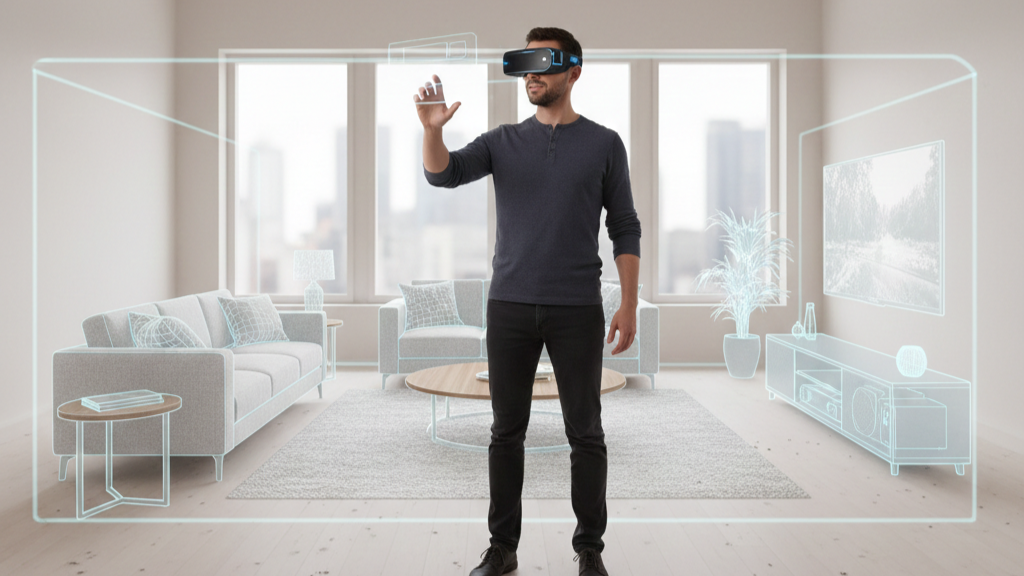
Property buying has always depended heavily on physical visits. Site travel, sample flats, repeated inspections, and coordination delays slow decisions and add friction for both buyers and sellers. Immersive technologies are changing this dynamic by blending digital experience with physical reality.
Virtual Reality, Augmented Reality, Mixed Reality, and advanced virtual tours are moving real estate from static listings to interactive exploration. The goal is not novelty. It is better understanding, faster decisions, and fewer wasted site visits.
This blog explains how immersive technologies are being used in real estate today, what “phygital” experiences actually mean, and why realism matters more than visual effects.
Understanding Immersive Technologies Simply
Immersive technologies cover different levels of digital interaction.
Virtual Reality allows users to step fully into a simulated property environment. Augmented Reality overlays digital elements onto the physical world. Mixed Reality blends both, allowing digital objects to interact with real spaces.
Virtual tours sit between these experiences. They recreate properties digitally while remaining accessible through everyday devices.
Together, these tools help buyers experience space before physically being there.
Interactive Property Viewings Beyond Photos
Traditional listings rely on images and videos that flatten space.
Immersive experiences allow buyers to:
Walk through rooms at their own pace
Understand proportions and movement flow
View different layouts and finishes
Experience light, height, and openness more accurately
This reduces mismatch between expectation and reality, one of the biggest causes of buyer disappointment.
The Rise of “Phygital” Real Estate Experiences
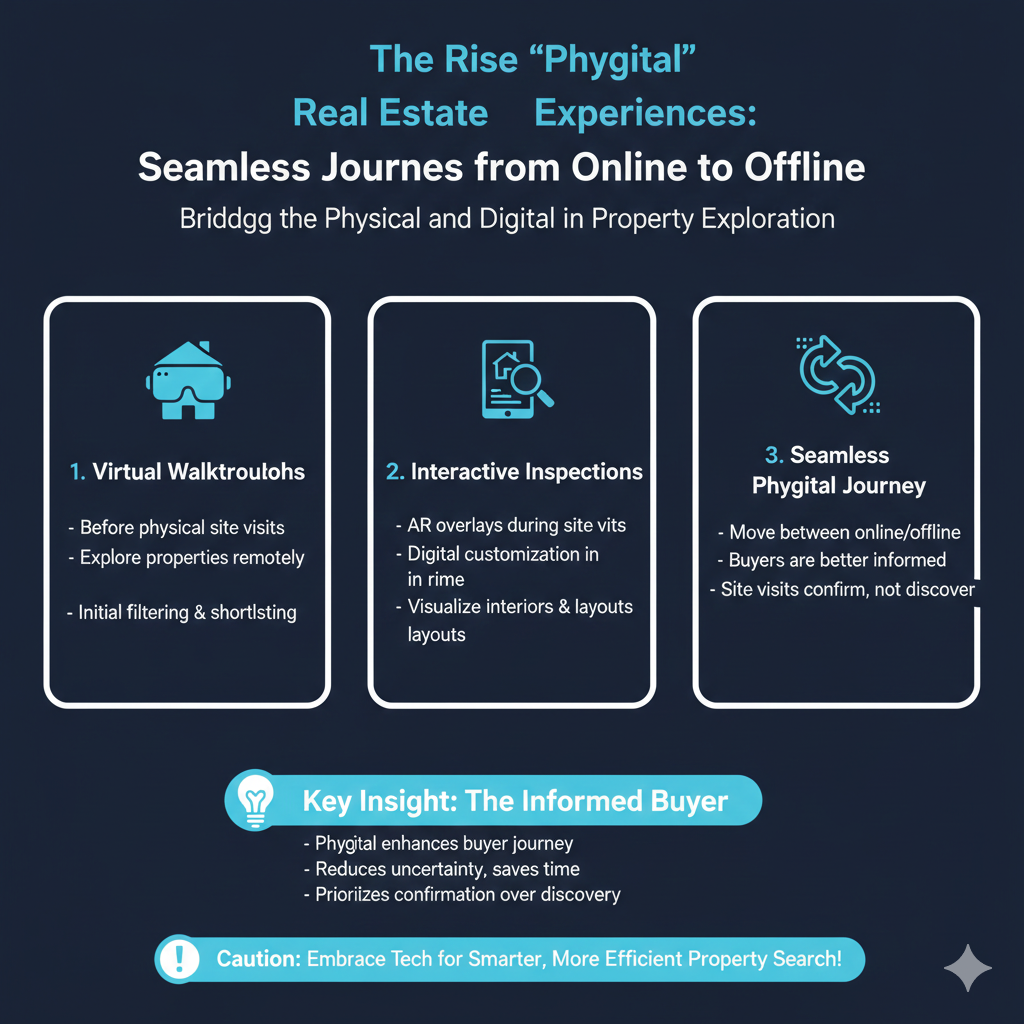
Phygital combines physical and digital interaction.
In real estate, this means:
Virtual walkthroughs before site visits
AR overlays during physical inspections
Digital customisation of interiors in real time
Seamless movement between online and offline exploration
Buyers arrive better informed, and site visits become confirmation exercises instead of discovery missions.
Remote Inspections and Decision Efficiency
Immersive technologies are especially valuable for:
NRIs and outstation buyers
Busy professionals
Early-stage shortlisting
Remote inspections allow buyers to eliminate unsuitable options early. Physical visits are reserved for serious, shortlisted properties.
This reduces travel fatigue and speeds up decision cycles without compromising confidence.
Marketing Impact Without Overpromising
Immersive marketing works best when realism is prioritised.
Effective use includes:
Accurate scale and proportions
Honest representation of views and surroundings
Clear differentiation between current and future stages
When immersive tools exaggerate or hide limitations, trust erodes quickly. The technology succeeds only when it aligns closely with real-world delivery.
Reducing Physical Showings Without Reducing Trust
Contrary to fear, immersive tools do not eliminate physical visits entirely.
They reduce unnecessary ones.
Buyers who visit after immersive exploration:
Ask sharper questions
Focus on specifics instead of basics
Close faster with fewer surprises
This improves efficiency for developers, agents, and buyers alike.
Holograms and Enhanced Realism
Emerging tools like holographic displays and ultra-realistic rendering add depth to immersive experiences.
Their real value lies in:
Explaining large or complex developments
Visualising master plans and future phases
Helping buyers understand scale and sequencing
As realism improves, the gap between virtual and physical experience continues to narrow.
FAQ Section
Do immersive tours replace site visits completely?
No. They reduce unnecessary visits and improve decision quality before physical inspections.
Are immersive tools only for luxury projects?
No. They are increasingly used across mid-range and large-scale developments.
Can immersive experiences mislead buyers?
Only if realism and accuracy are compromised. Honest representation is critical.
Do buyers trust virtual tours?
Trust increases when immersive tools match real-world experience closely.
Conclusion

Immersive technologies are reshaping how buyers discover, evaluate, and shortlist properties.
By combining realism with interaction, they reduce friction, improve understanding, and make physical visits more meaningful. The future of property buying is not fully virtual, but intelligently blended.
In real estate, better experience leads to better decisions.
Let’s Join Together to Bring Change to the World of Real Estate.
Thinking about your next home?
relai scores every project on data, not paid placements, and it's free for buyers.