How Micro-Markets Inside the Same Area Perform Very Differently

Homebuyers often assume that all properties within the same locality behave similarly. Same pin code, same price range, same future prospects. Yet, in reality, real estate performance can vary sharply within a few hundred metres.
In Hyderabad and other Indian cities, micro-markets inside the same area often show very different price growth, resale demand, and rental strength. The reasons are usually subtle, but their impact is long-lasting.
Understanding micro-markets helps buyers avoid overpaying for the wrong pocket and identify homes that hold value better over time.
1. Why Pin Codes Are Misleading
A pin code is an administrative label, not a market indicator.
Within the same pin code, you can find:
• Quiet residential streets and noisy arterial roads
• Well-planned layouts and congested inner pockets
• Premium gated communities and poorly maintained standalone buildings
Buyers who rely only on pin codes or area names often miss these internal differences. Real estate performance is driven by street-level economics, not postal boundaries.
2. Road Access and Daily Commute Reality
Road access is one of the strongest micro-market differentiators.
Main Roads vs Internal Access
Homes directly abutting main roads may look well-connected, but they often suffer from noise, pollution, and safety issues. Internal roads with controlled access usually offer better living comfort.
Bottlenecks and Congestion
Two projects in the same area can have very different commute experiences. A single choke point near a junction or railway crossing can add significant daily stress.
Buyers value predictable travel time more than theoretical proximity.
3. Zoning and Land-Use Mix
Zoning quietly shapes long-term livability.
Residential pockets surrounded by commercial or industrial zoning face:
• Higher traffic movement
• Parking spillovers
• Noise during extended hours
Purely residential zones, especially low-density ones, tend to age better and attract stable end-user demand.
Zoning also affects future development risk. Empty plots nearby may turn into offices, warehouses, or high-density housing, changing the character of the street.
4. Influence of Schools, Offices, and Hospitals
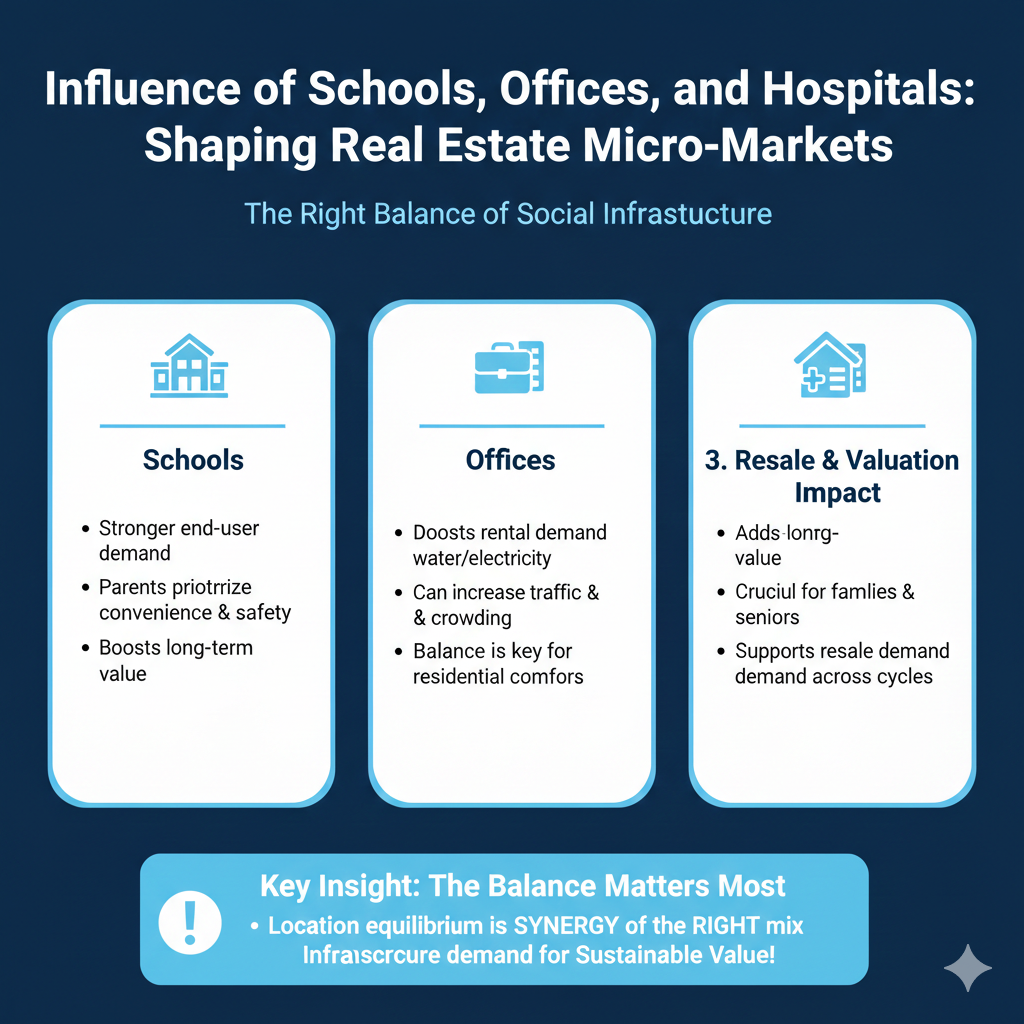
Social infrastructure creates micro-markets of its own.
Schools
Homes within short travel distance of reputed schools often see stronger end-user demand. Parents prioritise convenience and safety over marginal price differences.
Offices
Proximity to employment hubs boosts rental demand, but excessive office concentration can reduce residential comfort due to traffic and crowding.
Hospitals
Access to quality healthcare adds long-term value, especially for families and senior residents. It quietly supports resale demand across cycles.
The right balance of these factors matters more than sheer proximity.
5. Density and Community Composition
Density levels vary widely within the same area.
High-density pockets often struggle with:
• Parking shortages
• Lift congestion
• Overused common areas
Lower-density streets or communities usually offer better living experience and command steadier resale demand.
Community composition also matters. Areas dominated by end users tend to show better upkeep and stability than investor-heavy pockets.
6. How Micro-Markets Affect Price and Resale
Micro-market differences show up clearly during resale.
Buyers comparing similar-sized homes within the same locality often pay premiums for:
• Better road access without noise
• Lower congestion
• Strong social infrastructure
• Cleaner zoning surroundings
Poorly positioned pockets face longer selling cycles and higher negotiation pressure, even if overall area prices rise.
7. What Buyers Should Do Differently
Instead of evaluating only the locality, buyers should:
• Visit the street at different times of day
• Observe traffic flow and parking behaviour
• Check surrounding land use and vacant plots
• Compare resale listings within the same area
These steps reveal micro-market realities that brochures and price charts hide.
FAQ Section
Can two homes in the same area appreciate differently?
Yes. Micro-market factors like access, density, and infrastructure drive different outcomes.
Do rentals also vary within the same locality?
Yes. Tenants prefer specific pockets based on commute ease and daily convenience.
Is buying on a main road always bad?
Not always, but noise, safety, and long-term livability must be evaluated carefully.
How much price difference can micro-markets create?
In many cases, differences of 10–25% are common within the same area over time.
Conclusion

Real estate does not perform at the pin-code level. It performs at the micro-market level.
Buyers who look beyond area names and understand street-level dynamics make better long-term decisions. Small location details today often decide value, comfort, and liquidity tomorrow.
In property buying, precision beats generalisation.
Let’s Join Together to Bring Change to the World of Real Estate.
Thinking about your next home?
relai scores every project on data, not paid placements, and it's free for buyers.