How Maintenance Charges Quietly Decide a Project’s Long-Term Value
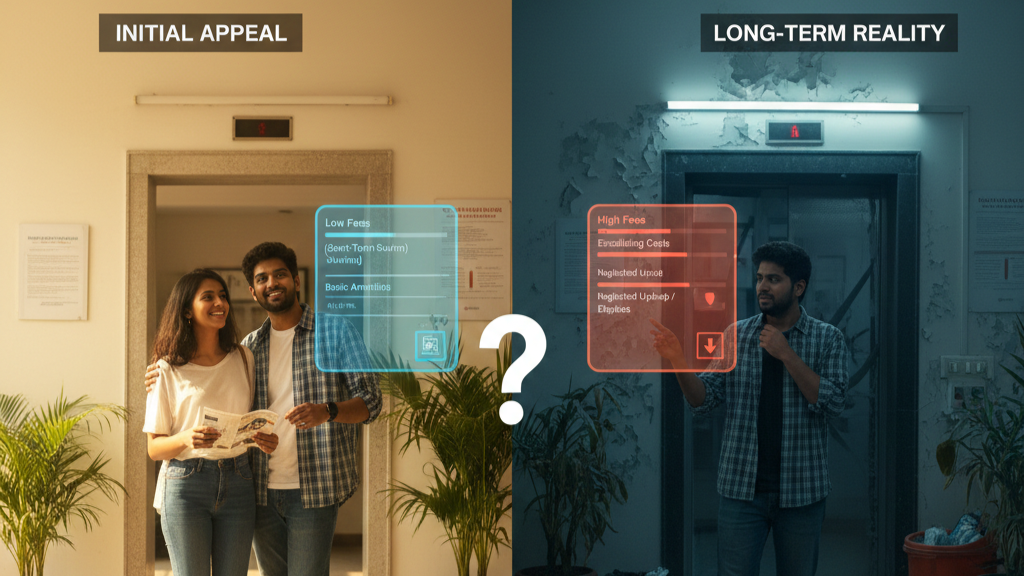
When homebuyers evaluate a property, most attention goes to price, location, and amenities. Maintenance charges are usually treated as a secondary detail, glanced at briefly and quickly forgotten. Yet, over the life of a home, maintenance costs quietly play a decisive role in how a project ages, how residents experience it, and how the property performs during resale or rental.
In Hyderabad, many projects that looked attractive at launch have seen their long-term value erode not because of location or construction quality, but because of how maintenance was planned, priced, and managed after handover.
This article explains why maintenance charges matter far more than most buyers realise, and how they shape a project’s real value over time.
1. Low Maintenance vs Under-Maintained Assets
Low maintenance charges sound appealing, especially to first-time buyers managing EMIs and household expenses. Builders often highlight low monthly maintenance as a selling point during launches.
However, there is a crucial difference between efficiently managed low maintenance and under-maintained assets.
Projects with unrealistically low charges often struggle to cover:
• Security staffing and training
• Lift servicing and electrical upkeep
• Plumbing, water treatment, and pumps
• Landscaping and common area cleaning
When budgets fall short, corners are cut. Over time, this leads to visible wear, frequent breakdowns, and declining living standards. Buyers may save a few thousand rupees monthly, but the asset quietly loses appeal.
Well-performing projects usually have maintenance charges that reflect real operating costs. These communities age better, retain functionality, and remain attractive to future buyers.
2. Cost Inflation After Handover
Another reality many buyers underestimate is maintenance inflation.
At launch or during possession, maintenance charges are often artificially low. Once the association takes over and real expenses become clear, costs rise.
Common reasons include:
• Increase in electricity and water tariffs
• Higher security and housekeeping wages
• Replacement of under-specified equipment
• AMC costs for lifts, generators, and STPs
In some Hyderabad projects, maintenance charges have doubled within a few years of handover. While some increase is natural, sharp jumps usually indicate poor initial planning or aggressive under-pricing during sales.
For end-users, sudden cost escalation impacts monthly budgets. For investors, it directly affects rental attractiveness.
3. Maintenance Quality and Daily Livability
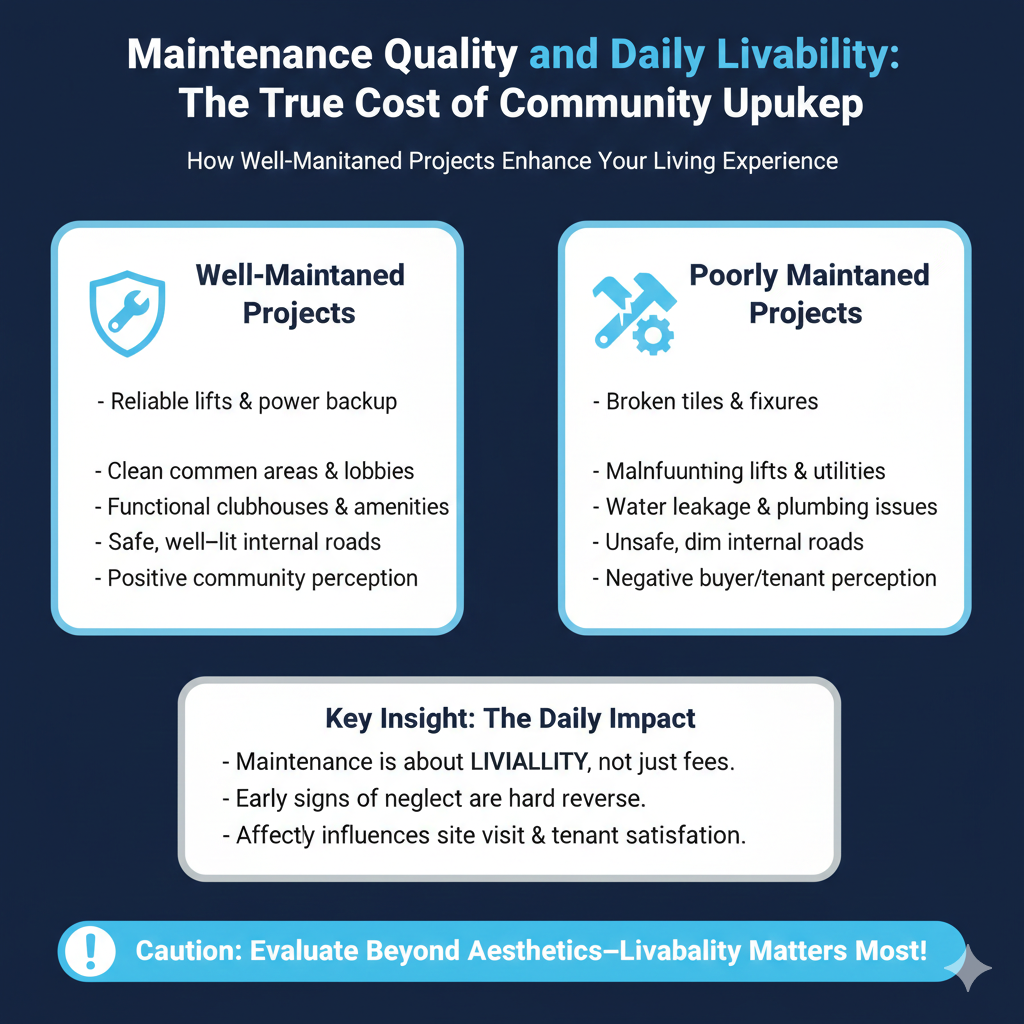
Maintenance is not just about money. It directly shapes daily living.
Well-maintained projects offer:
• Reliable lifts and power backup
• Clean common areas
• Functional clubhouses and amenities
• Safe, well-lit internal roads
Poorly maintained projects show early signs of decline. Broken tiles, malfunctioning lifts, water issues, and poorly kept amenities signal neglect. Once this perception sets in, it is hard to reverse.
Buyers and tenants pick up on these signals immediately during site visits.
4. Impact on Resale Value
Maintenance quality strongly influences resale liquidity.
When buyers compare similar homes in the same locality, projects with better upkeep command faster sales, even at slightly higher prices. Poorly maintained communities face longer selling cycles and heavier negotiation.
Two key factors drive this:
• Buyers mentally factor future maintenance headaches into price expectations
• Visible neglect raises doubts about association governance and financial health
Even structurally sound buildings suffer price discounts if common areas appear neglected.
5. Impact on Rental Demand
Tenants are extremely sensitive to maintenance quality.
Professionals working in Hyderabad’s IT corridors often prioritise:
• Cleanliness and safety
• Reliable water and power
• Well-managed common spaces
High maintenance charges can reduce net rental yields, but poor maintenance reduces demand altogether. Vacancies increase, and landlords are forced to lower rents to compensate.
Projects that strike a balance between reasonable charges and consistent upkeep perform best in the rental market.
6. What Homebuyers Should Check Before Buying
Before finalising a home, buyers should look beyond the headline maintenance number.
Practical checks include:
• Ask for a detailed maintenance breakup
• Understand what costs are builder-controlled vs association-controlled
• Observe the condition of lifts, parking, and common areas
• Speak with existing residents about recent cost increases
These steps reveal whether maintenance charges are realistic or temporarily suppressed.
FAQ Section
Are low maintenance charges always a red flag?
Not always. They can indicate efficient design and cost control. Problems arise when charges are unrealistically low for the scale of amenities offered.
Why do maintenance costs rise sharply after handover?
Because real operating costs become clear only after full occupancy and association management begins.
Do buyers really pay attention to maintenance during resale?
Yes. Visible upkeep and monthly costs significantly influence buyer decisions and negotiation strength.
Is high maintenance always bad for rentals?
High charges reduce net yield, but tenants prefer well-maintained projects. Balance matters more than the absolute number.
Conclusion

Maintenance charges quietly shape a project’s long-term destiny. They influence how a community lives, how it ages, and how the market values it years later.
For homebuyers, the goal should not be the lowest maintenance, but the right maintenance. Projects that budget realistically, maintain consistently, and manage transparently tend to hold value far better than those chasing short-term savings.
In real estate, upkeep is not an expense. It is an investment in longevity.
Let’s Join Together to Bring Change to the World of Real Estate.
Thinking about your next home?
relai scores every project on data, not paid placements, and it's free for buyers.