How Builder - Landowner Agreements Affect Buyer Risk
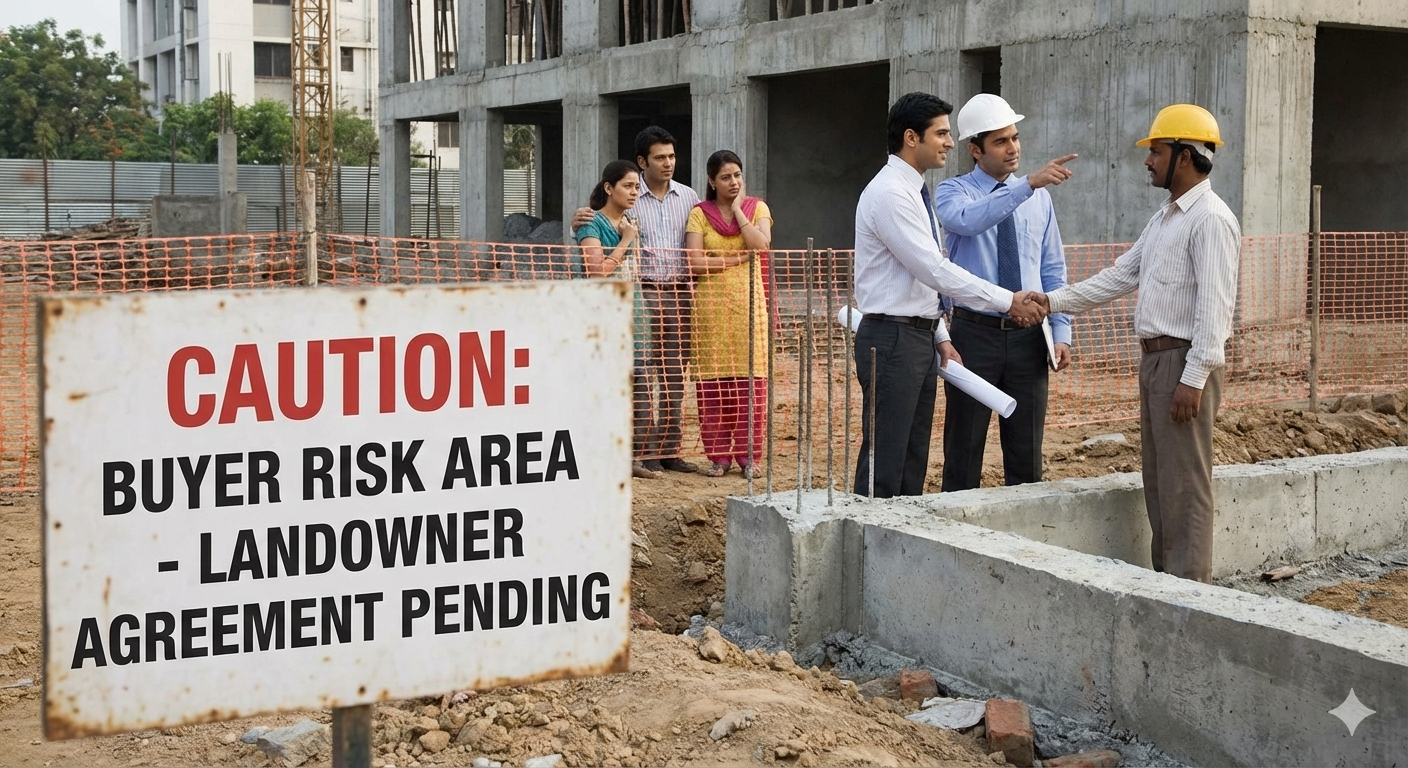
When buying a property in Hyderabad, most buyers focus on the builder’s reputation, project amenities, and location. However, one critical factor that often goes unnoticed is the underlying builder–landowner agreement. The type of agreement between the builder and landowner—whether revenue share, joint development, or outright sale—can significantly impact project timelines, legal clarity, and delivery risk. Understanding these agreements is essential to protect your investment and avoid unexpected issues.
Revenue Share vs Joint Development
Two common forms of builder–landowner arrangements are revenue share and joint development.
Revenue Share Agreements: In this model, the builder and landowner agree to share the project revenue in a pre-determined ratio. The landowner may not contribute capital, while the builder bears construction costs. Buyers may not see any direct impact initially, but delays or disputes between the builder and landowner can affect possession timelines and quality.
Joint Development Agreements (JDA): Here, the landowner provides land and the builder develops the property, often sharing a portion of built-up units or revenue. Legal complexities in JDAs are higher because landowners retain rights over their land until completion. Any disagreement or litigation can stall construction, leaving buyers in limbo.
Both models are common in Hyderabad, and the choice of agreement can directly influence project delivery and risk exposure for buyers.
Legal and Delivery Risks
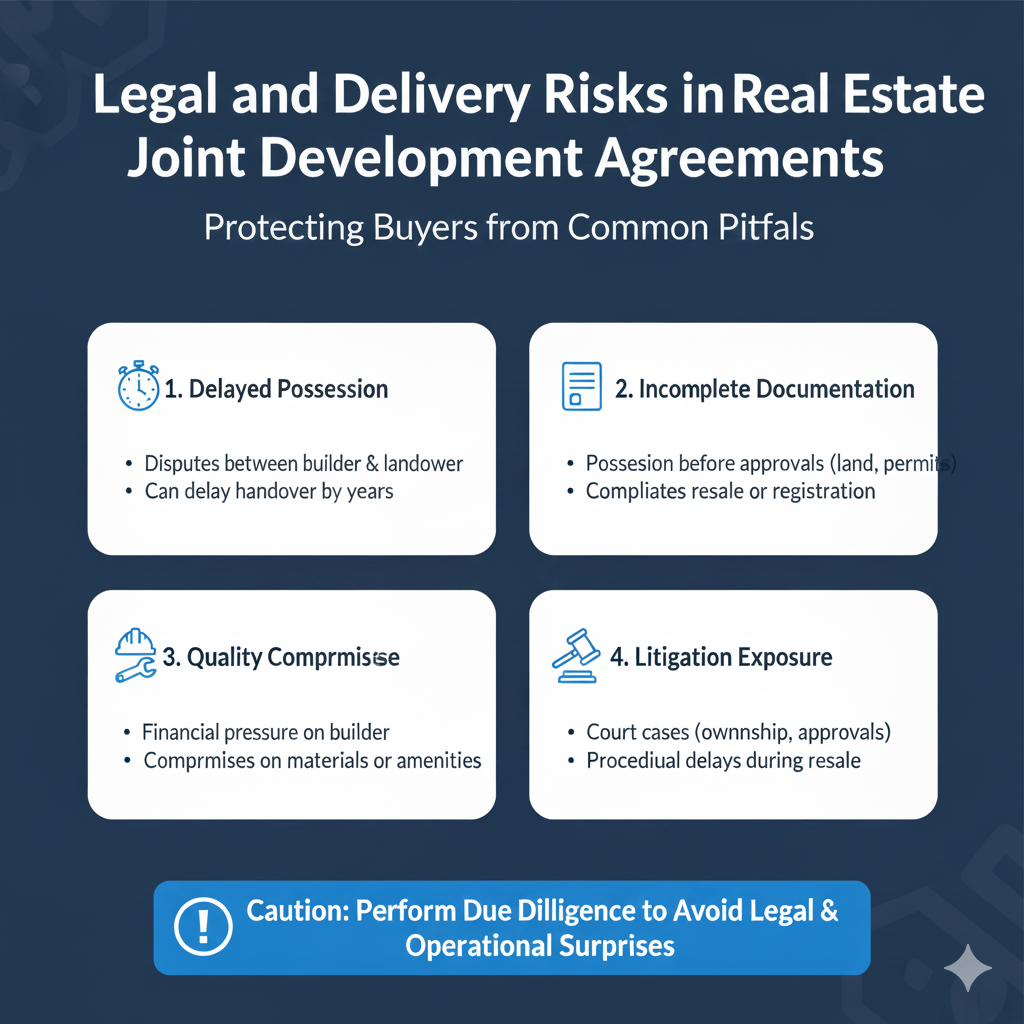
Buyer risk arises primarily from legal and operational factors in these agreements. Common issues include:
Delayed Possession: Disputes between builder and landowner can delay handover, sometimes by years.
Incomplete Documentation: Buyers may receive possession of units while certain land approvals or agreements remain pending, complicating resale or registration.
Quality Compromise: Builders under financial pressure to satisfy both landowners and buyers may compromise on materials or amenities.
Litigation Exposure: Some projects are tied up in court cases due to ownership claims, building approvals, or revenue disputes. Buyers may face procedural delays or legal hassles during registration or resale.
Awareness of these risks helps buyers perform due diligence and avoid surprises later.
What Buyers Should Verify
Before booking a unit in a project governed by a builder–landowner agreement, buyers should check:
Agreement Type: Confirm whether the project is based on revenue share, joint development, or outright purchase.
Land Ownership Documents: Ensure the landowner has clear title and that the agreement with the builder is legally registered.
RERA Registration: Verify that the project is registered under RERA and that the builder’s obligations and timelines are clearly defined.
Project Approvals: Check for building permits, zoning approvals, and environmental clearances.
Dispute History: Investigate whether the builder or landowner has past disputes or litigation that could affect delivery.
Performing these checks reduces exposure to legal and delivery risks while ensuring the buyer’s rights are protected.
Strategic Buying Decisions
Savvy buyers combine agreement analysis with other project factors:
Prioritize builders with a strong track record in JDA or revenue share projects.
Avoid projects with ongoing disputes or delayed approvals.
Factor potential delivery risk into pricing negotiations.
By doing so, buyers ensure that investment or home purchase decisions are not derailed by factors beyond their control.
FAQ Section
Q1: What is a revenue share agreement?
A1: A revenue share agreement is where the builder and landowner agree to share project revenue in a pre-determined ratio, with the builder handling construction.
Q2: How does a joint development agreement affect buyers?
A2: JDAs involve legal complexities and landowner rights over the land, which can lead to delays or disputes affecting possession.
Q3: Can legal disputes between builder and landowner delay possession?
A3: Yes. Such disputes are a common cause of project delays and can leave buyers waiting for years.
Q4: What documents should a buyer verify in these projects?
A4: Buyers should check the type of agreement, land ownership papers, RERA registration, building approvals, and any ongoing disputes.
Q5: Does RERA registration fully protect buyers?
A5: RERA provides legal protection and recourse in case of delays, but buyers should still verify land and agreement details to mitigate risk.
Conclusion

Builder–landowner agreements play a critical role in determining the risk profile of a project. Revenue share or joint development arrangements can influence delivery timelines, legal clarity, and quality of construction. Buyers who understand these agreements, verify documentation, and perform thorough due diligence are better positioned to make safe, long-term investments in Hyderabad real estate.
At Relai – For right home, we guide buyers to navigate builder–landowner complexities, ensuring every property decision is secure, transparent, and strategically sound.
Let’s Join Together to Bring Change to the World of Real Estate.
Thinking about your next home?
relai scores every project on data, not paid placements, and it's free for buyers.