Edge Computing in Real Estate: Why Smart Buildings Need Local Intelligence
Smart buildings today generate massive amounts of data. Sensors track movement, cameras monitor security, systems watch energy use, elevators log performance, and maintenance platforms flag issues. Traditionally, most of this data is sent to the cloud, processed there, and then instructions are sent back.
That model works — but it’s slow, dependent on connectivity, and not always privacy-friendly.
This is where edge computing changes the game for real estate.
Instead of sending everything to distant servers, edge computing processes data on-site or very close to the building itself. The result is faster responses, higher reliability, better privacy, and more efficient operations — especially critical in large residential complexes, commercial towers, and mixed-use developments.
What Is Edge Computing in Simple Terms?
Edge computing means processing data near the source instead of in a central cloud.
In a real estate context:
Cameras analyze footage inside the building itself
Sensors trigger alerts instantly without waiting for cloud confirmation
Smart systems make decisions locally and act in real time
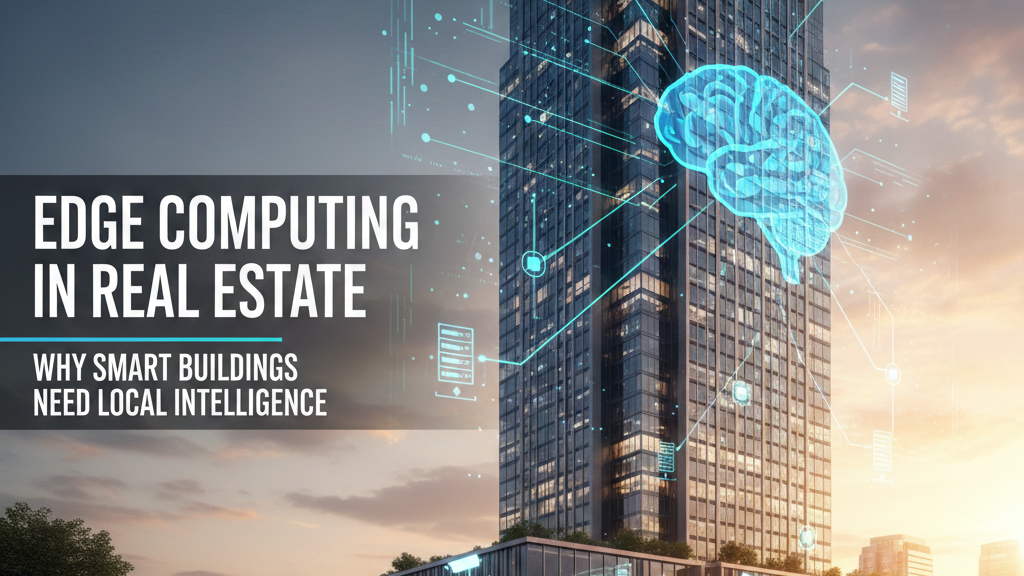
Think of it as giving a building its own local brain, instead of asking a remote server for permission every time something happens.
This shift matters because real estate operations are time-sensitive. A security breach, equipment failure, or fire alarm cannot afford delays measured in seconds.
Why Cloud-Only Smart Buildings Fall Short
Cloud platforms brought scale and flexibility, but in real estate they also introduced limitations:
Latency issues
When data travels to the cloud and back, even small delays can affect:
Access control decisions
Emergency alerts
Predictive maintenance actions
Connectivity dependency
If the internet goes down or slows, cloud-dependent systems can partially fail — a serious risk for security and life-safety functions.
Data overload
Sending every sensor reading to the cloud increases bandwidth costs and system noise, without adding value.
Privacy concerns
Continuous streaming of video, voice, and behavioral data outside the property raises concerns for residents and regulators.
Edge computing directly addresses all four problems.
Faster Security and Access Control
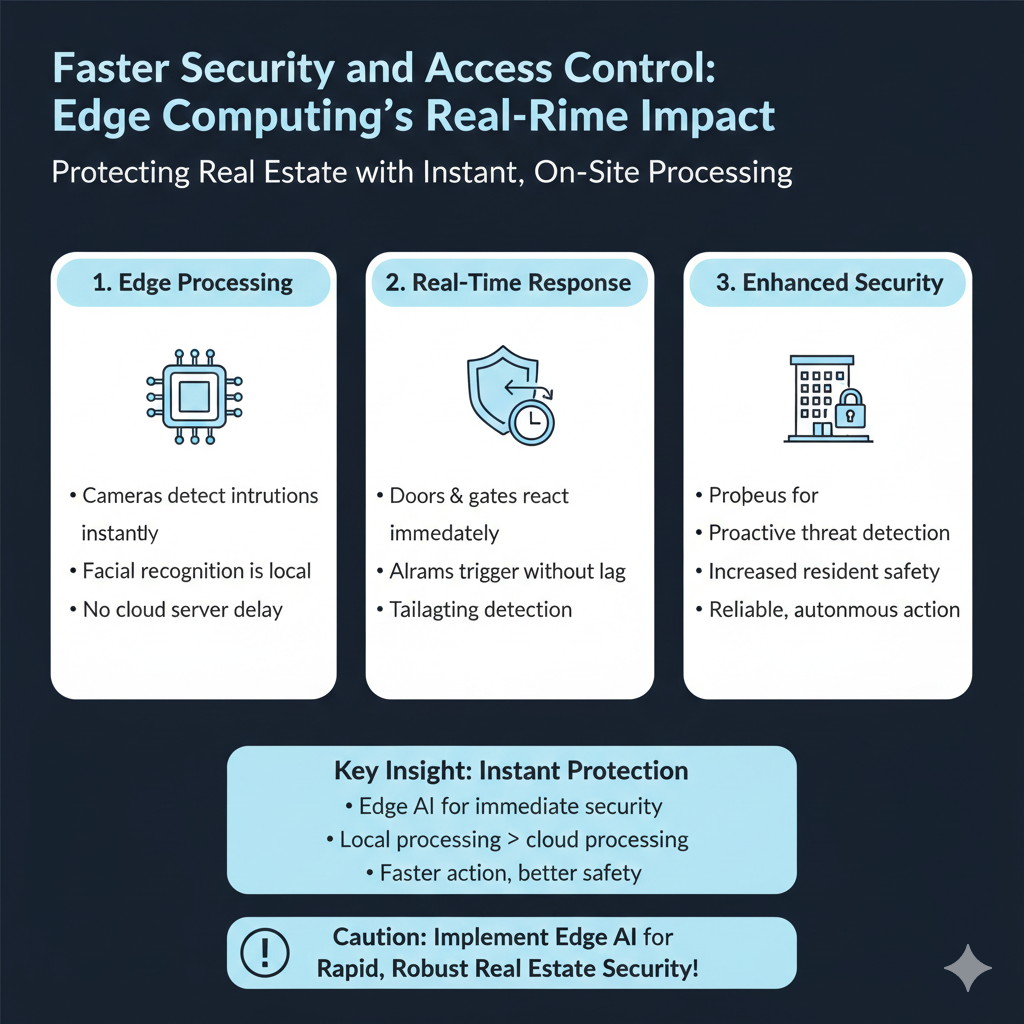
Security is one of the strongest use cases for edge computing in real estate.
With edge processing:
Cameras can detect intrusions, tailgating, or unusual behavior instantly
Facial recognition or access verification happens locally
Doors, gates, and alarms respond in real time
There’s no need to wait for a cloud server to analyze footage before triggering action.
In large residential communities or office campuses, this reduces false alarms while improving actual response speed. It also ensures that critical systems keep working even during temporary network outages.
Smarter Maintenance with Immediate Alerts
Maintenance failures are expensive when they go unnoticed.
Edge computing enables:
Local analysis of equipment health data
Immediate alerts when vibration, temperature, or pressure crosses thresholds
Early detection of faults in elevators, HVAC systems, pumps, and generators
Instead of streaming raw data continuously to the cloud, the system processes it on-site and sends only meaningful alerts.
This leads to:
Lower downtime
Fewer emergency repairs
Longer asset life
Better planning for facility teams
For large buildings, this shift alone can significantly reduce operating costs.
Better Tenant Experience Through Real-Time Response
Tenants don’t care where data is processed. They care about responsiveness.
Edge computing improves everyday experiences such as:
Lights turning on instantly when motion is detected
Climate systems adjusting without lag
Voice commands responding immediately
Parking systems recognizing vehicles without delay
When responses feel instant, technology fades into the background. That’s when smart buildings stop feeling “technical” and start feeling comfortable.
This matters in premium residential projects and Grade-A commercial buildings where experience directly impacts retention and pricing power.
Privacy by Design, Not Afterthought
One of the most overlooked benefits of edge computing is privacy.
When data is processed locally:
Video feeds don’t need to be streamed externally
Voice commands can be interpreted on-device
Behavioral data can be anonymized before sharing
This reduces exposure risks and helps align with data protection expectations, especially in residential settings.
For developers and property managers, this means fewer compliance headaches and higher trust with occupants — something increasingly important as smart systems become more pervasive.
Efficiency at Scale for Large Properties
Edge computing becomes even more valuable as building size increases.
In large residential townships, IT parks, hospitals, or malls:
Thousands of sensors generate continuous data
Cloud costs rise rapidly
Latency issues multiply
Edge architecture filters, analyzes, and prioritizes data locally before sending summaries or insights upstream.
The result:
Lower bandwidth usage
More predictable system behavior
Easier scaling across multiple buildings
This is why edge computing is becoming a foundation for next-generation smart campuses rather than a niche upgrade.
How Edge and Cloud Work Together
Edge computing does not replace the cloud. It complements it.
A practical real estate setup looks like this:
Edge handles real-time decisions and immediate actions
Cloud handles analytics, reporting, optimization, and long-term learning
For example:
A fault is detected locally and acted upon instantly
The incident data is later sent to the cloud for trend analysis
This hybrid model delivers speed without losing strategic insight.
Who Benefits Most from Edge Computing?
Edge computing delivers the highest value in:
Large residential communities
Commercial office buildings
Mixed-use developments
Data-sensitive environments like hospitals and schools
Smaller properties may not need full edge setups immediately, but as costs fall and platforms mature, edge capabilities are becoming more accessible even at mid-scale levels.
FAQ Section
Is edge computing expensive to implement?
Initial setup costs exist, but savings from reduced downtime, lower cloud usage, and efficient maintenance often offset them over time.
Does edge computing work without the internet?
Core functions continue to operate locally even during connectivity issues, which is a major advantage for security and safety systems.
Is edge computing secure?
Yes. Processing data locally reduces exposure and limits external attack surfaces, improving overall security posture when implemented correctly.
Does this replace existing smart building systems?
No. Edge computing typically enhances existing systems rather than replacing them, especially when integrated gradually.
Conclusion

Edge computing brings intelligence closer to where decisions actually matter — inside the building.
By enabling faster responses, improving privacy, reducing dependence on constant connectivity, and increasing operational efficiency, edge computing is quietly becoming a core layer of modern real estate infrastructure.
As smart buildings evolve from feature-driven to experience-driven, local intelligence will define which properties truly feel reliable, secure, and future-ready.
Let’s Join Together to Bring Change to the World of Real Estate.
Thinking about your next home?
relai scores every project on data, not paid placements, and it's free for buyers.