Digital Twins for Properties and Real Estate Assets
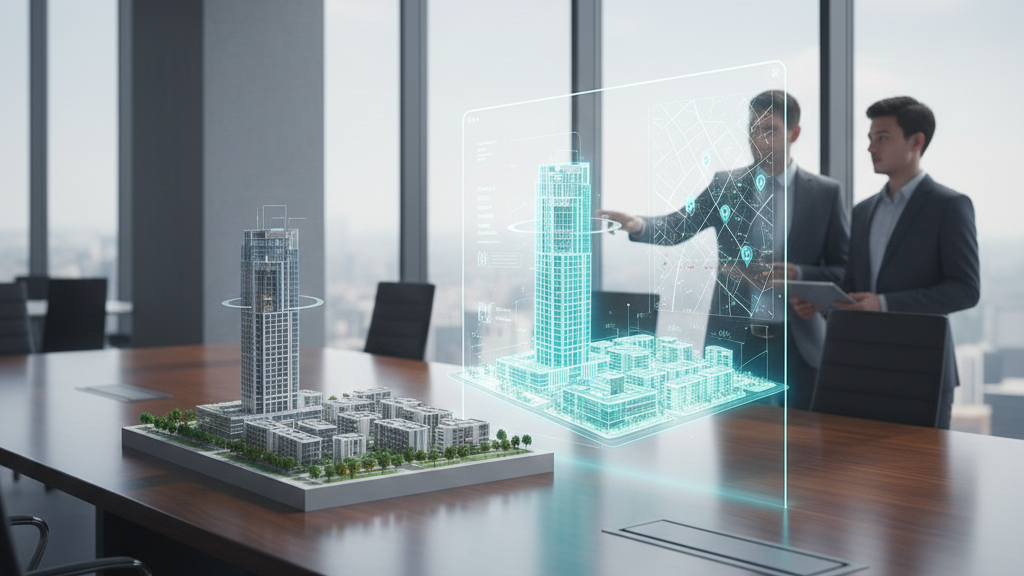
Real estate decisions are usually made using static information. Floor plans, reports, inspections, and periodic reviews capture only a moment in time. Digital twins change this by turning buildings into living, continuously updated systems.
A digital twin is a virtual replica of a physical property that mirrors its structure, systems, and behaviour in real time. When combined with sensors and data feeds, it allows owners and operators to see how a building actually performs, not how it was designed to perform.
This blog explains what digital twins mean for real estate, how they work, and why they are becoming critical for asset performance, maintenance, and tenant experience.
What Is a Digital Twin, Simply Explained
A digital twin is a detailed digital model of a real building that stays connected to the physical asset.
It includes:
Accurate 3D geometry of the property
Live data from building systems
Historical performance records
Predictive simulations for future scenarios
Unlike a static 3D model, a digital twin updates continuously. If equipment usage changes, occupancy shifts, or systems degrade, the digital twin reflects it.
In real estate, this creates a single source of truth for how a property behaves over time.
How Digital Twins Work in Buildings
Digital twins combine multiple technologies.
Core components include:
3D building models
IoT sensors for energy, HVAC, lifts, and water systems
Asset management and maintenance data
Analytics and simulation engines
Data flows from the physical building into the digital twin. The system analyses patterns, flags anomalies, and tests outcomes before actions are taken on the ground.
This turns property management from reactive to predictive.
Simulation and Scenario Planning
One of the strongest benefits of digital twins is simulation.
Owners and operators can:
Test energy-saving upgrades before spending capital
Simulate occupancy increases or layout changes
Evaluate emergency response scenarios
Measure the impact of new equipment or controls
Instead of guessing outcomes, decisions are tested virtually first. This reduces cost overruns and operational surprises.
Maintenance Optimization and Cost Control
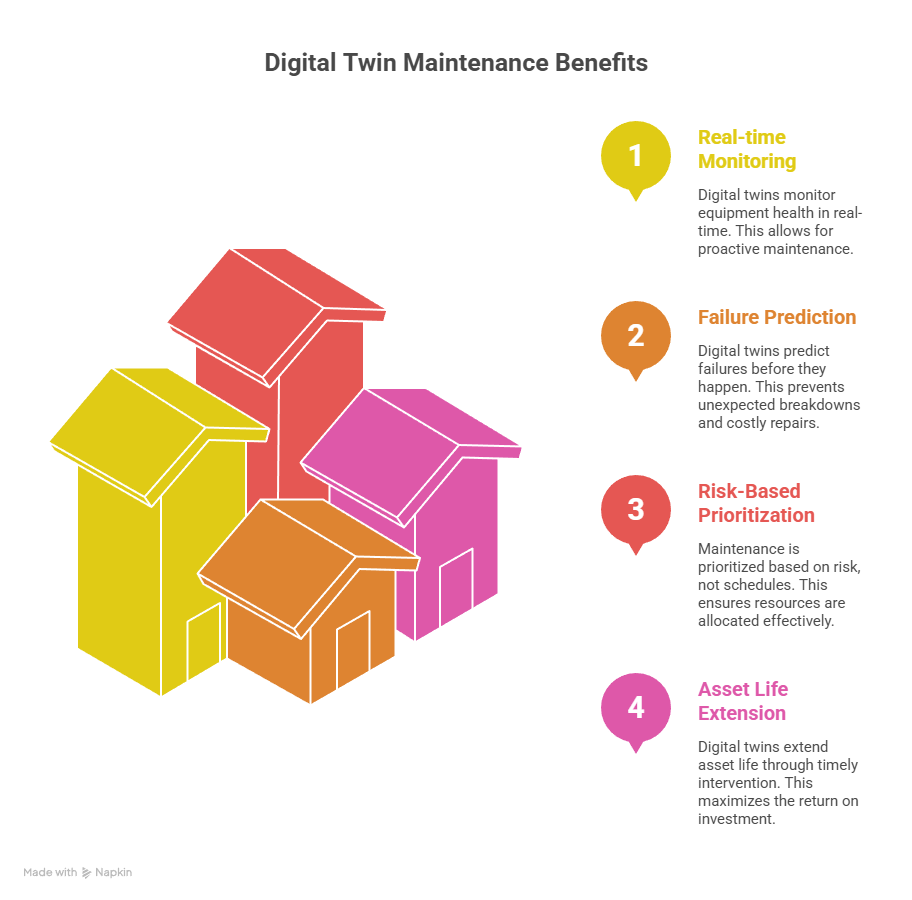
Maintenance is a major expense in long-term ownership.
Digital twins improve maintenance by:
Monitoring real-time equipment health
Predicting failures before breakdowns occur
Prioritising maintenance based on risk, not schedules
Extending asset life through timely intervention
This approach reduces downtime, avoids emergency repairs, and improves budgeting accuracy.
Real-Time Monitoring and Performance Visibility
Traditional reporting shows what happened last month or last quarter.
Digital twins show what is happening now.
They provide:
Live energy consumption tracking
Equipment performance benchmarking
Occupancy pattern analysis
Immediate alerts for abnormal behaviour
This level of visibility allows faster decisions and tighter operational control.
Enhancing Tenant Experience
Tenant experience is increasingly linked to building intelligence.
Digital twins support:
More reliable building services
Faster issue resolution
Better comfort through optimised climate control
Transparency in service quality
For commercial assets, this improves retention. For residential projects, it supports smoother daily living and better community satisfaction.
Where Digital Twins Deliver the Most Value
Digital twins create the strongest impact when:
Buildings are large or complex
Operating costs are significant
Uptime and service reliability matter
Long-term asset value is a priority
They are especially effective for offices, mixed-use developments, data-heavy commercial assets, and large residential communities.
FAQ Section
Is a digital twin the same as a 3D building model?
No. A 3D model is static. A digital twin is dynamic and connected to real-time data.
Do digital twins require new buildings?
No. Existing buildings can be retrofitted with sensors and models.
Are digital twins expensive to implement?
Costs vary, but savings from efficiency and maintenance often justify the investment.
Who benefits most from digital twins?
Asset owners, operators, and tenants all benefit through better performance and experience.
Conclusion

Digital twins transform buildings from passive structures into intelligent assets.
By enabling simulation, real-time monitoring, and predictive maintenance, they improve performance, control costs, and enhance tenant experience. As real estate becomes more data-driven, digital twins are shifting from a luxury to a competitive necessity.
The future of property management is not just physical. It is virtual, connected, and continuously learning.
Let’s Join Together to Bring Change to the World of Real Estate.
Thinking about your next home?
relai scores every project on data, not paid placements, and it's free for buyers.