Ancestral Property in India 2025: Meaning, Rights, and Inheritance Rules Explained
Ancestral Property in India 2025: Meaning, Rights, and Inheritance Rules Explained
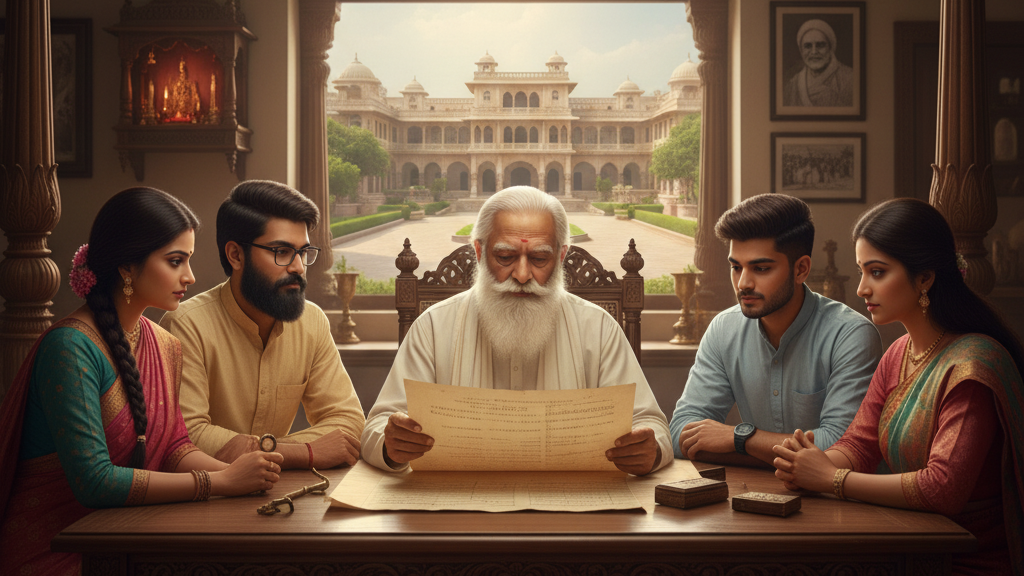
In India, property ownership often passes through generations, creating complex family legacies. Among these, ancestral property holds a special place. It is not just about land or buildings — it represents lineage, rights, and legal responsibilities that evolve over time.
With changing laws and family structures, understanding ancestral property rights in 2025 has become essential for buyers, heirs, and investors alike. Let’s decode what it means, who owns what, and how inheritance works today.
What is Ancestral Property?
An ancestral property is one that passes undivided through four generations of the male lineage — from the great-grandfather to the current holder — without any legal partition.
It automatically becomes coparcenary property, meaning every legal heir by birth gets an equal right to it.
For example, if your great-grandfather owned a piece of land and it was never divided, his great-grandchildren automatically become co-owners.
However, self-acquired property does not become ancestral unless the owner explicitly passes it down without division through successive generations.
Key Characteristics of Ancestral Property
Undivided lineage: Must remain unpartitioned through four generations.
Equal rights by birth: Every coparcener (male or female descendant) has an equal claim.
Cannot be gifted or willed away: One co-owner cannot sell or gift ancestral property without consent of others.
Division leads to self-acquired status: Once partitioned, each share becomes the owner’s self-acquired property.
Subject to personal laws: Governed mainly by the Hindu Succession Act, 1956 (as amended in 2005).
Changes in Ancestral Property Rights: What’s New by 2025

Over the past two decades, several court judgments and amendments have modernized ancestral property rights.
Daughters as equal coparceners (2005 Amendment): Daughters now have the same rights as sons in ancestral property, regardless of when they were born.
Supreme Court ruling (2020): Reinforced that daughters have coparcenary rights even if the father passed away before the 2005 amendment.
2025 legal updates: Most states have now streamlined mutation and registration processes to record equal inheritance rights for female heirs in land records.
These changes mark a significant shift from patriarchal inheritance models toward gender-equal ownership.
Who Can Claim Ancestral Property?
Under Hindu law, coparceners can claim rights in ancestral property. This includes:
Sons and daughters
Grandsons and granddaughters
Great-grandsons and great-granddaughters
All have equal ownership from birth, irrespective of gender or marital status.
However, legal heirs under Muslim or Christian law follow separate inheritance systems — ancestral property as defined under Hindu law doesn’t apply to them.
Rights of Coparceners in Ancestral Property
Right | Description |
Right by birth | Ownership begins at birth, not by will or gift. |
Right to demand partition | Any coparcener can ask for division of the property. |
Right to sell or transfer | Only after partitioning and owning a defined share. |
Right to income | Entitled to rental income or profits proportionate to their share. |
Partition of Ancestral Property
Partition can be done through:
Mutual agreement: All heirs consent to divide the property.
Partition deed: A registered legal document formalizing the division.
Court decree: When disputes arise and need judicial intervention.
Once divided, each share becomes the individual’s self-acquired property, and future heirs cannot claim ancestral rights over it.
Can Ancestral Property Be Sold or Gifted?
A single co-owner cannot sell or gift the property without the consent of all other coparceners.
However, after a legal partition, each owner is free to sell or transfer their individual share.
If consent is not obtained, the sale can be challenged in court and declared void.
Tax and Legal Implications in 2025
Stamp duty and registration: Payable on partition deeds or transfers, varying by state.
Capital gains tax: Applies only when the property (or part of it) is sold.
Mutation: Mandatory after partition or inheritance to update land records.
States like Telangana, Maharashtra, and Karnataka have simplified digital mutation systems to make inheritance claims faster and transparent.
FAQ Section
1. Is ancestral property the same as inherited property?
No. Inherited property can become ancestral only if it passes undivided through four generations.
2. Can a father sell ancestral property without consent?
No. He cannot sell or transfer it without the written consent of all coparceners.
3. Do daughters have rights in ancestral property?
Yes. Since the 2005 amendment, daughters have equal rights by birth, similar to sons.
4. What happens to ancestral property after partition?
Each heir’s share becomes self-acquired property, which can then be sold, gifted, or willed freely.
5. How can ancestral property disputes be resolved?
Through mutual settlement, partition deeds, or court orders under the Hindu Succession Act, 1956.
Conclusion

Ancestral property represents both legacy and law. As inheritance rights evolve in 2025, understanding your share — and the process to claim or divide it — has never been more crucial.
For families in cities like Hyderabad, where multi-generational ownership is common, timely documentation and legal clarity can prevent years of disputes.
Let’s Join Together to Bring Change to the World of Real Estate.
Learn how inheritance and property ownership work better with Relai Real Estate.
Thinking about your next home?
relai scores every project on data, not paid placements, and it's free for buyers.