Agentic AI and Autonomous AI Agents in Real Estate
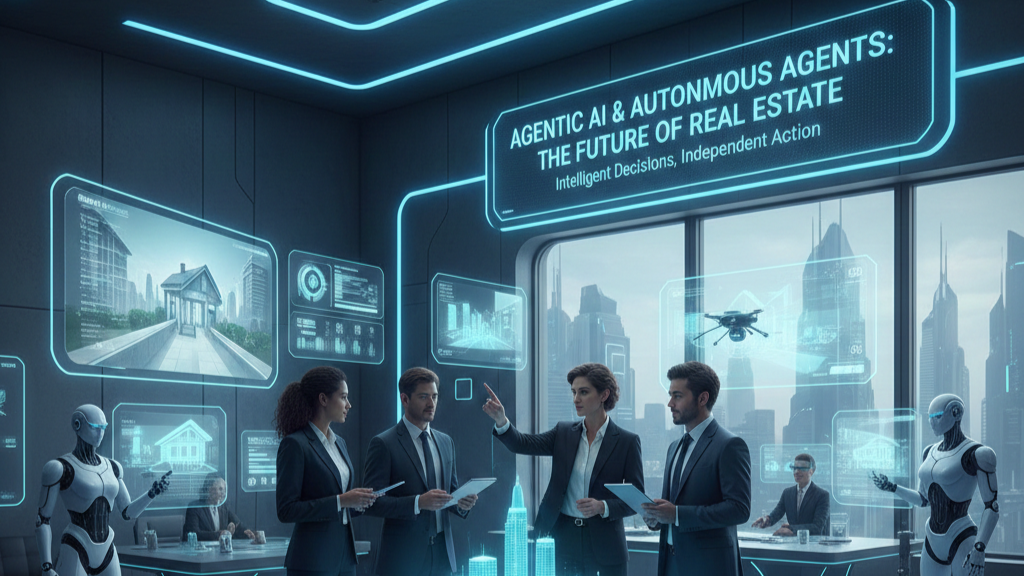
Real estate is entering a phase where technology no longer just supports decisions but actively makes and executes them. This shift is driven by Agentic AI and Autonomous AI Agents — systems designed to operate independently across complex workflows with minimal human intervention.
Unlike traditional software or basic AI tools, these systems do not wait for instructions at every step. They observe data, decide actions, execute tasks, and learn from outcomes. In property management and real estate investment, this changes how work gets done.
This blog explains what agentic AI really means, how autonomous agents function in real estate, and why they are being seen as digital teammates rather than tools.
What Is Agentic AI, Simply Explained
Agentic AI refers to AI systems that can pursue goals on their own within defined boundaries.
Instead of answering a single query or automating one task, an agentic system:
Understands a broader objective
Breaks it into steps
Executes actions across systems
Monitors outcomes and adjusts behaviour
In real estate, this could mean managing an entire leasing cycle or monitoring asset performance continuously, without manual supervision at every stage.
Autonomous AI agents are the operational form of agentic AI. They act persistently in the background, much like a junior team member who never switches off.
How Autonomous AI Agents Work in Real Estate
Autonomous agents operate by connecting multiple data sources and tools.
In a property context, this includes:
Lease documents and contracts
Maintenance logs and IoT sensor data
Market price trends and transaction data
Occupancy and rental performance metrics
The agent analyses this data, identifies patterns, and takes predefined actions. Humans step in mainly to set rules, approve critical decisions, or handle exceptions.
This makes AI a participant in workflows, not just an assistant.
Lease Abstraction Without Manual Effort
Lease abstraction is time-consuming and error-prone when done manually.
Autonomous AI agents can:
Read lease documents end to end
Extract key clauses, dates, and obligations
Flag unusual or risky terms
Update dashboards automatically
Instead of weeks of review, abstraction happens continuously and updates in real time when documents change.
This improves accuracy while freeing teams from repetitive legal work.
Predictive Maintenance Scheduling
Traditional maintenance is reactive or calendar-based.
Agentic AI enables predictive maintenance by:
Monitoring equipment usage patterns
Analysing sensor data from lifts, HVAC, or generators
Predicting failure probabilities
Scheduling service before breakdowns occur
This reduces downtime, controls costs, and improves resident experience without constant manual monitoring.
Market Analysis and Investment Decision Support
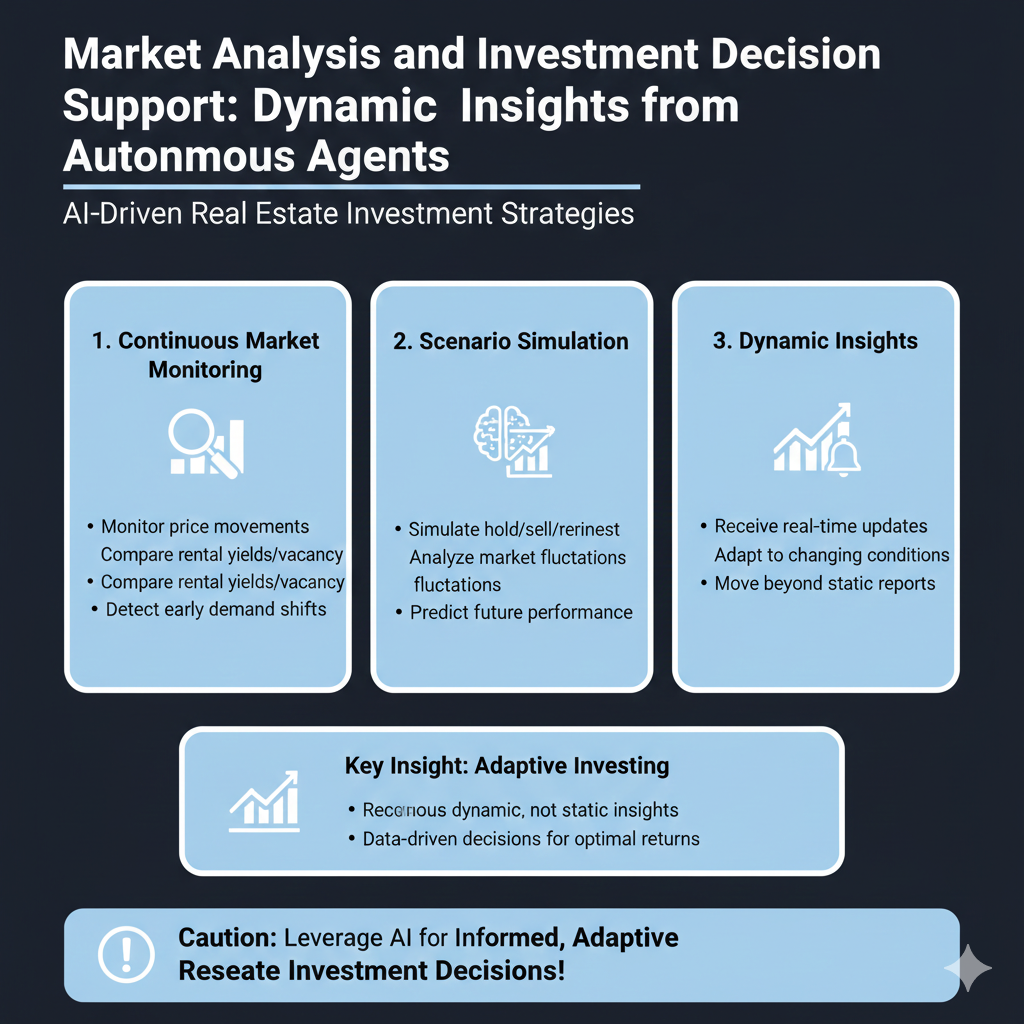
Autonomous agents can track markets continuously, not periodically.
They can:
Monitor price movements across micro-markets
Compare rental yields and vacancy trends
Detect early signs of demand shifts
Simulate scenarios for hold, sell, or reinvest decisions
Instead of static reports, investors receive dynamic insights that adapt as conditions change.
AI as a Digital Teammate
The real shift is psychological, not technical.
Autonomous agents behave less like software and more like team members who:
Work continuously
Handle routine complexity
Escalate only when judgment is required
This does not remove human decision-making. It reshapes it. Humans focus on strategy, negotiation, and accountability, while AI handles execution and monitoring.
Risks and Boundaries Buyers and Operators Must Understand
Agentic AI still needs boundaries.
Key considerations include:
Data quality and bias risks
Over-reliance without human oversight
Regulatory and compliance alignment
Clear accountability for decisions
AI should operate within defined guardrails, especially in financial and legal decisions.
FAQ Section
Is agentic AI different from normal automation?
Yes. Automation follows fixed rules, while agentic AI adapts actions based on outcomes.
Can autonomous AI replace property managers?
No. It replaces repetitive execution, not human judgment and accountability.
Is this technology already in use?
Yes, in parts. Lease abstraction, maintenance prediction, and market monitoring are already being deployed at scale.
Is agentic AI suitable for small portfolios?
It becomes more valuable as portfolio size and complexity increase.
Conclusion

Agentic AI and autonomous agents mark a shift from assisted work to delegated work.
In real estate, this means faster decisions, lower operational friction, and better visibility across assets. The winners will not be those who replace people with AI, but those who combine human judgment with autonomous execution intelligently.
AI is no longer just a tool. It is becoming a teammate.
Let’s Join Together to Bring Change to the World of Real Estate.
Thinking about your next home?
relai scores every project on data, not paid placements, and it's free for buyers.