Affordable Housing: Indian Initiatives vs US Models
Affordable Housing: Indian Initiatives vs US Models
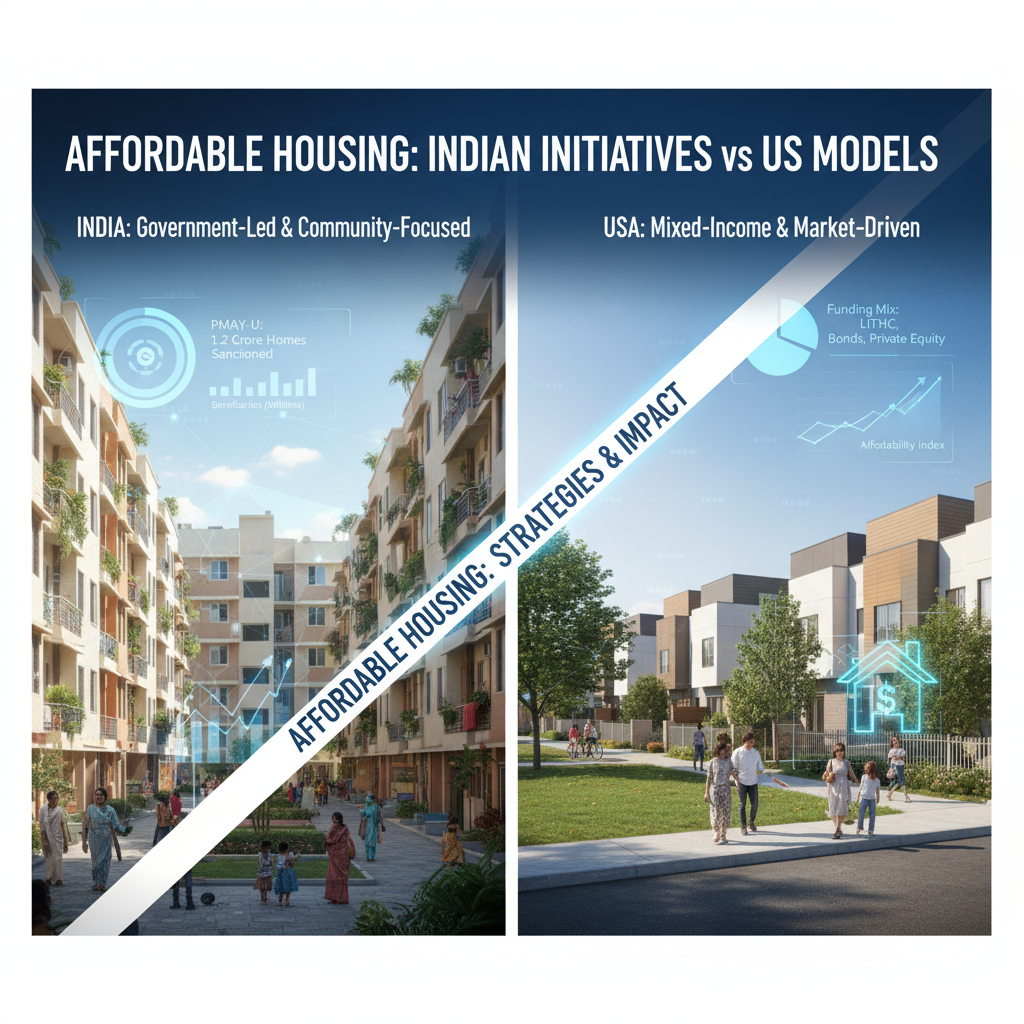
Affordable housing is a global challenge. Whether in rapidly urbanizing India or in the mature markets of the United States, governments, developers, and investors grapple with the same question: how do you provide quality housing at a price that ordinary citizens can afford?
While the goals are the same, the approaches differ greatly. India leans heavily on government-led missions and subsidies, while the US combines federal support with private participation and financing innovations. Let’s explore both landscapes and see what lessons can be drawn.
Why Affordable Housing Matters
Housing is not just about shelter—it directly impacts social stability, workforce productivity, and economic growth. Lack of affordable housing leads to urban slums, long commutes, and widening income inequality.
According to UN-Habitat, nearly 1.6 billion people globally lack adequate housing, with India alone facing a shortfall of around 29 million units (as per Ministry of Housing data). In the US, the National Low Income Housing Coalition estimates a shortage of 7.3 million affordable rental homes for extremely low-income households.
Clearly, the problem spans both developing and developed economies.
India’s Affordable Housing Push
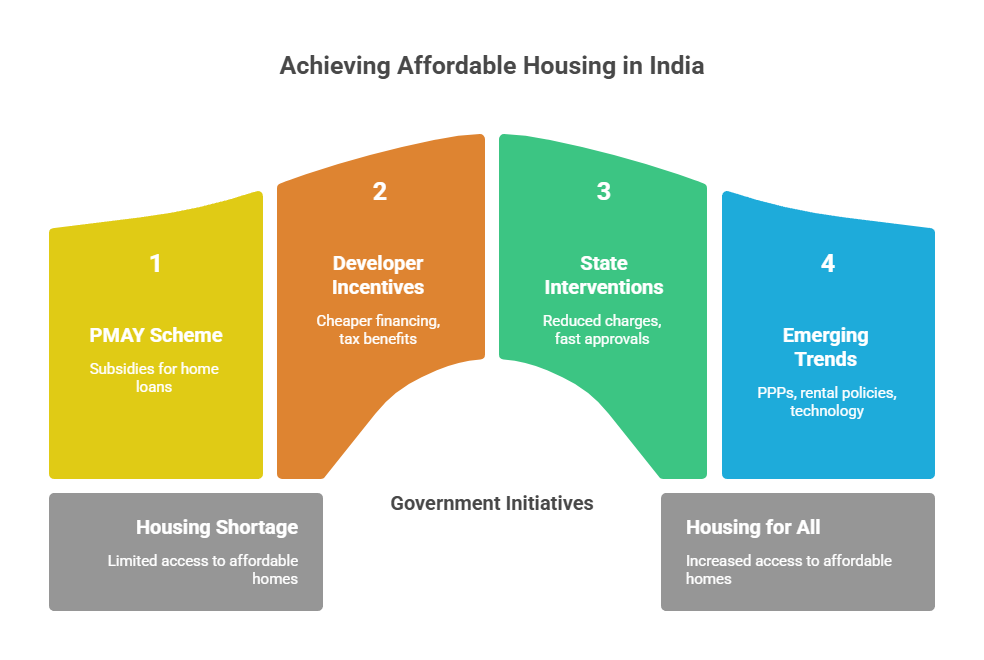
1. Pradhan Mantri Awas Yojana (PMAY)
Launched in 2015, PMAY aims to provide “Housing for All” by 2024. The scheme offers:
Subsidies on home loans under the Credit Linked Subsidy Scheme (CLSS).
Support for both urban and rural housing.
Partnerships with private developers to build mass housing projects.
As of 2024, over 22 million houses have been sanctioned, with significant focus on Tier-2 and Tier-3 cities.
2. Incentives for Developers
The Indian government has also classified affordable housing under Infrastructure Status, giving developers access to cheaper financing. Tax incentives are provided for building units within defined size and cost limits.
3. State-Level Interventions
Cities like Hyderabad, Mumbai, and Delhi NCR have introduced local schemes such as reduced development charges and fast-track approvals to boost affordable housing stock.
4. Emerging Trends
Public-private partnerships (PPPs): Large housing projects where state governments provide land and developers build low-cost housing.
Rental Housing Policies: Encouraging private participation in rental stock to serve migrant workers.
Technology Adoption: Use of precast construction, 3D printing, and modular housing to reduce costs.
US Affordable Housing Landscape
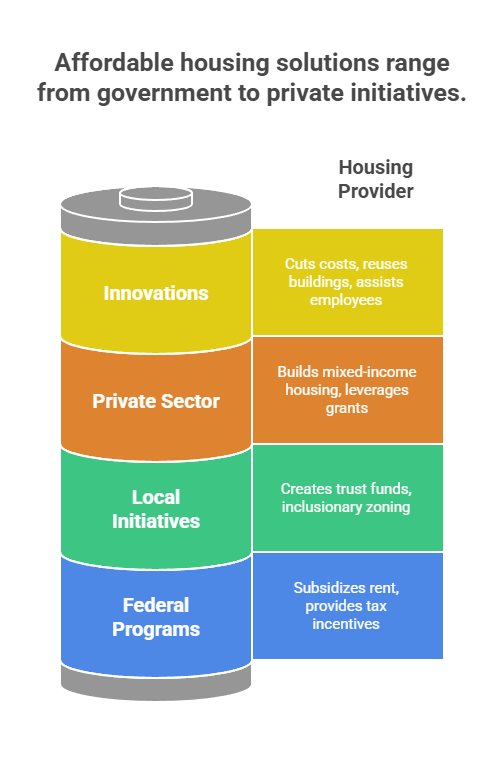
The United States faces a different challenge: while housing quality is generally higher, affordability is a major issue due to rising land prices, zoning restrictions, and stagnant wages.
1. Federal Programs
Section 8 Housing Choice Vouchers: Helps low-income families rent homes in the private market by subsidizing rent.
Low-Income Housing Tax Credit (LIHTC): Provides tax incentives to developers who build or preserve affordable housing.
Public Housing Authorities (PHAs): Manage and operate government-owned housing units.
2. Local Government Initiatives
Cities like New York, San Francisco, and Los Angeles have created their own affordable housing trust funds and inclusionary zoning policies, requiring developers to set aside a portion of units for low-income families.
3. Private Sector Role
The US has a robust ecosystem of non-profits and community developers who leverage grants, loans, and federal support to build mixed-income housing. Impact investors are also entering the sector, seeing affordable housing as both a social good and a steady, low-risk asset.
4. Innovations in Delivery
Modular housing to cut construction costs.
Adaptive reuse of old commercial buildings into affordable apartments.
Employer-assisted housing programs, where companies subsidize housing for workers in expensive markets.
Comparing India and the US
Factor | India | United States |
Housing Shortage | ~29 million units | ~7.3 million units |
Main Drivers | Urbanization, income disparity | High rents, wage stagnation |
Key Programs | PMAY, CLSS, PPPs | Section 8, LIHTC, PHAs |
Government Role | Central and state-led, heavy subsidies | Federal + state + private partnerships |
Developer Incentives | Infrastructure status, tax breaks | Tax credits, zoning relaxations |
Technology Use | Emerging (3D printing, modular homes) | Advanced (adaptive reuse, prefab housing) |
Both countries share similar objectives but differ in scale and execution. India is still addressing basic housing shortages, while the US focuses on affordability within already developed markets.
Lessons India Can Learn from the US
Tax Credit Models Work: India could adapt a LIHTC-style program to encourage private developers in mass housing.
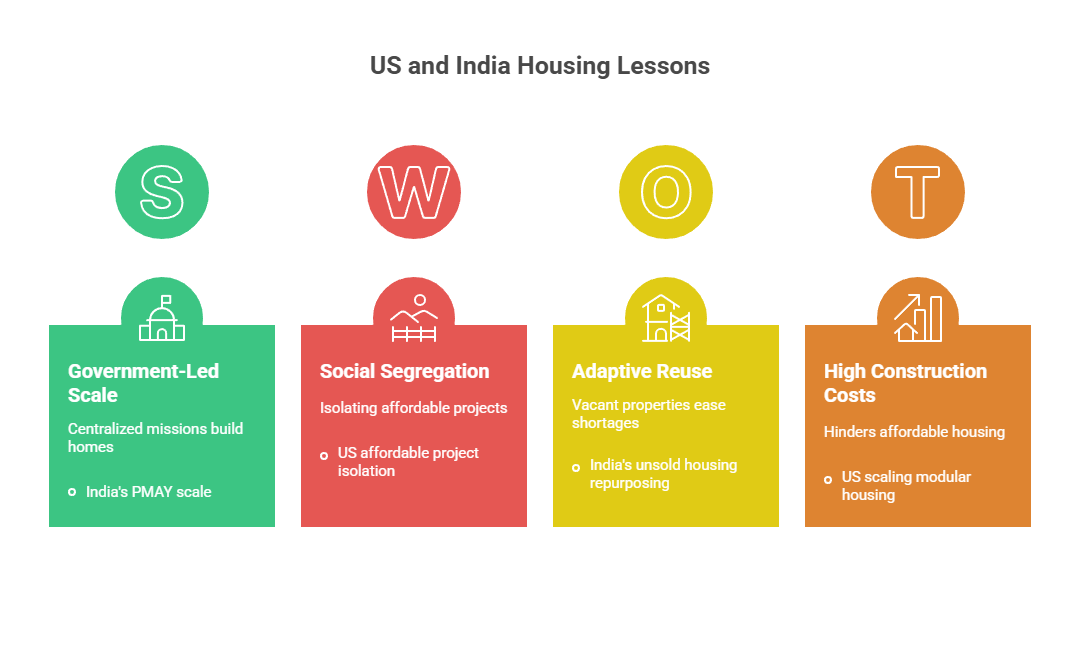
Mixed-Income Housing: Instead of isolating affordable projects, blending them into regular developments prevents social segregation.
Repurposing Vacant Properties: With India’s growing stock of unsold housing and idle commercial buildings, adaptive reuse could ease shortages.
Lessons the US Can Learn from India
Government-Led Scale: India’s ability to sanction millions of homes under PMAY highlights the power of centralized missions.
Subsidized Ownership: While the US focuses more on rental support, schemes like CLSS can help families build long-term equity.
Low-Cost Construction Technologies: India’s push for affordable construction methods could inspire the US to scale modular housing faster.
The Investor Angle
Affordable housing is also an investment opportunity. In India, rising urban migration and government support make it an attractive long-term bet, especially in Tier-2 and Tier-3 cities. In the US, steady rental yields and low vacancy rates ensure affordable housing projects attract impact investors and pension funds.
Advisory firms like Relai Real Estate in Hyderabad help investors understand the nuances of regulations, incentives, and project feasibility, making it easier to balance financial goals with social impact.
Conclusion

Affordable housing will remain a critical global challenge for decades to come. India is making strides through government-led programs like PMAY, while the US relies on financial tools and local partnerships. Each model has strengths and weaknesses, but the convergence of technology, public-private partnerships, and innovative financing offers hope for bridging the gap.
For investors, policymakers, and homebuyers, the lesson is clear: affordable housing is not just a social responsibility—it’s a long-term growth opportunity.
Thinking about your next home?
relai scores every project on data, not paid placements, and it's free for buyers.