A Beginner’s Guide to Real Estate Investing in India

Real estate is often seen as one of the safest ways to build long-term wealth in India. Yet for beginners, it can feel confusing, jargon-heavy, and risky. Stories of high returns exist alongside stories of stalled projects, legal disputes, and poor liquidity.
The truth is simple. Real estate investing is not about luck or insider access. It is about understanding a few core concepts, avoiding common mistakes, and starting in a way that limits downside risk.
This guide is written for beginners. It explains basic terms every investor must know, highlights mistakes first-time investors often make, and shows how to start investing in Indian real estate with lower risk.
Basic Real Estate Terms Every Investor Must Know
Understanding a few key terms changes how you evaluate any property.
Capital appreciation refers to the increase in a property’s value over time. This depends largely on location, demand, and infrastructure growth.
Rental yield is the annual rental income expressed as a percentage of the property’s purchase price. In most Indian cities, residential rental yields range between 2% and 4% (Knight Frank India Residential Research).
Carpet area is the actual usable area inside the home. Super built-up area includes common areas like lifts, corridors, and clubhouses. Buyers should always compare prices using carpet area.
Undivided Share of Land (UDS) represents your ownership portion of the land beneath an apartment. Higher UDS generally supports better long-term value.
Liquidity refers to how easily a property can be sold at market price. Assets with strong end-user demand have better liquidity.
RERA is the Real Estate (Regulation and Development) Act, introduced to improve transparency and accountability in the sector. RERA registration is mandatory for most new projects (Real Estate Regulatory Authority – India).
Common Beginner Mistakes in Real Estate Investing
One of the biggest mistakes beginners make is chasing appreciation without understanding demand. Buying purely based on future projections, without current end-user activity, increases risk.
Another mistake is overleveraging. Stretching finances based on optimistic rental or resale assumptions can cause stress if markets slow or possession gets delayed.
Ignoring legal due diligence is also common. Many first-time investors assume reputed builders eliminate all risk. Title clarity, approvals, and documentation still need independent verification.
Beginners often focus only on purchase price and ignore holding costs. Maintenance charges, property tax, vacancy periods, and repairs impact real returns over time.
Finally, emotional buying leads to poor decisions. A home that feels attractive to live in may not always make sense as an investment.
Understanding Risk in Real Estate
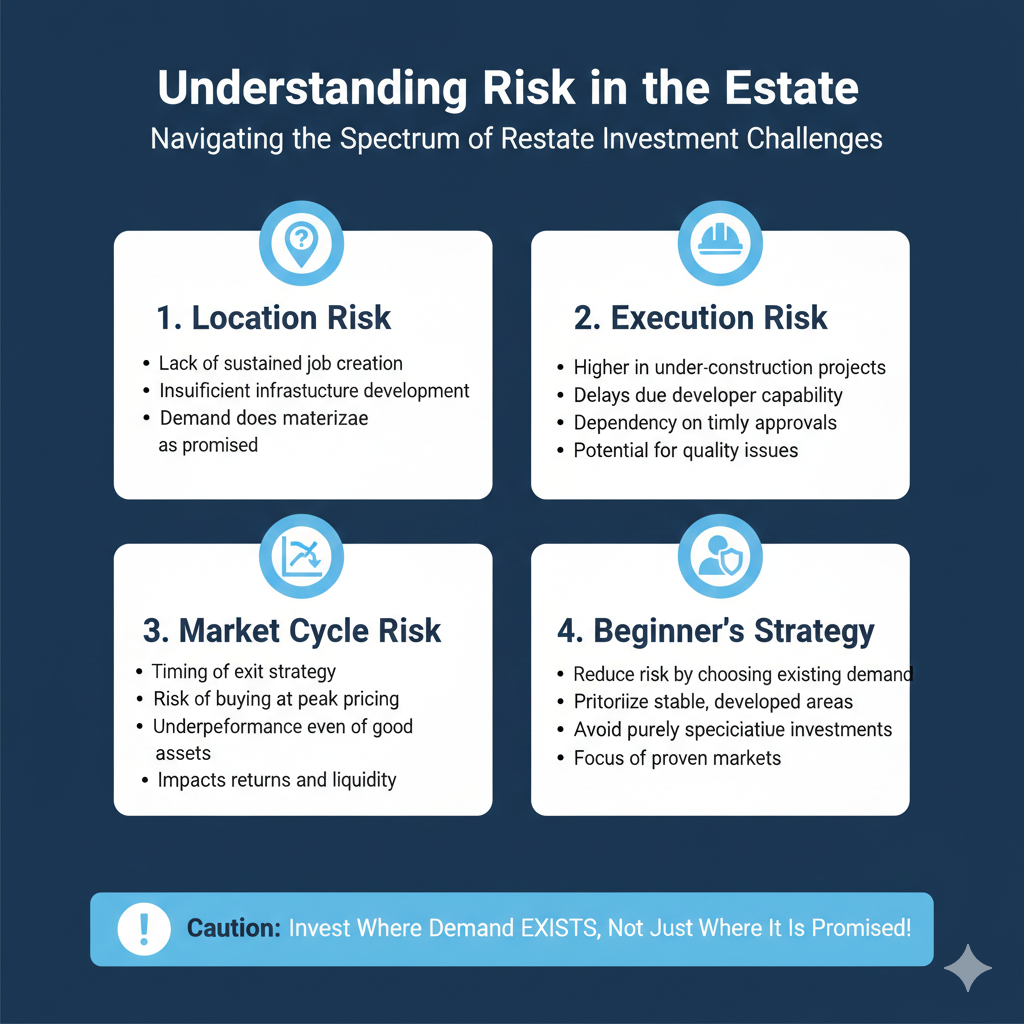
Real estate risk is not binary. It exists on a spectrum.
Location risk arises when areas lack sustained job creation or infrastructure follow-through.
Execution risk is higher in under-construction projects where delivery timelines depend on developer capability and approvals.
Market cycle risk affects exit timing. Even good assets can underperform if bought at peak pricing.
Beginners reduce risk by choosing assets where demand already exists, not just where it is promised.
How Beginners Can Start With Lower Risk
Starting small and simple is usually safer.
Ready-to-move-in or near-completion properties reduce execution risk. While entry prices may be higher, visibility on quality, possession, and rental potential improves certainty.
Choosing demand-driven locations matters more than choosing the cheapest option. Proximity to employment hubs, transport connectivity, schools, and hospitals supports both rental and resale demand.
First-time investors should prioritise clean documentation and RERA-compliant projects. Transparency reduces downside risk.
Keeping leverage conservative helps. EMIs should be manageable even without rental income for a few months.
Professional advice adds value. A legal review before purchase costs far less than fixing a bad decision later.
Investment vs End-Use: Clarity Matters
Beginners often mix investment and self-use objectives.
An investment-focused purchase should prioritise liquidity, demand, and exit flexibility. Personal preferences take a back seat.
End-use purchases can justify compromises on yield or appreciation if lifestyle needs are met.
Being clear about intent avoids disappointment later.
FAQ Section
Is real estate a good investment for beginners in India?
Yes, if approached carefully. Real estate rewards patience and discipline more than speculation.
How much money do I need to start investing?
There is no fixed number. Beginners should invest only after building an emergency fund and ensuring EMI comfort.
Are under-construction projects suitable for beginners?
Generally no. They carry higher execution and delay risks that first-time investors may find difficult to manage.
What is the safest real estate investment for beginners?
Demand-driven, ready-to-move-in residential properties with clean documentation are among the lower-risk options.
Conclusion
Real estate investing in India does not require expert-level knowledge, but it does require discipline. Beginners who understand basic terms, avoid common mistakes, and focus on risk control rather than quick gains build far better outcomes over time.
The goal is not to maximise returns in the first deal, but to avoid mistakes that remove you from the game altogether. A steady, informed start creates room for smarter growth later.
Let’s Join Together to Bring Change to the World of Real Estate
Thinking about your next home?
relai scores every project on data, not paid placements, and it's free for buyers.