3D Printing in Construction: Faster, Cheaper, Greener Homes
3D Printing in Construction: Faster, Cheaper, Greener Homes
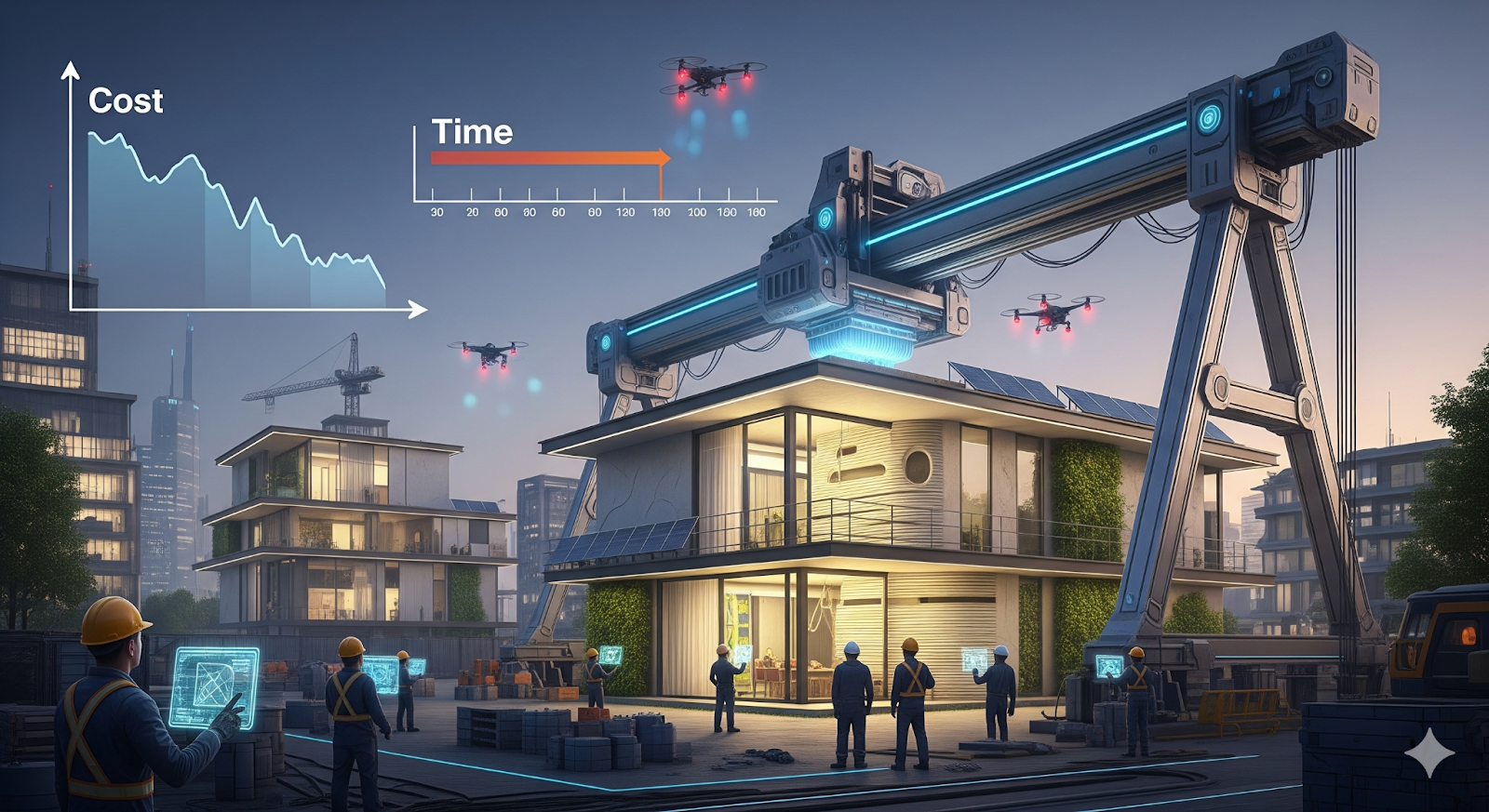
For decades, the construction industry has been slow to change. Bricks, mortar, steel, and concrete have dominated skylines, while labor-heavy methods have kept costs and timelines high. But in 2025, one technology is rewriting the rules of the game: 3D printing in construction.
What was once a futuristic idea—printing an entire house layer by layer—has now become a practical reality in several parts of the world, including India. With its ability to deliver speed, cost savings, and sustainability, 3D printing is set to transform how we think about building homes and commercial spaces.
In this blog, we explore how the technology works, why it matters, and what the future holds for 3D-printed real estate.
How 3D Printing in Construction Works
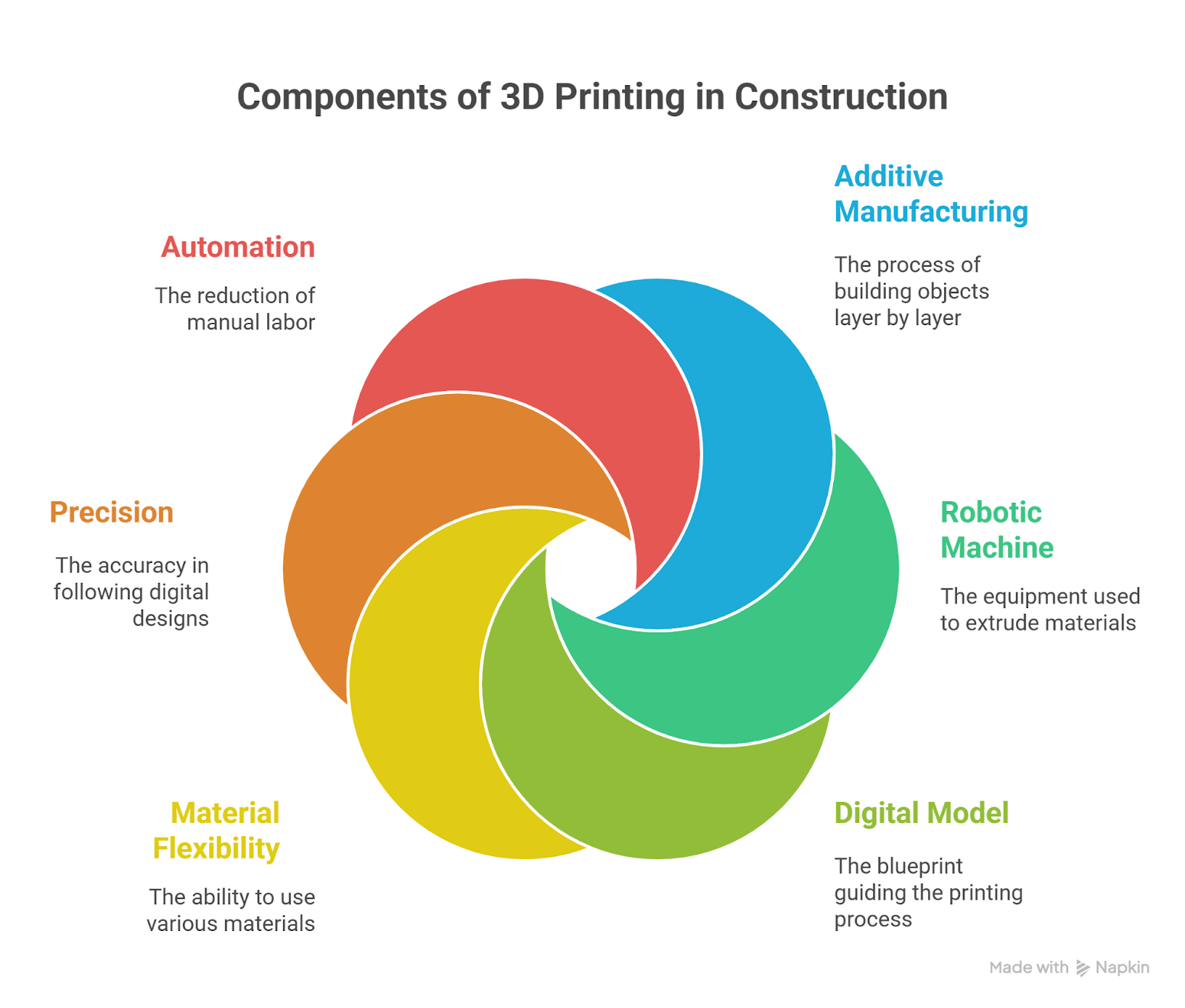
3D printing, also called additive manufacturing, creates objects by depositing material layer by layer. In construction, the “printer” is a large robotic machine that uses concrete-based mixes, polymers, or even recycled materials.
Instead of laying individual bricks, the printer follows a digital model (CAD design) to extrude material directly into walls and structural components. Windows, doors, and plumbing are then added afterward.
Some key advantages of the method include:
Precision: Printers follow digital designs with near-zero error.
Automation: Minimal manual labor is needed.
Material flexibility: From eco-friendly concrete to recycled waste, a variety of mixes can be used.
Faster: Cutting Construction Time in Half
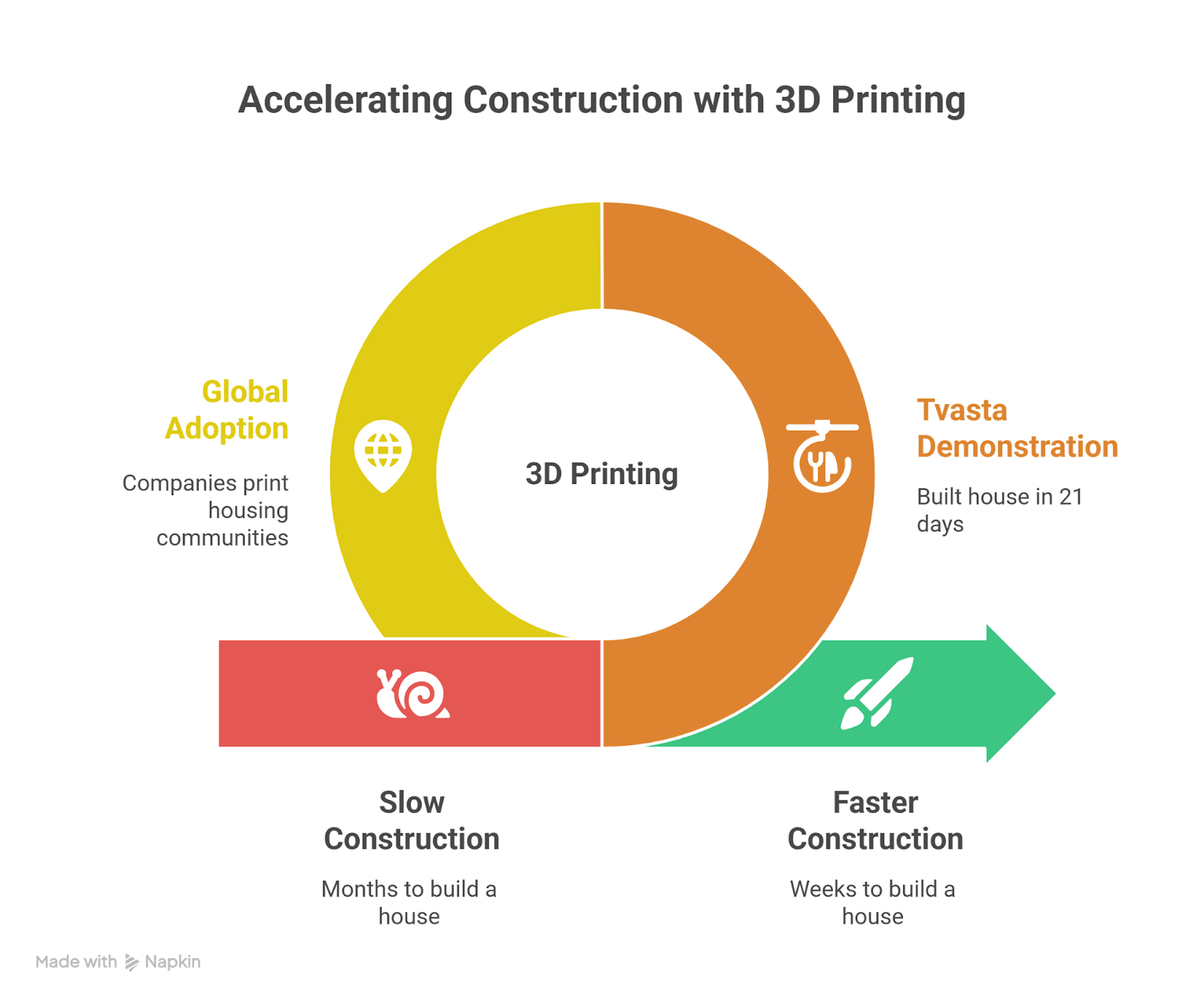
Traditional construction of a 2BHK house can take anywhere from 4 to 6 months. With 3D printing, the same structure can be built in as little as 3–4 weeks.
In 2021, IIT-Madras-backed startup Tvasta demonstrated India’s first 3D-printed house in Chennai, built in just 21 days. Globally, companies like ICON in the U.S. and COBOD in Europe have already printed entire housing communities in record time.
For developers, this speed means:
Quicker project completion
Faster sales cycles
Earlier cash flow realization
For buyers, it translates into reduced waiting times and greater trust in project timelines.
Cheaper: Lower Labor and Material Costs
Construction costs are heavily influenced by two factors—labor and raw materials.
3D printing reduces both:
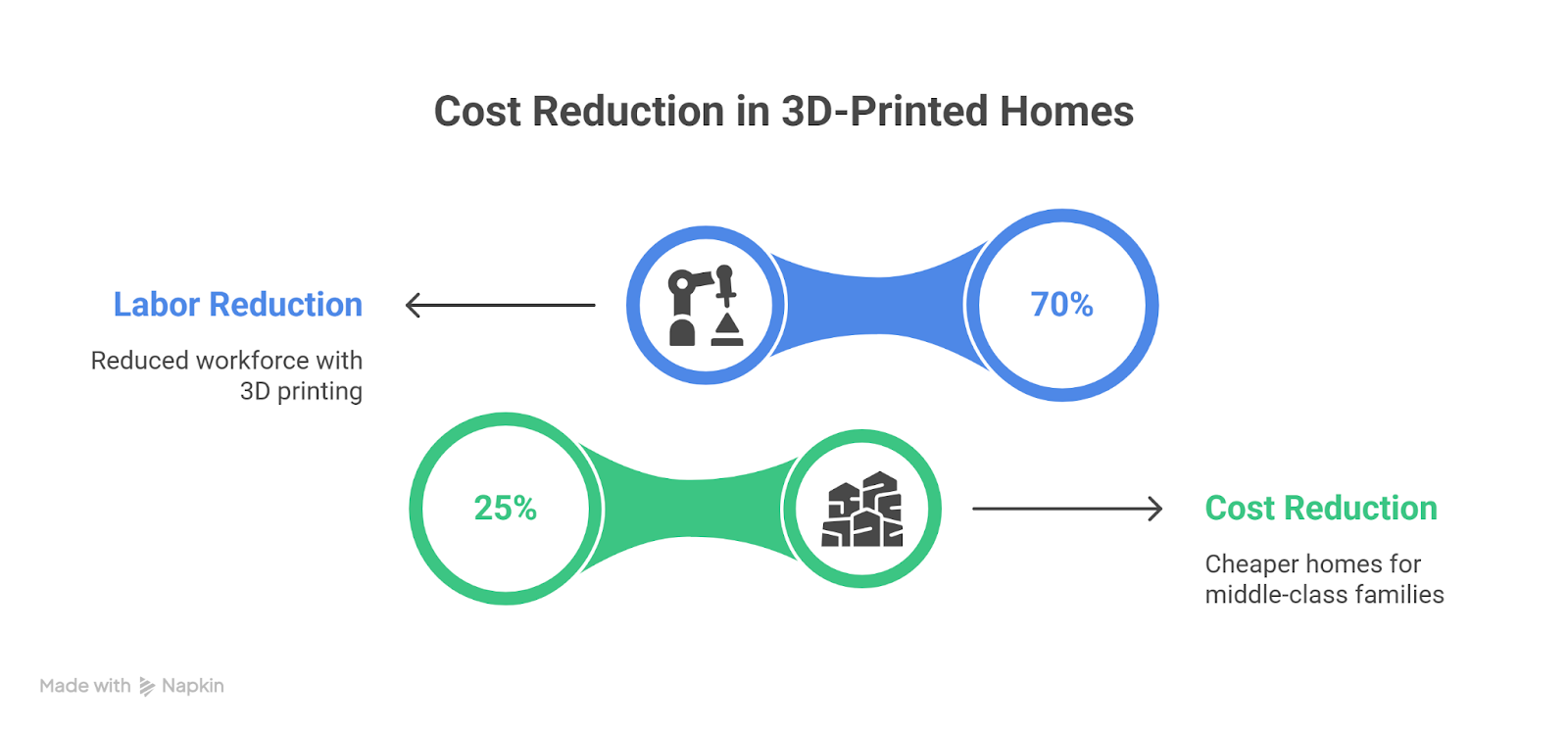
Labor requirement drops by up to 70%, since only machine operators and technicians are needed.
Precision reduces material wastage, cutting cement and concrete usage significantly.
According to a World Economic Forum study, 3D-printed homes can be 20–30% cheaper than conventionally built ones. For middle-class families in India struggling with rising real estate prices, this could be a game-changer.
Greener: Building for Sustainability
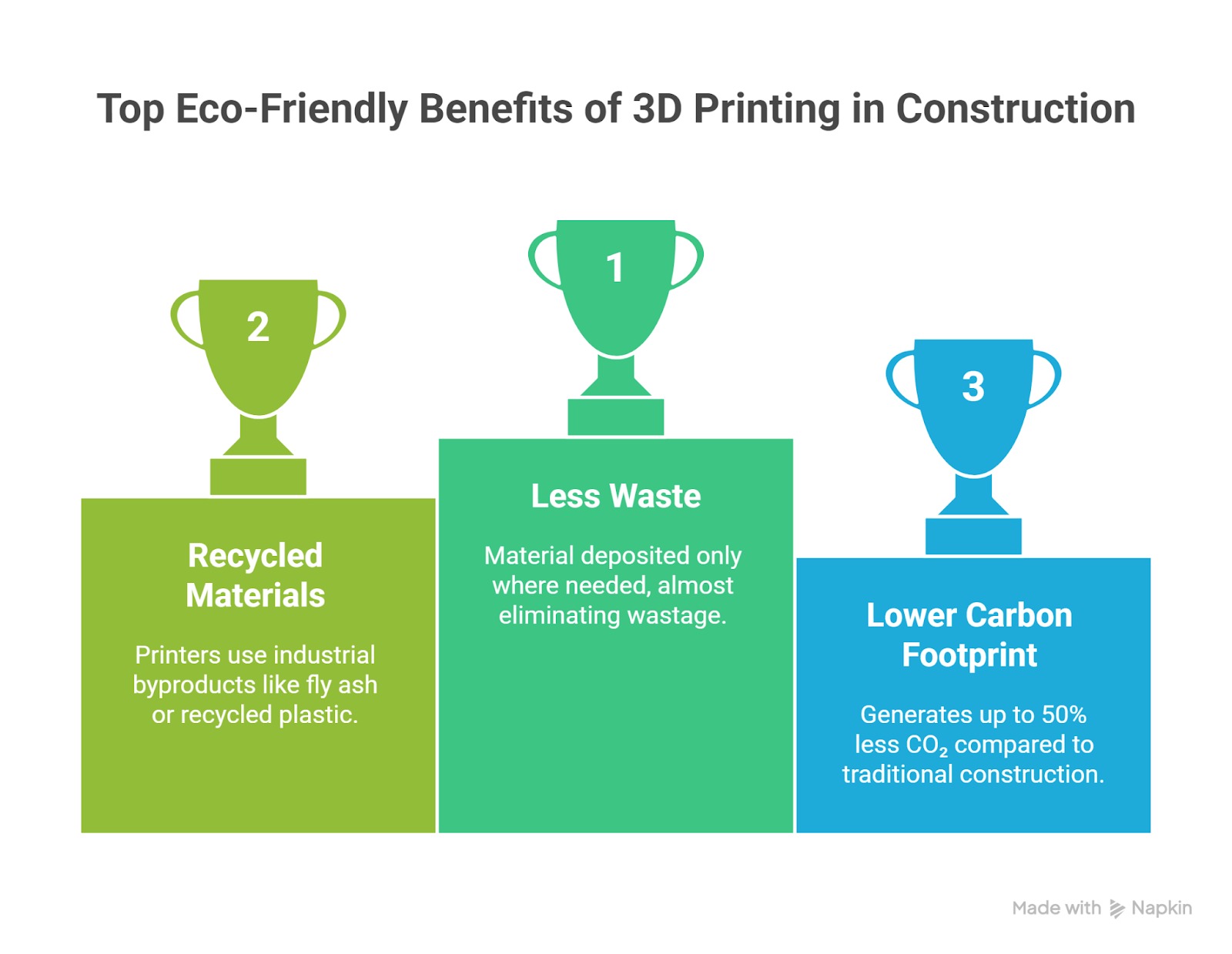
One of the biggest selling points of 3D printing in construction is its eco-friendly potential.
Less Waste: Since material is deposited only where needed, wastage is almost eliminated.
Recycled Materials: Printers can use industrial byproducts like fly ash or even recycled plastic.
Lower Carbon Footprint: Studies suggest that 3D-printed buildings generate up to 50% less CO₂ compared to traditional construction.
In a world where climate-conscious buyers are increasingly seeking sustainable homes, 3D printing aligns perfectly with green building goals.
Real-World Examples of 3D-Printed Homes
India: Tvasta’s 600 sq. ft. house in Chennai (built in 21 days) showed how affordable housing could scale.
U.S.: ICON built 3D-printed homes in Austin, Texas, priced around $450,000—competitive with traditional homes in the area.
Europe: COBOD constructed multi-storey 3D-printed apartment complexes, proving scalability beyond small homes.
These examples highlight the global acceptance of 3D printing as more than just a novelty.
Challenges That Remain
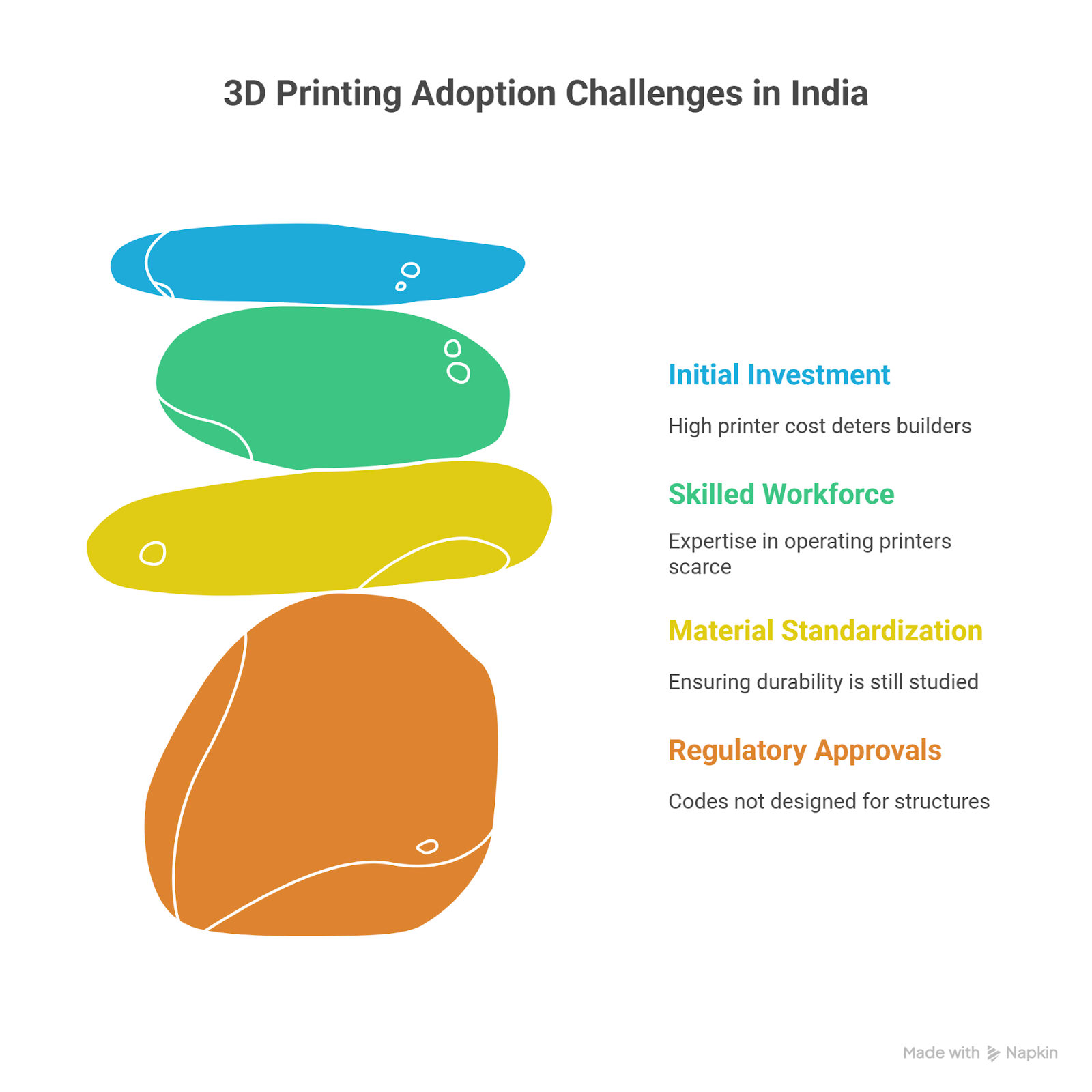
While the benefits are clear, the technology faces hurdles before mass adoption in India:
Regulatory approvals – Current building codes are not designed for 3D-printed structures.
Material standardization – Ensuring durability of 3D-printed concrete over decades is still being studied.
Skilled workforce – While labor demand is lower, expertise in operating printers is scarce.
Initial investment – Printers cost crores, which can deter smaller builders.
These challenges mean that 3D printing may initially be used in affordable housing projects or pilot developments before becoming mainstream.
What It Means for Buyers and Investors
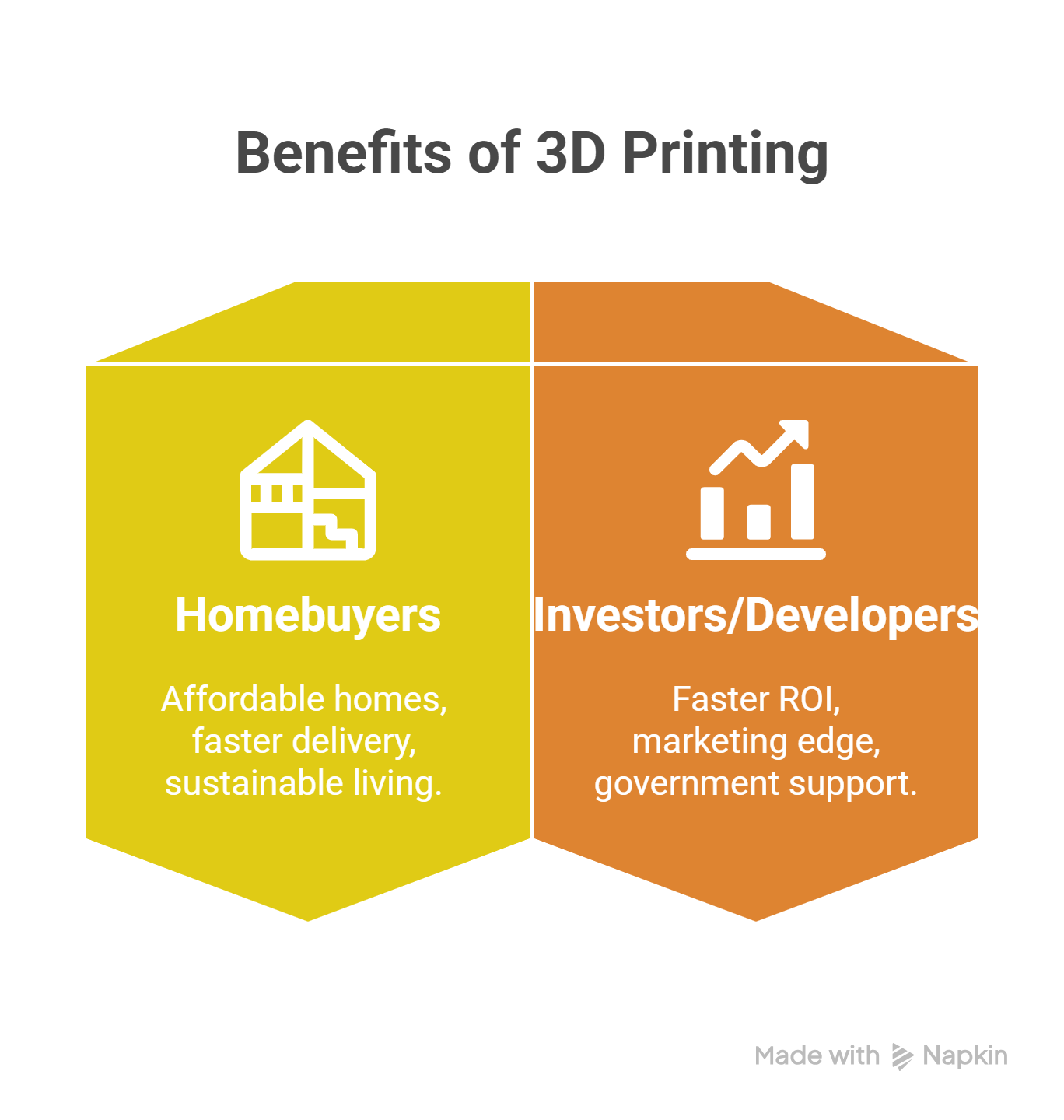
For homebuyers, 3D printing could soon mean:
Affordable entry-level homes priced lower than traditional builds
Faster delivery of projects with fewer delays
Sustainable living with lower carbon footprints
For investors and developers, it offers:
Faster ROI cycles due to speed of construction
Marketing edge as eco-friendly, tech-driven projects appeal to new-age buyers
Potential government support as affordable housing aligns with national housing goals
The Road Ahead
By 2030, experts estimate that 10–15% of new homes worldwide could be 3D-printed. India, with its housing shortage and affordability gap, is one of the best-suited markets for rapid adoption.
The government’s focus on affordable housing, combined with Hyderabad and Bengaluru’s tech-driven ecosystems, could make these cities early adopters of 3D-printed construction.
Conclusion

3D printing in construction is not just a trend—it is the future of real estate. Homes that are faster to build, cheaper to buy, and greener to live in are exactly what the next generation of homeowners is demanding.
While challenges remain in regulation, scale, and awareness, the direction is clear: 3D printing will play a central role in solving India’s housing and sustainability challenges.
As a buyer or investor, keeping an eye on this trend today could give you a first-mover advantage in tomorrow’s property market
Thinking about your next home?
relai scores every project on data, not paid placements, and it's free for buyers.