Top 5 Areas in Hyderabad with the Most Noise Pollution in 2026
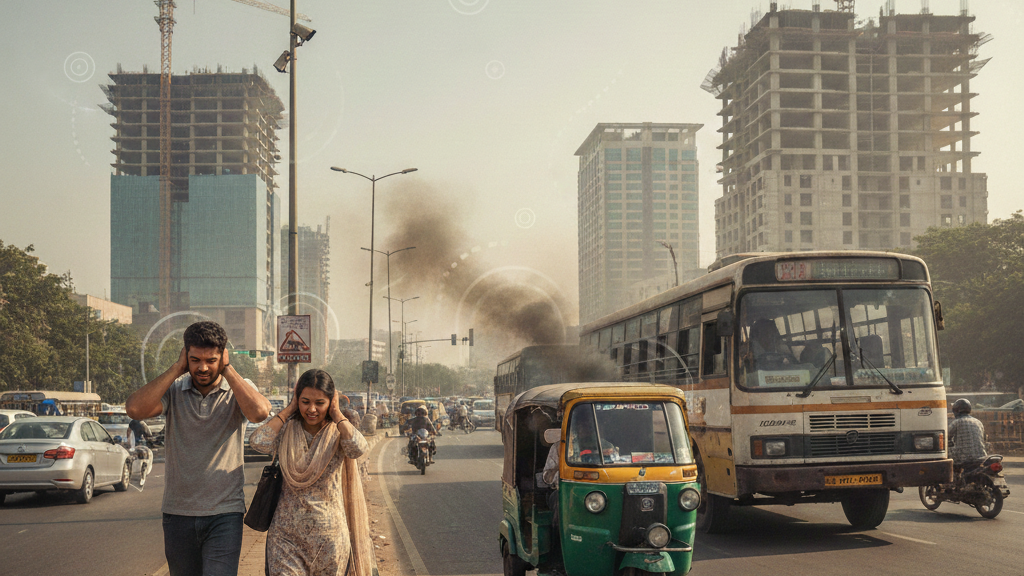
Noise pollution is an invisible but powerful factor that affects everyday comfort, health, and long-term wellbeing. For homebuyers in Hyderabad — especially families with children, professionals working from home, or those planning retirement — understanding where noise is worst matters just as much as assessing prices or connectivity.
This blog explains what noise pollution is, the key causes in Hyderabad’s busiest zones, how it impacts different age groups, precautions for buyers, and steps residents and authorities can take to reduce it.
What Is Noise Pollution?
Noise pollution refers to unwanted or harmful sound that disrupts normal life and has negative effects on health. It is typically measured in decibels (dB). Here are some typical benchmarks:
30–40 dB: Quiet residential area
50–60 dB: Moderate day time noise
70–85 dB: Heavy traffic areas
Above 85 dB: Can cause hearing damage with prolonged exposure
In cities like Hyderabad, noise levels frequently exceed healthy limits near highways, marketplaces, transport hubs, and construction zones.
Top 5 Areas in Hyderabad with the Highest Noise Levels
1. Hyderabad Inner Ring Road (HITEC City – Madhapur Stretch)
This stretch — including HITEC City and Madhapur — consistently records high decibel levels. With continuous traffic, office movement, honking, and commercial activity from early morning to late night, noise levels often exceed 75–80 dB.
Root Cause:
Heavy IT traffic and buses
Commercial zones with deliveries, honking, public announcements
Nighttime movement of ride-hailing vehicles
This urban core is dynamic, but the trade-off for convenience is significant ambient noise.
2. Gachibowli & Financial District Junctions
As one of Hyderabad’s busiest job hubs, Gachibowli sees high traffic flow throughout the day. Roads near Sarath City Capital Mall, Financial District, and major junctions report noise above 70 dB, especially during peak hours.
Root Cause:
Heavy office-related vehicle movement
Buses, autos, and 24/7 transport services
Nearby construction and infrastructure activity
Workers here may face noise well into evening due to ongoing development.
3. KPHB & Kukatpally Main Roads
Kukatpally and KPHB (Kukatpally Housing Board) roads are among the busiest retail and transit corridors in North Hyderabad. Decibel levels often range 65–75 dB due to mixed traffic and dense pedestrian movement.
Root Cause:
Crowded marketplaces
Autos, buses, and passenger vehicles
Frequent honking and signal congestion
Residents here cite regular night-time noise from 2-wheeler traffic and public transport.
4. Secunderabad Railway Station & Surrounding Zones
The Secunderabad station area — including Sitaphalmandi and Malkajgiri — experiences elevated sound levels due to train whistles, engine noise, platform announcements, and heavy commuter movement.
Root Cause:
Train operations (day/night)
Public announcements
Nearby bus terminals and passenger load zones
While convenient for commuters, proximity to transport hubs brings persistent noise.
5. Mehdipatnam Junction & NH44 Corridor
The Mehdipatnam – NH44 stretch is a major arterial route in South Hyderabad. With trucks, intercity buses, city traffic, and continuous honking, this corridor consistently records high noise, especially near junctions and signal points.
Root Cause:
Intercity bus and truck movement
Signal congestion and honking
Commercial traffic near retail clusters
Noise levels here routinely hover above healthy thresholds, particularly during morning and evening rush hours.
Problems Caused by Noise Pollution
Noise affects people differently, depending on age, lifestyle, and health:
Children
Difficulty concentrating
Disrupted sleep patterns
Increased stress and irritability
Working Adults
Reduced productivity
Stress, headache, and concentration issues
Increased fatigue
Senior Citizens
Aggravated cardiovascular risks
Sleep disruption
Increased anxiety and stress response
Long-term exposure to noise above 85 dB can even lead to permanent hearing damage without protective measures.
Why These Areas Have High Noise Levels
Several structural and behavioural factors contribute:
Traffic Density: Core tech and business corridors have heavy vehicular movement throughout the day.
Mixed-Use Zones: Areas with retail, offices, and residences in close proximity experience prolonged noise exposure.
Transport Hubs: Train stations, bus terminals, and freeway junctions generate constant sound.
Lack of Noise Barriers: Many roads and constructions lack acoustic buffers or green belts to absorb sound.
Construction Activity: Ongoing development contributes to elevated background noise levels.
Together, these elements make certain parts of Hyderabad noisier than others.
Precautions if Buying in High Noise Pollution Areas
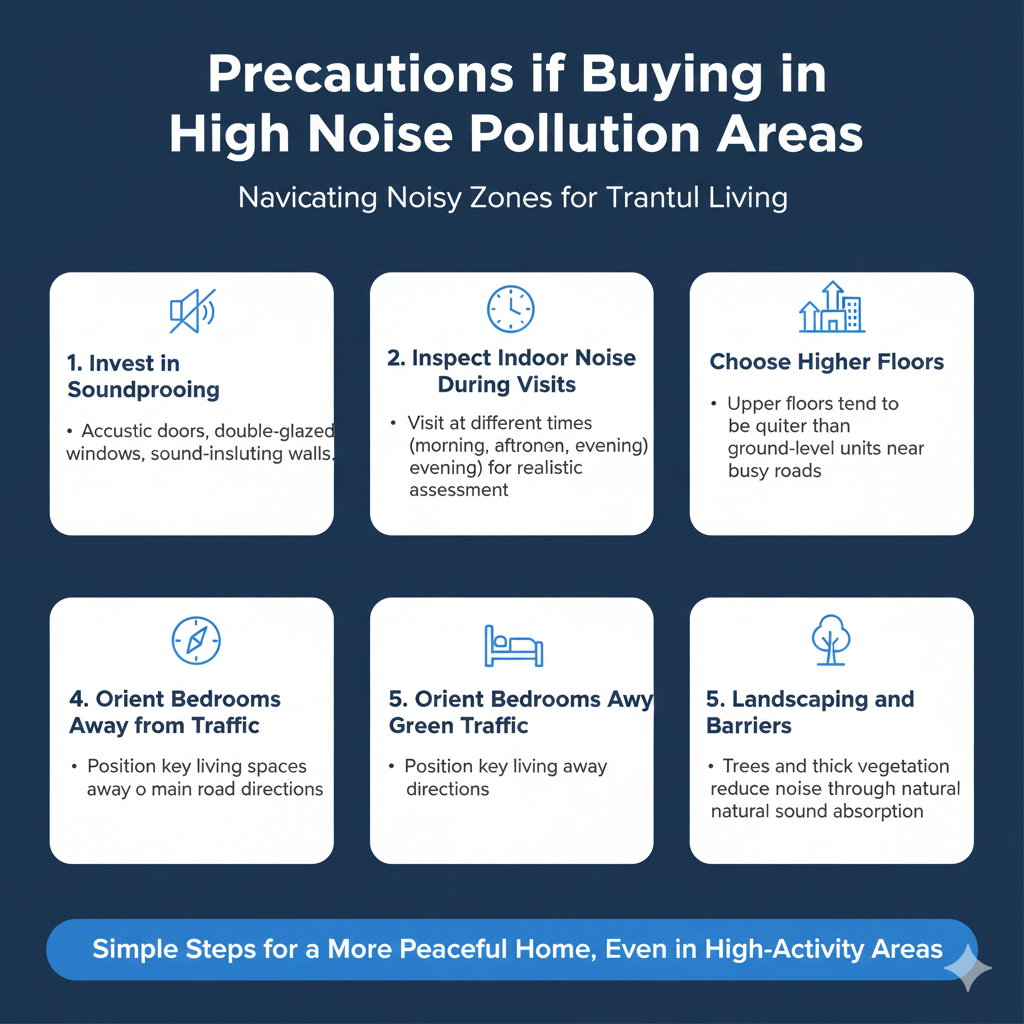
Buying in a noisy zone doesn’t mean giving up comfort, but it does require thoughtful planning:
1. Invest in Soundproofing
Use acoustic doors, double-glazed windows, and sound-insulating walls to reduce external noise.
2. Inspect Indoor Noise During Visits
Visit properties at different times (morning, afternoon, evening) to assess noise levels realistically.
3. Choose Higher Floors
Upper floors tend to be quieter than ground-level units near busy roads.
4. Orient Bedrooms Away from Traffic
If possible, position key living spaces away from main road directions.
5. Landscaping and Green Barriers
Trees and thick vegetation around homes can reduce noise through natural sound absorption.
These simple precautions can greatly improve living experience even in high-noise zones.
What Authorities and Residents Can Do to Reduce Noise Pollution
Tackling noise pollution requires both policy action and community participation:
1. Implement Noise Zoning Regulations
Clear limits for maximum allowable noise in residential and mixed-use areas — enforced by local traffic and environmental authorities.
2. Traffic Management
Smooth traffic flow, dedicated lanes, and speed enforcement reduce loud braking and honking.
3. Acoustic Barriers on Highways
Installing sound-absorbing walls along major roads and transit corridors can greatly reduce impact on nearby homes.
4. Controlled Construction Practices
Limiting construction hours and using noise-reducing machinery helps protect nearby residents.
5. Promote Electric Vehicles (EVs)
EVs generate significantly less noise than combustion engines, especially in stop-start traffic.
6. Green Urban Design
Planting trees along roads and around residential layouts acts as a natural noise buffer.
7. Public Awareness Campaigns
Educating drivers about honking etiquette, speed limits, and community noise responsibility can lead to behavioural change.
These steps make cities more liveable for everyone.
FAQ Section
Is noise pollution worse near major roads?
Yes. Areas near highways, junctions, and transport hubs tend to have the highest decibel levels.
Can soundproofing solve noise issues completely?
It helps significantly indoors but cannot eliminate all external noise. Combined architectural planning and urban policy support is most effective.
Are there legal limits on noise in Hyderabad?
Yes, environmental authorities set daytime and nighttime limits, but enforcement remains uneven — especially in high-growth zones.
Does traffic calmness reduce noise?
Yes. Smoother traffic flow leads to less honking, fewer abrupt stops, and lower overall sound levels.
Conclusion

Noise pollution is a silent yet significant factor affecting quality of life in Hyderabad. Areas like the HITEC City-Madhapur corridor, Gachibowli, Kukatpally, Secunderabad station zones, and Mehdipatnam/NH44 regularly record high noise levels, driven by traffic, transport hubs, and development activity.
If you’re considering buying in these zones, it’s essential to understand how noise impacts daily living, take practical precautions (like soundproofing and smart apartment orientation), and advocate with your community and authorities for noise-reducing policies and infrastructure.
At Relai – For right home, we help buyers assess both environmental and real estate factors — because healthy, comfortable living matters as much as price and location.
Let’s Join Together to Bring Change to the World of Real Estate.
Thinking about your next home?
relai scores every project on data, not paid placements, and it's free for buyers.