Unsold Inventory in India: Why Buyers Are Slowing Down and What It Means for the 2025 Market
Unsold Inventory in India: Why Buyers Are Slowing Down and What It Means for the 2025 Market
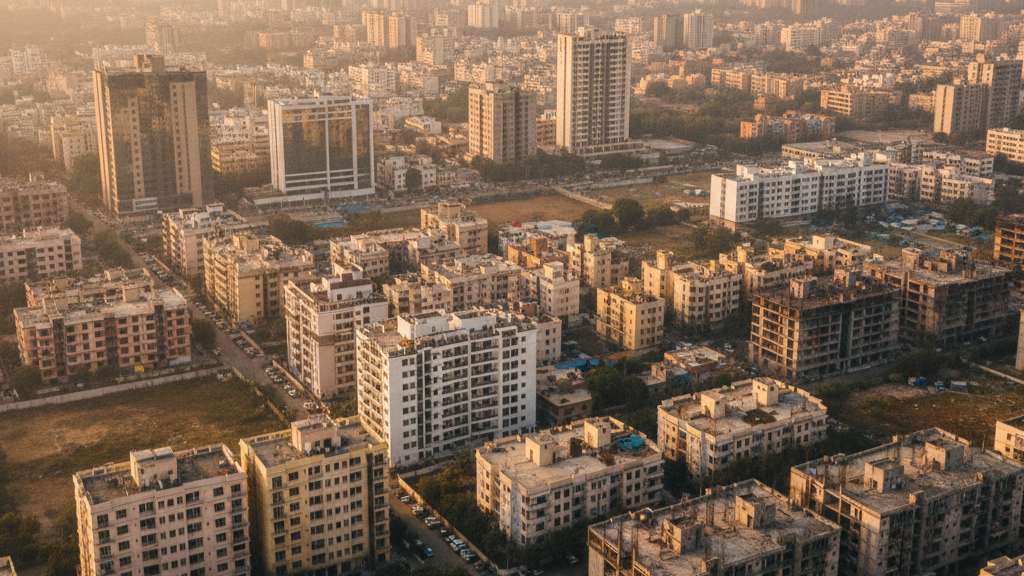
The Indian housing market is going through a strange mix of strength and caution. Prices are stable in most large cities, construction pace is improving, and demand for mid-segment homes is steady. Yet, a new concern is showing up across reports: unsold inventory rising again, especially in standalone buildings across Mumbai and Thane.
At the same time, buyers are becoming more careful, delaying decisions, checking more options, and waiting for festive deals. The slowdown is real. Data confirms a 20% drop in Q2 sales in some pockets and a 9% year-to-date decline across the top cities according to field reports from multiple market trackers.
So, what exactly is happening? And what does this mean for someone planning to buy in the next six months?
What’s Causing the Rise in Unsold Inventory?
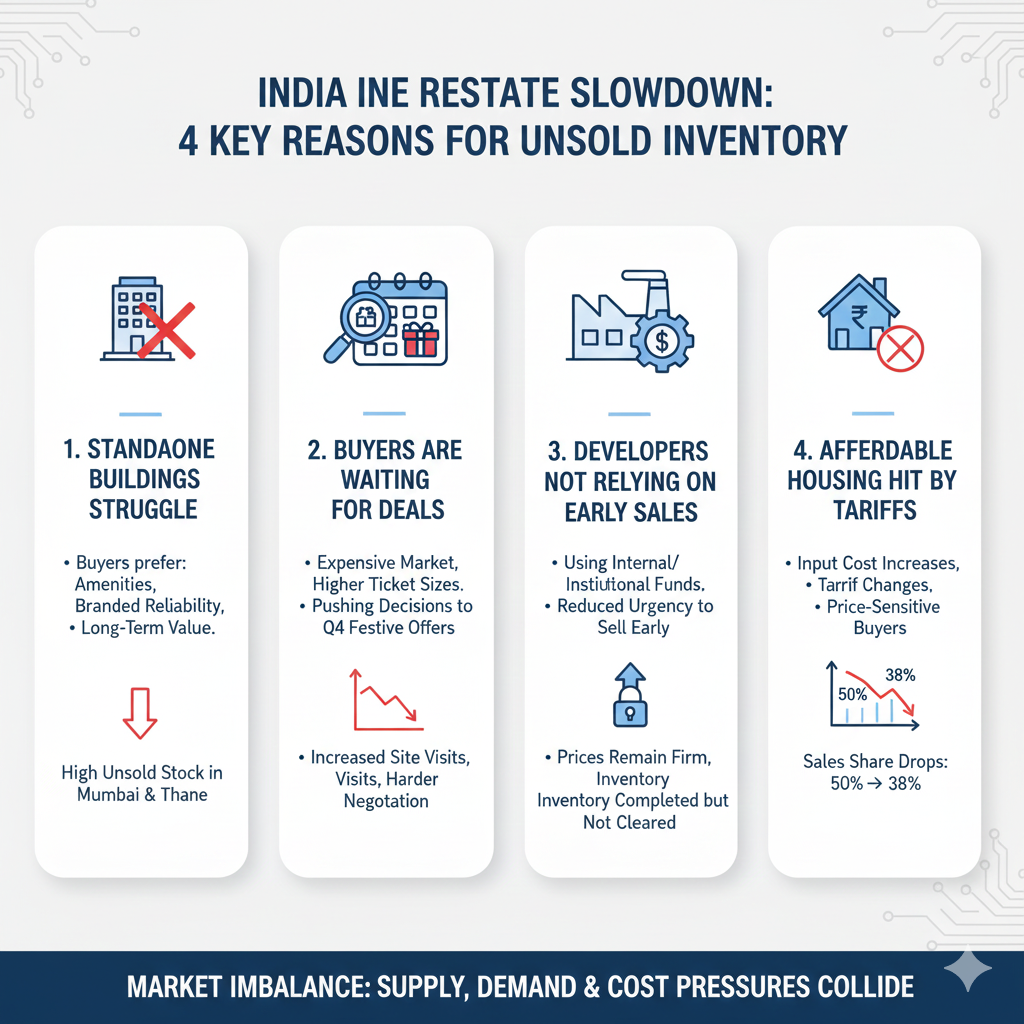
1. Standalone Buildings Are Struggling the Most
Large developers with strong balance sheets are still selling well, but smaller standalone projects are not moving at the same pace. Many of these projects are already complete or nearing completion, yet buyers are not rushing in. The reason is simple:
buyers prefer amenities
buyers prefer branded reliability
and buyers want long-term value
A standalone building without modern facilities loses appeal. This is why Mumbai and Thane, which have hundreds of such buildings, now show some of the highest unsold stock levels in 2024–25.
2. Buyers Are Waiting for Better Deals
The market has become expensive. Interest rates are stable, but the ticket size of homes has increased sharply in the last 24 months. Buyers now visit more sites, compare more projects, and negotiate harder.
Reports from brokers and property platforms show that many buyers are pushing decisions to Q4, hoping developers will roll out festive offers.
3. Developers Are Completing Projects Without Relying on Buyer Money
Construction activity is strong. Developers—especially mid and large ones—are finishing projects using internal funds or institutional financing.
This has reduced the urgency to sell early. As a result:
launches are timed more strategically
prices remain firm
inventory gets completed but not cleared
This adds to the count of “ready but unsold” homes in multiple cities.
4. Affordable Housing Has Taken a Hit After Tariff Changes
One of the biggest reasons behind the slowdown is the shrinkage in affordable-housing activity, especially after input cost increases and tariff changes.
Affordable housing used to contribute almost half the city-wise sales. Today it sits at just 38%, according to early market assessments of 2024–25.
This segment caters to the most price-sensitive buyers. Any increase in cost or loan rate immediately slows the conversion rate. That is exactly what the industry is seeing now.
Field Insights: What Site Visits Reveal
Agents, platforms, and advisors conducting site visits across Mumbai, Thane, Pune, and Bengaluru are reporting a clear pattern:
buyers are showing interest
buyers are visiting multiple projects
but final decisions are delayed
One leading real estate platform noted in its mid-year update that buyer inquiries remain strong but actual closures are lagging by 30–45 days compared to last year. This aligns with the 13% dip in H1 sales shared by Knight Frank in their India Real Estate update (linked inline here: Knight Frank H1 2024 Report).
Rather than buying immediately, people are asking more questions about:
long-term maintenance costs
rental demand
resale value
parking and floor density
safety and water supply stability
This caution is partly due to rising prices and partly due to the overall economic mood.
Is This Slowdown Temporary?
Most indicators suggest yes.
Here’s why the dip may not last long:
1. Festive Quarter Traditionally Lifts Sales
Q4 (October–December) is the strongest quarter for real estate every year.
Developers plan special pricing. Banks offer festive loan schemes. Buyers feel confident making major purchases.
2. Inventory Clearing Tactics Are Getting Sharper
Developers with high unsold stock are preparing targeted offers like:
floor rise waivers
zero stamp duty campaigns
pre-launch insider rates
early-bird discounts for ready units
While some discounts are marketing gimmicks, many are real and will help clear inventory.
3. Demand Drivers Are Still Intact
Urban migration, income growth, and family upgrades continue to push housing demand.
The structural picture is still strong. A temporary dip does not change the medium-term story.
Is the Slowdown Good for Buyers?
Yes, in one way—this is the best time to evaluate options without pressure.
When sales are too fast, buyers are forced to choose quickly.
Today, the market gives you time to:
inspect more units
compare developers
get accurate pricing
negotiate better
And with developer focus shifting to clearing ready inventory, the selection is better than earlier.
For someone looking for stability, community features, and long-term value, this period allows more informed choices.
FAQ Section
1. Why is unsold inventory rising mainly in Mumbai and Thane?
These markets have a high number of standalone buildings that lack modern amenities. Buyers today prefer branded gated communities, which is why smaller isolated projects move slower.
2. Are home prices expected to drop because of rising unsold inventory?
Prices are not expected to fall meaningfully. Developers are financially stronger now and do not need to discount heavily. Instead, tactical offers or small festive discounts are more likely.
3. Is it safe to buy during a market slowdown?
Yes. Market slowdowns actually benefit buyers because you get more choices and time for due diligence. Branded developers are delivering projects on time, making it a stable period for purchase.
4. Why did affordable housing sales drop?
Higher construction costs, tariff adjustments, and reduced subsidy-linked demand have hit the affordable segment. This reduced its share to around 38%.
5. Will the festive quarter improve sales?
Historically, Q4 brings the highest conversions. With many developers preparing clearance strategies, a pickup in sales is expected.
Conclusion

Unsold inventory is rising, but not because of weak demand—it's because buyers are becoming smarter and more patient. With cautious sentiment, delayed decisions, and a slump in the affordable segment, 2024–25 has seen a temporary slowdown.
Yet, the fundamentals remain strong, construction is steady, and the festive quarter could bring the turnaround.
For serious buyers, this phase is an opportunity to negotiate well and secure better value.
Thinking about your next home?
relai scores every project on data, not paid placements, and it's free for buyers.