Tier-2 & Tier-3 City Surge: India’s New Real Estate Growth Curve
Tier-2 & Tier-3 City Surge: India’s New Real Estate Growth Curve
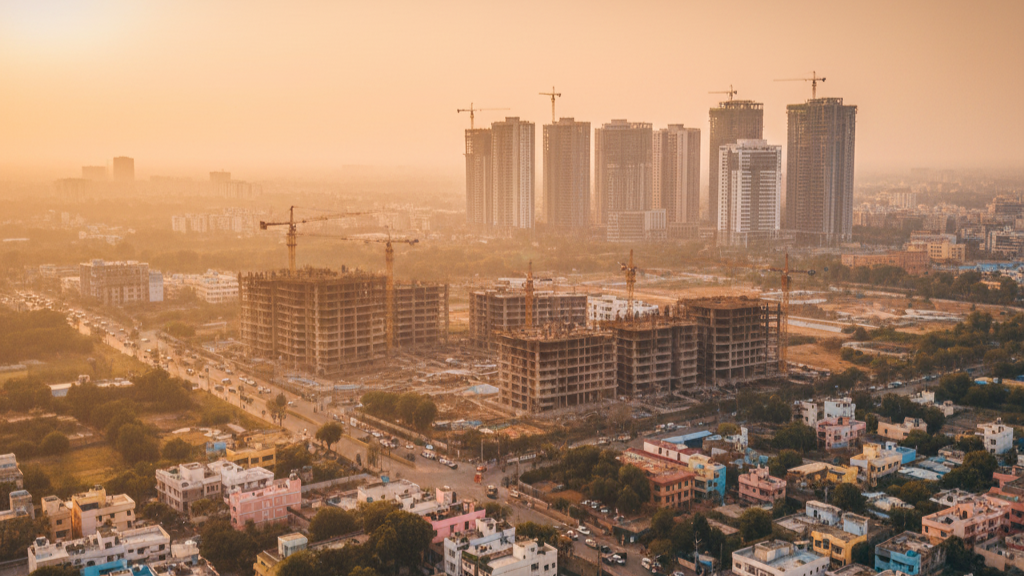
India’s real estate sector is entering a different kind of growth cycle. For years, big cities like Mumbai, Bengaluru, and Hyderabad shaped the demand curve. But the momentum is now spreading beyond metros. Tier-2 and Tier-3 cities are becoming the next investment hotspots, driven by affordability, better infrastructure, growing migration, and rising commercial activity.
The numbers make this shift clear. India is currently the fastest-growing major real estate market in the world, recording 12.05% year-on-year growth in 2024, as per data compiled in the India Real Estate Market Outlook 2024 by Cushman & Wakefield. This expansion isn’t coming only from metros—it’s accelerated by emerging cities that are scaling faster than expected.
The Rise of Tier-2 and Tier-3 Real Estate
Several cities are now recording growth rates that surpass major metros. Locations like Noida, Lucknow, Indore, Jaipur, Coimbatore, Vizag, and Nagpur are attracting residential buyers, investors, and developers. This shift reflects two parallel trends:
– Value-conscious homebuyers moving toward stable, affordable locations
– Developers shifting focus due to land scarcity and saturation in metros
Housing sales, once highly concentrated in top cities, are now supported by strong demand across Tier-2 and Tier-3 clusters. Better connectivity, rising employment hubs, and state-level infrastructure investments are pushing this wave forward.
Plot Prices Soaring: Noida and Lucknow Lead the Charge
One of the clearest indicators of this trend is the sharp rise in plot prices. A widely shared dataset on X (formerly Twitter) highlighted how plot prices in Noida and Lucknow have seen extraordinary appreciation.
In some pockets, prices have surged from ₹1,650 per sq ft to ₹10,500 per sq ft—a 536% jump in a span of a few years. This sudden price momentum reflects:
– Investor confidence in future infrastructure
– Increased commercial activity
– Anticipation of new economic zones
Source: Trends widely reported by property observers and validated in market circles, including data compiled by ANAROCK Research – Residential Price Tracker.
Such rapid appreciation signals that the next decade of real estate growth is shifting toward cities where land is still available, policies are business-friendly, and infrastructure pipelines are active.
Chennai and Pune Defy National Sales Dip
While the broader Indian housing market saw a mild dip in sales in certain quarters due to rising prices, Chennai and Pune recorded an impressive 14% year-on-year growth, according to Knight Frank India Q3 2024 Residential Market Report.
Why does this matter?
Because these two cities show what mid-sized, stable markets can achieve when driven by IT, manufacturing, and new job clusters.
– Chennai’s growth is led by OMR, Porur, Sholinganallur, and GST Road
– Pune’s growth is led by Hinjawadi, Baner-Balewadi, Wagholi, and Kharadi
Both cities are becoming models for how Tier-1.5 markets (between metros and Tier-2 cities) can lead national growth when supported by job creation and infrastructure.
Social Media Making Tier-2 Investments Go Viral

Real estate discussions are one of the fastest-growing categories on X and YouTube.
Content related to Tier-2 city investments—plots, farmhouses, co-living, and townships—regularly go viral.
This online attention has influenced real-world behaviour:
– Larger investor groups are pooling funds to buy in Tier-2 belts
– NRIs are adding these cities to their portfolios
– Developers are launching more plotted and villa projects nearby
The “investment upside” narrative is now stronger in smaller cities than metros because entry prices are lower and appreciation potential is high.
Urban Migration Reshaping Demand
Urban migration, once concentrated around major IT cities, is now spreading. Tier-2 cities are upgrading their economic profiles with new industrial corridors, education hubs, and IT parks.
This shift is also driven by:
– Remote work
– Hybrid work cultures
– Cost of living differences
– Better lifestyle-per-rupee value in smaller cities
Demand is not just residential. Commercial demand is rising too.
Data Centers Are Fueling 15–18 Million Sq Ft Demand
India’s digital economy is expanding rapidly. As per JLL's India Data Center Market Update 2024, the country is expected to add 15–18 million sq ft of data center capacity over the next few years.
A significant share of this expansion is happening outside metros.
Cities like Chennai, Noida, Pune, Hyderabad periphery, and Kochi are emerging as data center hotspots due to:
– Strong power infrastructure
– Lower land costs
– Proximity to metro markets
– Strategic coastal connectivity (especially Chennai and Kochi)
Data centers bring high-paying jobs, stable commercial leasing, and ancillary businesses—supercharging local real estate demand.
Why Developers Are Moving Toward Tier-2 and Tier-3 Cities
Developers are shifting from high saturation metros to emerging cities because:
– Land is cheaper
– Approval cycles are shorter
– Buyer segments are expanding
– Competition is lower
– Infrastructure is improving faster
This is similar to how US and European real estate markets expanded outward when their primary cities became expensive.
Who Benefits the Most?
Homebuyers
They get better homes, larger spaces, and more amenities for the same price they would pay in metros.
Investors
They stand to benefit from strong capital appreciation and rental income stability.
Developers
They enjoy faster sales cycles and better customer sentiment due to affordability-driven demand.
FAQ Section
1. Why are Tier-2 and Tier-3 cities growing faster today?
Because infrastructure upgrades, lower land costs, and new employment hubs are pushing demand beyond metros.
2. Are these cities good for long-term investment?
Yes. They offer stronger appreciation potential due to early-stage development cycles and rising migration.
3. Which cities show the strongest growth indicators?
Noida, Lucknow, Pune, Chennai, Jaipur, Indore, and Coimbatore are among the strongest performers based on recent reports.
4. Do NRIs prefer Tier-2 investments now?
Increasingly yes, due to lower entry prices and strong demand for plotted and villa-style developments.
5. Will Tier-2 cities continue to outpace metros?
With ongoing infrastructure expansion and job creation, Tier-2 markets are expected to grow faster over the next 5–7 years.
Conclusion

India’s real estate landscape is no longer defined only by metros. The next phase of growth is shifting toward Tier-2 and Tier-3 cities where demand is strong, appreciation potential is high, and infrastructure upgrades are accelerating. With plot prices skyrocketing in cities like Noida and Lucknow, steady sales in Pune and Chennai, and a massive 15–18 million sq ft data center pipeline, these markets are evolving into the country’s most promising investment corridors.
As this transformation accelerates, buyers and investors need guidance to navigate the new growth pockets.
Relai – For right home.
Let’s join together to bring change to the world of real estate.
Thinking about your next home?
relai scores every project on data, not paid placements, and it's free for buyers.