The Rise of Renting in 2025: How High Property Costs Are Reshaping Urban Housing Choices
The Rise of Renting in 2025: How High Property Costs Are Reshaping Urban Housing Choices
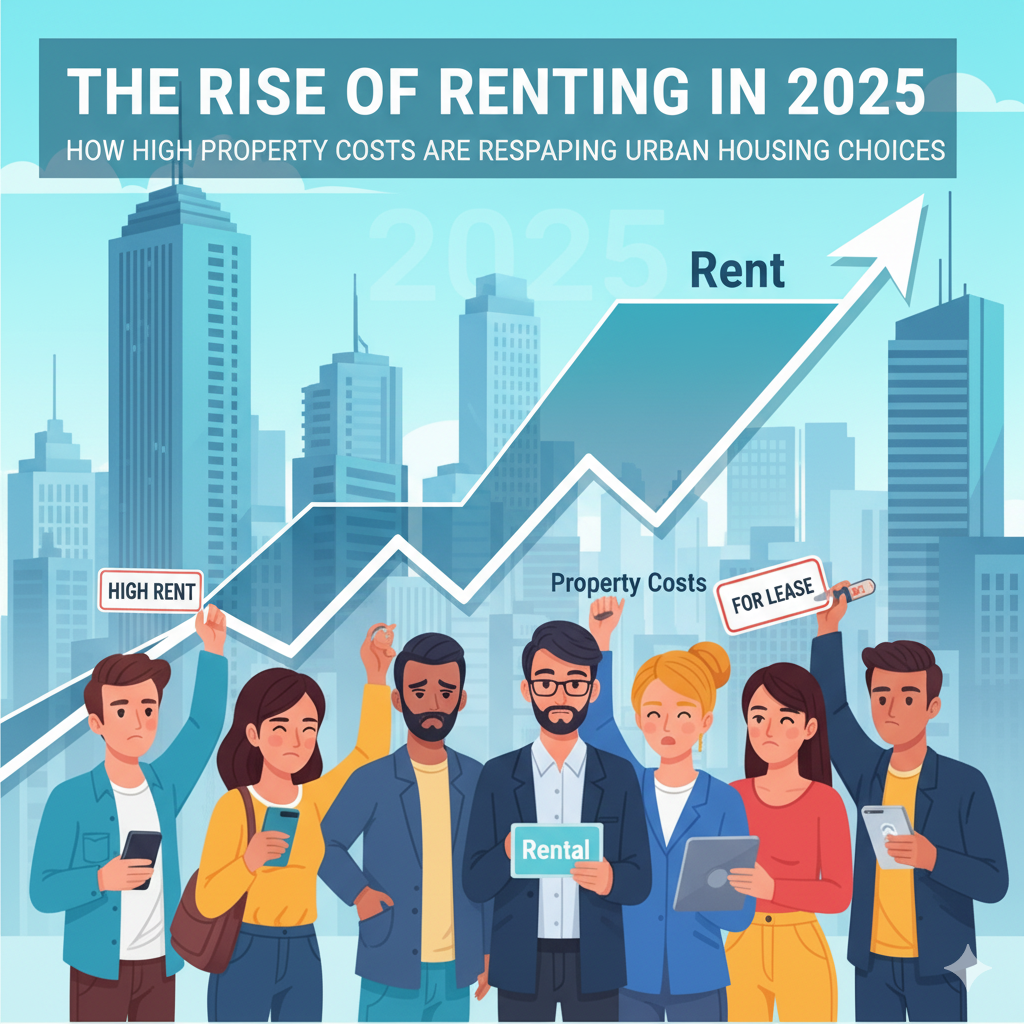
For decades, homeownership was considered the ultimate financial milestone in India. But in 2025, rising property costs, high interest rates, and stagnant wage growth are driving a quiet yet profound shift — more urban Indians are choosing to rent long-term instead of buying homes.
Cities like Hyderabad, Bengaluru, Mumbai, and Pune are witnessing what economists call a “rental recalibration” — where lifestyle, flexibility, and affordability increasingly outweigh the traditional appeal of ownership.
Let’s explore how this shift is unfolding, what it means for both renters and investors, and how the Indian real estate market is adapting to this new era.
Rising Property Prices and the Ownership Barrier
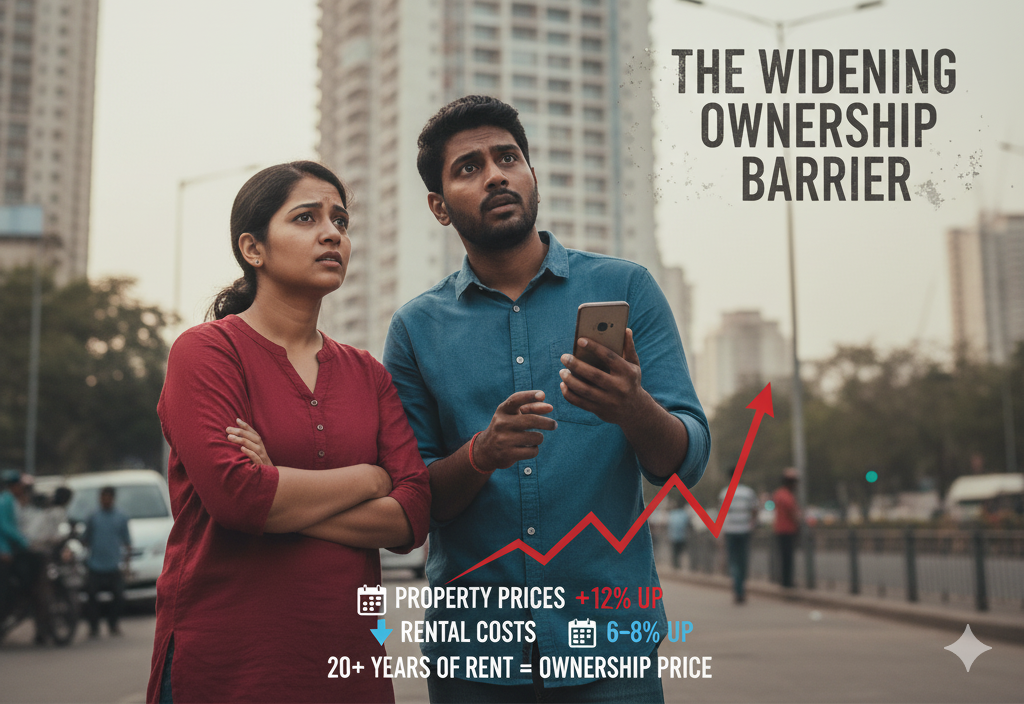
The average residential price across major metros rose by 10–15% in 2024, while home loan interest rates hovered around 8.5–9%, making EMIs significantly higher than average rental costs. (Economic times)
In cities like Hyderabad, average prices touched ₹6,500–₹7,000 per sq ft, a 12% jump year-on-year, while rents increased at a slower pace of 6–8%. (https://www.anarock.com/press-release/hyderabad-housing-prices-rise-12percent-in-2024)
This widening gap between purchase cost and rental value means it now takes over 20 years of rent to equal the price of owning — compared to just 12–15 years a decade ago. As affordability weakens, more buyers are deferring purchase decisions and choosing long-term leases.
Job Market Uncertainty Amplifies the Trend
With the IT/ITeS and startup sectors facing layoffs and hiring freezes in 2024–2025, job mobility has become common. A growing number of professionals prefer rental flexibility over being tied to a home loan. (Deccan Chronicals)
This trend is particularly visible in Hyderabad’s IT corridors — HITEC City, Gachibowli, and Kokapet — where tech professionals are choosing to rent premium 2 and 3 BHK apartments instead of buying. For many, the security of liquidity and job flexibility outweighs the sense of ownership.
The New Demographics of Renters
A decade ago, renting was seen as a temporary stage for early-career professionals. In 2025, the profile has evolved:
Millennials and Gen Z professionals: prefer lifestyle amenities, co-living setups, and proximity to work hubs.
Young families: delay ownership to manage finances and maintain flexibility.
NRIs returning to India: choose renting first before committing to long-term investments.
This demographic diversification has made India’s rental market more structured, with institutional players entering the space through build-to-rent and managed housing models. (Money Control)
The Economic Logic Behind Renting Over Buying
Let’s take an example.
If you buy a ₹1 crore apartment in Hyderabad with a 20-year loan at 8.5%, your EMI is around ₹86,000 per month. The same property rents for ₹35,000–₹40,000 per month. That’s less than half the EMI, freeing up ₹40,000–₹45,000 monthly cash flow.
For individuals in uncertain job environments or pursuing flexible lifestyles, the rent-and-invest strategy — renting a home while investing surplus cash in diversified assets — is gaining popularity. LiveMint)
How Developers Are Responding
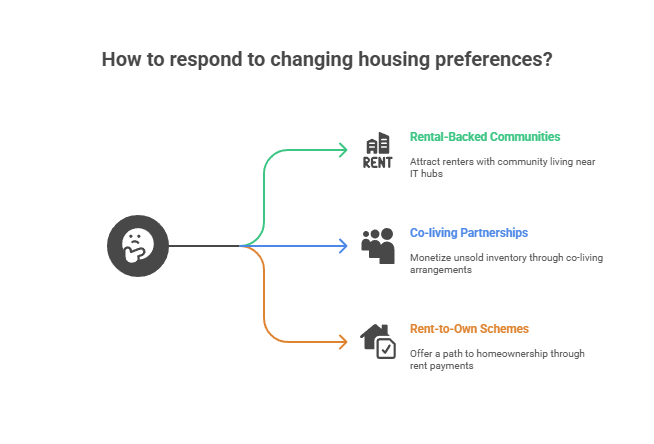
Developers, too, are adapting to this behavioral shift:
Launching rental-backed communities and managed housing projects near IT hubs.
Partnering with co-living operators to monetize unsold inventory.
Offering rent-to-own schemes where part of rent counts toward down payment after a fixed term.
In Hyderabad, several projects near Kokapet and Narsingi are already piloting rent-based housing models to attract younger demographics. (99acres)
Impact on Real Estate Investment Patterns
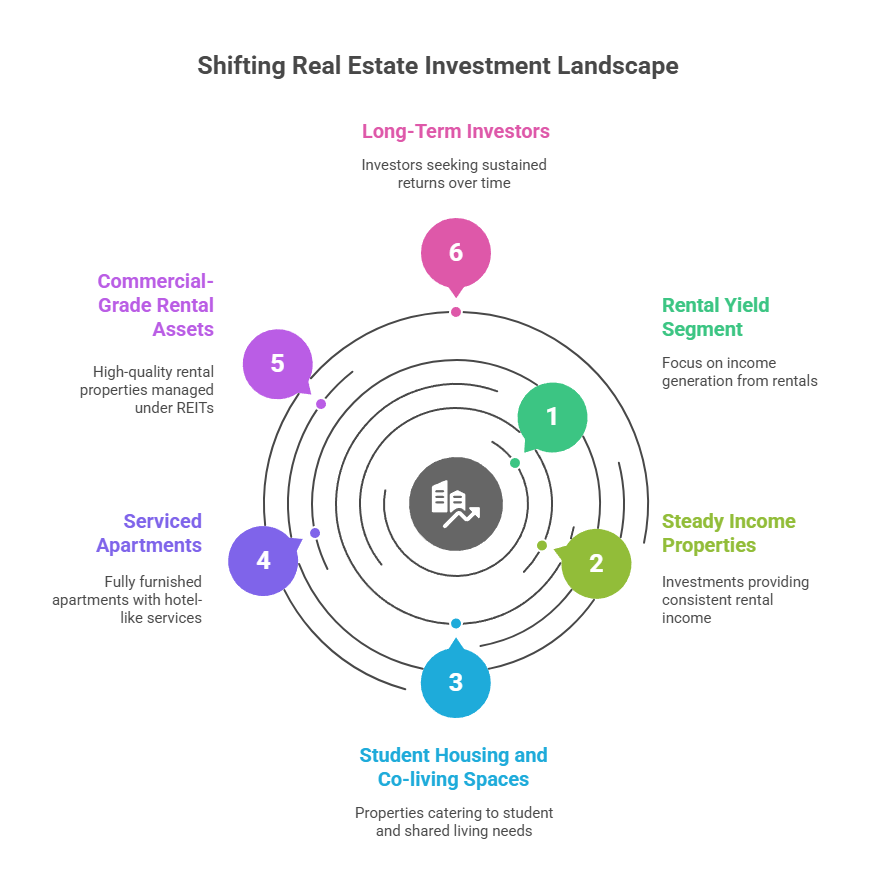
As renting grows, investors are seeing new opportunities in the rental yield segment. Traditional investors focused on appreciation are now shifting to steady income properties such as:
Student housing and co-living spaces
Serviced apartments near employment clusters
Commercial-grade rental assets under REIT structures (Business Standardl)
For long-term investors, this transition indicates a maturing real estate ecosystem — where ownership isn’t the only route to returns.
Government and Policy Shifts
The government’s renewed focus on rental housing policy is another reason behind this trend. The Model Tenancy Act aims to make renting more secure for both landlords and tenants by clearly defining rights and dispute resolution. (Mohua)
States like Telangana are now working to digitize rental agreements and streamline online dispute resolution for tenancy conflicts — a key move toward a transparent, scalable rental ecosystem.
FAQ Section
Q1. Is renting cheaper than buying in Hyderabad in 2025?
Yes. On average, monthly rents are 40–50% lower than EMIs for similar properties. However, buying remains better for those with stable jobs and long-term plans.
Q2. Does renting affect financial stability?
Not necessarily. Many renters invest their surplus savings in diversified portfolios, which can sometimes yield better returns than home appreciation.
Q3. Are developers building more rental-focused projects now?
Yes. Especially in Hyderabad and Bengaluru, developers are exploring managed housing and rent-to-own concepts to cater to flexible urban consumers.
Q4. Is long-term renting legally safe in India?
Yes, under the Model Tenancy Act, registered agreements clearly outline rent terms, tenure, and dispute resolution mechanisms, offering better protection to both parties.
Q5. Should investors focus on rental income or property appreciation in 2025?
Rental income offers more stability in uncertain markets, while appreciation depends on location and economic cycles. A balanced approach is best.
Conclusion

The era of “owning at any cost” is fading. In 2025, rising property prices, volatile job markets, and evolving lifestyles are redefining what financial security means for India’s urban middle class. Renting is no longer a compromise — it’s a strategic choice rooted in flexibility, liquidity, and smarter allocation of capital.
For Hyderabad’s real estate landscape, this shift signals a maturing market where diverse housing models coexist — ownership, co-living, managed rentals, and investment-backed leasing.
At Relai Real Estate, we help you make sense of these transitions — guiding you to the right property decisions whether you’re buying, investing, or renting.
Let’s Join Together to Bring Change to the World of Real Estate.
Thinking about your next home?
relai scores every project on data, not paid placements, and it's free for buyers.