The “Education–Medical” Yield: Investing in Mucherla’s 1,000‑Acre Health City & Skill University
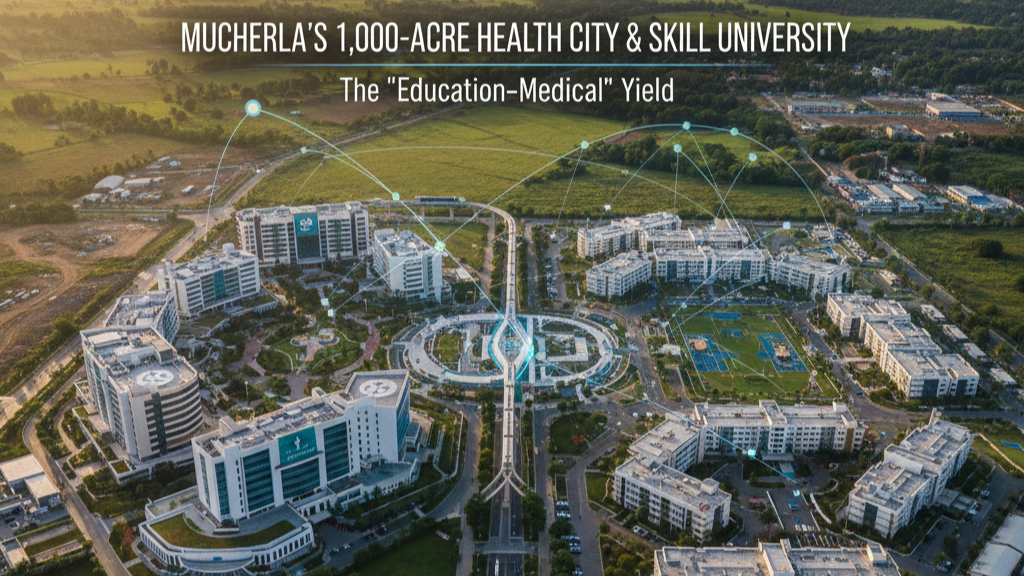
Most real estate conversations around South Hyderabad stop at plotted developments. Land banking, future appreciation, and long holding periods dominate the narrative. But in 2025, a different investment logic is quietly taking shape inside the Fourth City region.
Around Mucherla, Meerkhanpet, and Yacharam, rental‑led demand is emerging, driven not by IT parks but by large‑scale institutional anchors. The proposed 1,000‑acre Health City and the Telangana Skill University are reshaping this belt into an education‑medical hub.
This is not a story for pure land holders. This is for cash‑flow investors looking at student housing, staff accommodation, studio apartments, and executive PG formats.
Beyond Plots: Why Rental Intent Is Moving South
South Hyderabad has traditionally been seen as a long‑term appreciation play. Investors bought plots and waited.
Institutional hubs change that equation.
Medical universities, specialty hospitals, and skill campuses bring daily occupancy demand. Students, doctors, nurses, visiting faculty, administrators, technicians, and patient families all need housing close to work.
Unlike IT corridors, where demand fluctuates with hiring cycles, education and healthcare operate continuously. This creates predictable rental absorption.
The 1,000‑Acre Health City: A Permanent Demand Generator
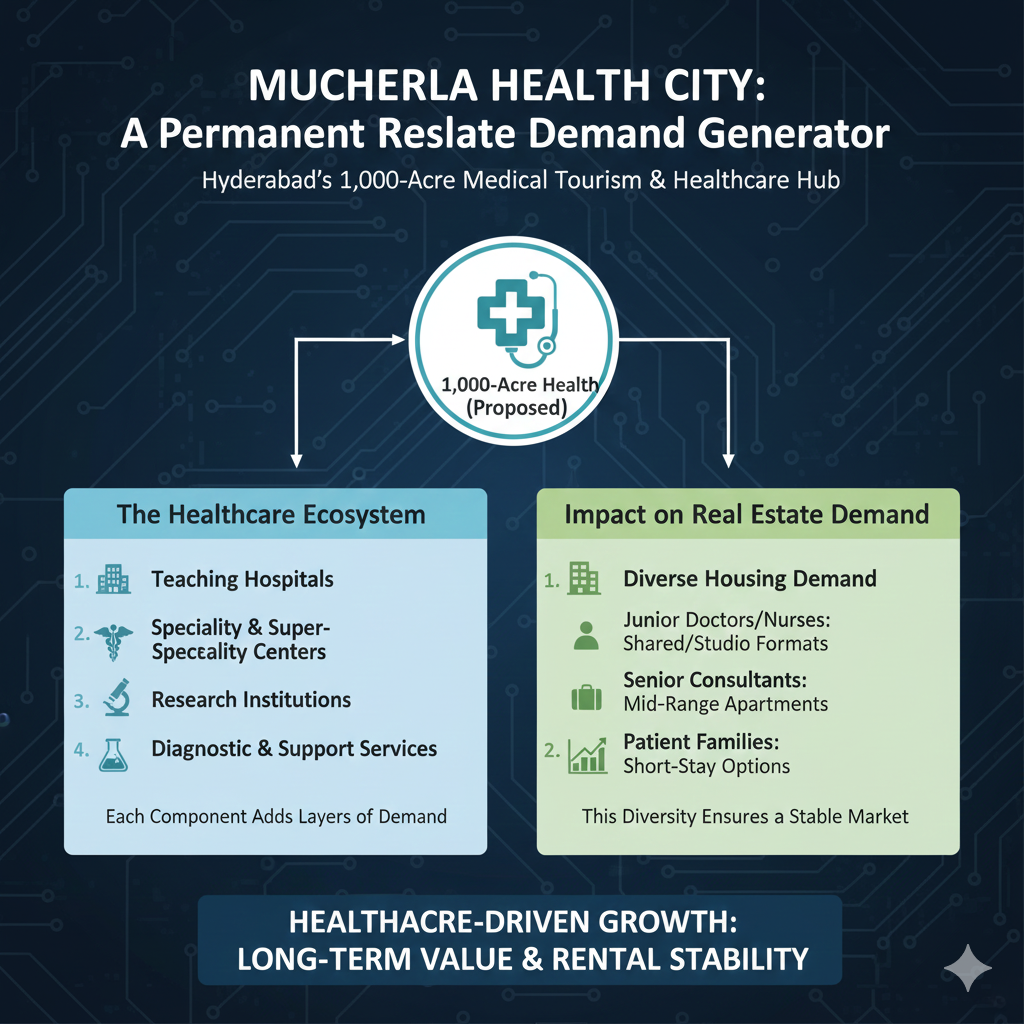
The proposed Health City near Mucherla is planned as a large medical tourism and healthcare cluster.
Once operational, such ecosystems typically include:
• Teaching hospitals
• Specialty and super‑specialty care centers
• Research institutions
• Diagnostic and support services
Each component adds layers of housing demand. Junior doctors and nurses prefer shared or studio formats. Senior consultants look for quiet mid‑range apartments. Patient families need short‑stay options.
This diversity makes the rental market resilient.
Telangana Skill University: Volume‑Driven Housing Demand
The Telangana Skill University adds a different but complementary demand profile.
Skill universities attract large student populations, visiting trainers, and administrative staff. Many students prefer managed accommodation close to campus rather than daily travel.
This supports:
• Hostels and co‑living models
• Compact studio apartments
• Affordable executive PG formats
High volume, moderate rent, and low vacancy define this segment.
The Rental Multiplier: Why Medical and Academic Tenants Are Stronger
Medical and academic professionals typically offer around 20 percent higher rental stability compared to floating IT tenants.
The reasons are simple.
They relocate less frequently. Their work hours are fixed to institutions. Their income patterns are predictable. Vacancies are shorter, and tenant churn is lower.
For investors, this translates to steadier cash flow rather than peak rents followed by long gaps.
Proximity Check: Where Location Really Matters
In institutional markets, distance matters more than micro‑amenities.
Rental performance improves sharply within a 2‑kilometer radius of the Health City boundary. This zone typically includes parts of:
• Mucherla
• Meerkhanpet
• Yacharam
Plots or small apartment developments beyond this radius see weaker demand unless backed by transport links.
Buyers must verify exact survey numbers and access roads before committing. Proximity without legal clarity does not convert into yield.
The Medical Tourism Play: Short‑Term Rentals
Medical tourism adds a powerful short‑stay layer to this market.
Families traveling for procedures often need accommodation for days or weeks. Hotels are expensive and impersonal. Serviced apartments and managed rentals near hospitals fill this gap.
Near specialty hospitals, short‑term rentals can outperform traditional leases when professionally managed.
This model works best for investors willing to actively manage or partner with operators.
What Type of Investor Should Look Here
Cash‑Flow Investors
Those prioritizing monthly income over long appreciation cycles benefit the most.
Small Developers
Builders focusing on studios, PGs, or compact apartments aligned with institutional demand.
Portfolio Diversifiers
Investors already exposed to IT‑led rentals looking to balance risk with education and healthcare.
Risks and Reality Checks
This is not a speculative overnight market.
Buyers must be careful about:
• Project timelines of institutions
• Land‑use zoning and approvals
• Overbuilding generic apartments without demand alignment
Institution‑led markets reward planning, not speed.
FAQ Section
Is Mucherla suitable for rental investment today?
Early‑stage opportunities exist, especially for investors with a 3–5 year horizon aligned to institutional development.
What rental format works best here?
Studio apartments, executive PGs, and managed co‑living perform better than large family units.
How does this compare to IT rental markets?
Rents may be lower initially, but vacancy risk and tenant churn are also lower.
Is short‑term rental viable near Health City?
Yes, especially near specialty hospitals, provided operations are professionally handled.
Conclusion

Mucherla’s education‑medical corridor represents a shift in how smart investors think about yield. Instead of waiting for appreciation, this market offers the opportunity to build cash‑flow assets backed by institutions that do not shut down or relocate. For investors willing to move beyond raw plots and design housing around real demand, the Fourth City’s institutional hubs may define the next decade of stable rental income.
At Relai – For right home, we help investors map institutional demand, verify land correctly, and structure rental‑focused investments with clarity.
Let’s Join Together to Bring Change to the World of Real Estate.
Thinking about your next home?
relai scores every project on data, not paid placements, and it's free for buyers.