PMAY & Affordable Housing Initiatives: How India’s Housing Push Is Reshaping the Market in 2025
PMAY & Affordable Housing Initiatives: How India’s Housing Push Is Reshaping the Market in 2025
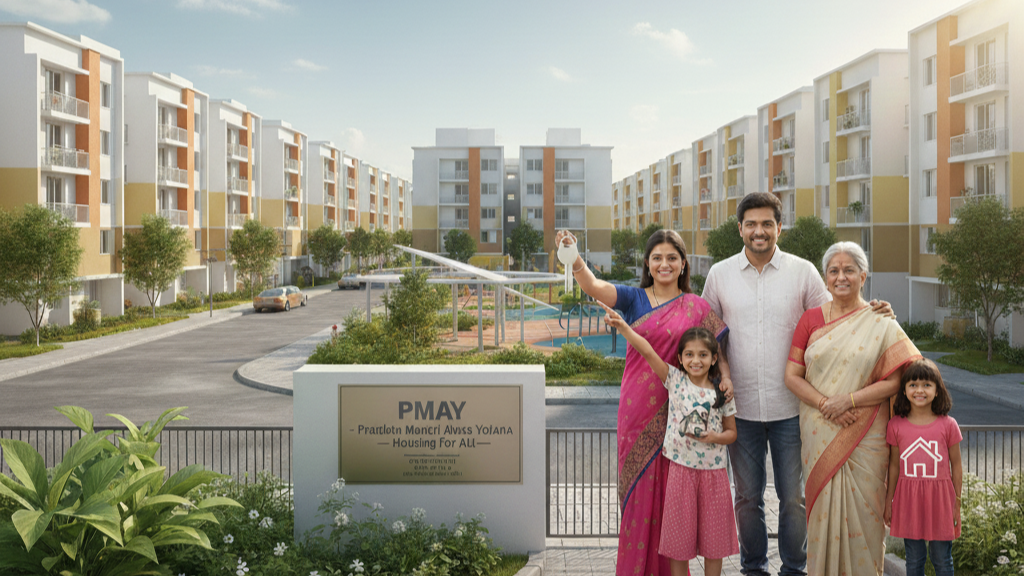
India’s housing landscape is undergoing a major transformation, driven largely by government-led affordable housing programs. As urbanization accelerates and millions move toward cities for work and education, the need for accessible, secure, and dignified housing has become a national priority. The Pradhan Mantri Awas Yojana (PMAY)—across both urban (PMAY-U) and rural (PMAY-G) components—sits at the center of this effort.
With new policy signals in Budget 2025, stalled-project financing through the SWAMIH Fund II, and renewed incentives for first-time homebuyers, affordable housing is emerging as the backbone of India’s residential market. Despite a 13% dip in housing sales during H1 2024 in certain regions, the broader push toward affordability and social welfare has kept demand resilient and sentiment positive.
This blog unpacks how PMAY initiatives, state efforts, and financial support systems are shaping market direction heading into 2025.
PMAY-U & PMAY-G: Strengthening the Foundation of Affordable Housing
PMAY aims to provide housing for all, ensuring that low-income families can access safe, permanent homes. According to the Ministry of Housing and Urban Affairs, PMAY-U has sanctioned more than 1.2 crore houses, while PMAY-G has delivered over 3 crore rural homes to date (source).
A notable recent example comes from Andhra Pradesh, where 3 lakh houses have been supported through PMAY and complementary state programs. AP’s model highlights the government’s focus not only on housing delivery but also on improving social determinants of well-being. Better housing has been linked to improvements in nutrition, education engagement, and long-term income stability. These outcomes position Andhra Pradesh as a reference point for other states aiming to link infrastructure and social welfare more closely.
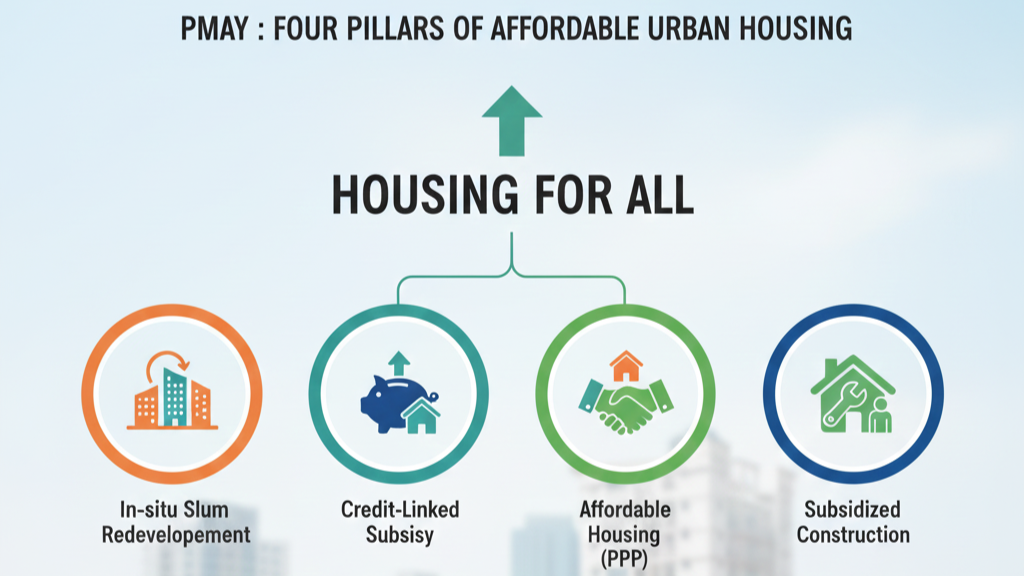
The broader strategy behind PMAY is built on four pillars:
In-situ slum redevelopment
Credit-linked subsidy for borrowers
Affordable housing through public-private partnerships
Subsidized construction for eligible families
Even with funding challenges and delivery delays in certain cities, the scheme remains the most significant driver of affordable housing demand across the country.
Budget 2025 Signals: Renewed Focus on Affordability
The Union Government’s early signals for Budget 2025 point toward a stronger push for affordable housing. Experts expect extended subsidies, targeted allocations for urban poor housing, and improved funding for state-level schemes tied to PMAY.
A major indicator of priority is the composition of capital flows. According to recent market analysis, 45% of real estate investments in 2024 were directed toward residential development, with a significant portion tied to affordable and mid-income segments. This shift marks a contrast from earlier cycles where commercial projects dominated investment inflows.
For buyers—especially first-time homeowners—the government’s approach strongly suggests continued support in the form of tax benefits, credit-linked subsidies, and simplified financing norms. Rising awareness through platforms like X has amplified stories such as Andhra Pradesh’s progress, signaling a positive narrative amid broader sector challenges.
SWAMIH Fund II: Unlocking Stalled Projects
One of the biggest roadblocks for homebuyers over the past decade has been stalled or delayed housing projects. These projects not only lock buyer savings but also prevent market inventory from being delivered on time.
To address this, the government launched the Special Window for Affordable and Mid-Income Housing (SWAMIH) fund. Its latest phase—SWAMIH Fund II—has a corpus of ₹15,000 crore aimed at resolving stuck projects, completing construction, and handing homes over to buyers.
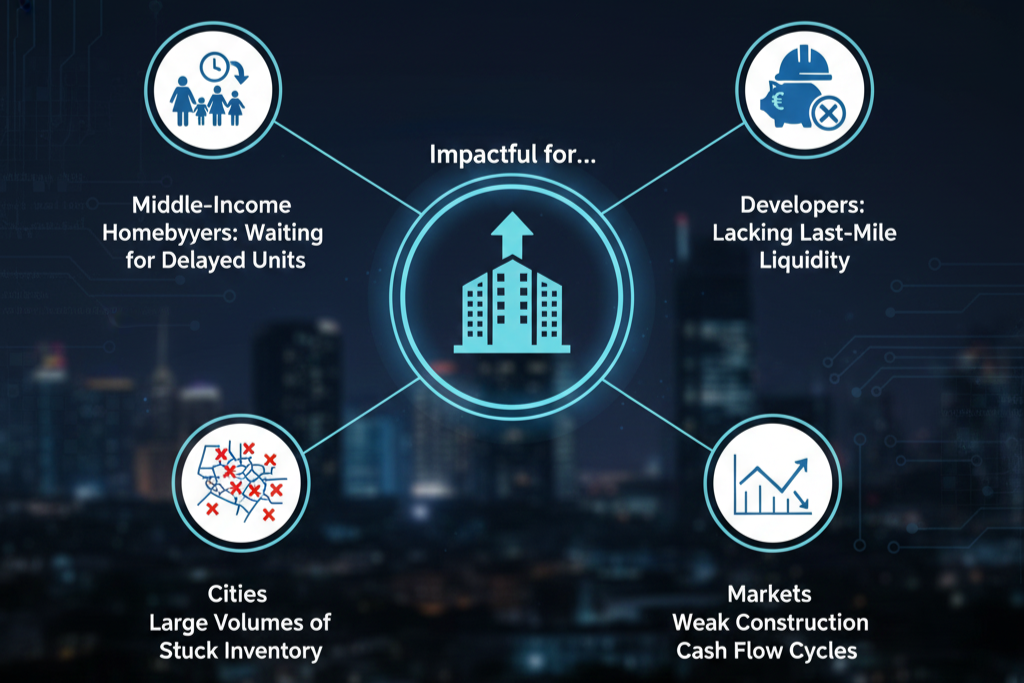
This fund is particularly impactful for:
Middle-income homebuyers waiting for delayed units
Developers lacking last-mile liquidity
Cities with large volumes of stuck inventory
Markets where construction cash flow cycles are weak
By accelerating delivery, SWAMIH reduces buyer risk and improves sentiment across the affordable and mid-income categories. Faster project completion also reduces legal disputes and strengthens trust in the formal market.
Tax Incentives for First-Time Homebuyers
To encourage ownership, the government continues to support first-time homebuyers through tax deductions and credit-linked subsidies. Under PMAY’s Credit Linked Subsidy Scheme (CLSS), eligible buyers can access subsidized interest rates, making EMIs significantly more affordable.
Additional tax deductions under Section 80EE and Section 24(b) further reduce the cost of homeownership for individuals purchasing their first residential property. These incentives play a critical role at a time when urban rents have increased across major metros due to post-pandemic demand surges.
As affordability improves, the market becomes more inclusive—supporting salaried professionals, gig workers, and lower-income families who aspire to long-term housing stability.
Why Affordable Housing Still Drives Demand Despite Sales Dip
While certain metros saw a 13% sales dip in H1 2024, the affordable segment remains a stable and resilient pillar. Three reasons explain this stability:
1. End-user driven demand
Unlike luxury housing, which relies heavily on investor sentiment, affordable housing is supported by families prioritizing ownership.
2. Large unmet housing need
Urban housing shortages still stand at over 1 crore units, according to the MoHUA. This structural gap keeps demand steady.
3. Government-backed confidence
With PMAY subsidies, tax benefits, and SWAMIH interventions, buyers feel more secure entering the market.
As a result, the affordable and mid-income categories continue attracting the highest buyer volumes even during market corrections.
FAQ Section
1. What is PMAY?
PMAY (Pradhan Mantri Awas Yojana) is a government initiative to provide housing for all through subsidies, incentives, and construction support.
2. How is Andhra Pradesh benefiting from PMAY?
More than 3 lakh houses in AP have been supported through PMAY and state schemes, improving living standards and social indicators.
3. What is the role of the SWAMIH Fund II?
It provides last-mile funding to stalled affordable and mid-income projects, enabling completion and timely delivery of homes.
4. Are there tax benefits for first-time homebuyers?
Yes. Sections 80EE and 24(b) offer interest-related deductions, and PMAY’s CLSS provides subsidized home loan interest rates.
5. Why is affordable housing still strong despite a sales decline?
End-user demand, a large housing shortage, and government-backed stability keep the segment growing.
Conclusion

Affordable housing is at the heart of India’s real estate vision for 2025. With PMAY driving large-scale delivery, SWAMIH unlocking stalled projects, and government incentives increasing buyer confidence, the ecosystem is becoming more accessible and stable.
For millions of families, these initiatives mean more than a home—they mean social mobility, financial security, and long-term well-being.
Let’s Join Together to Bring Change to the World of Real Estate.
Thinking about your next home?
relai scores every project on data, not paid placements, and it's free for buyers.