Luxury High-Rises: Indian Cities vs Dubai & Singapore
Luxury High-Rises: Indian Cities vs Dubai & Singapore
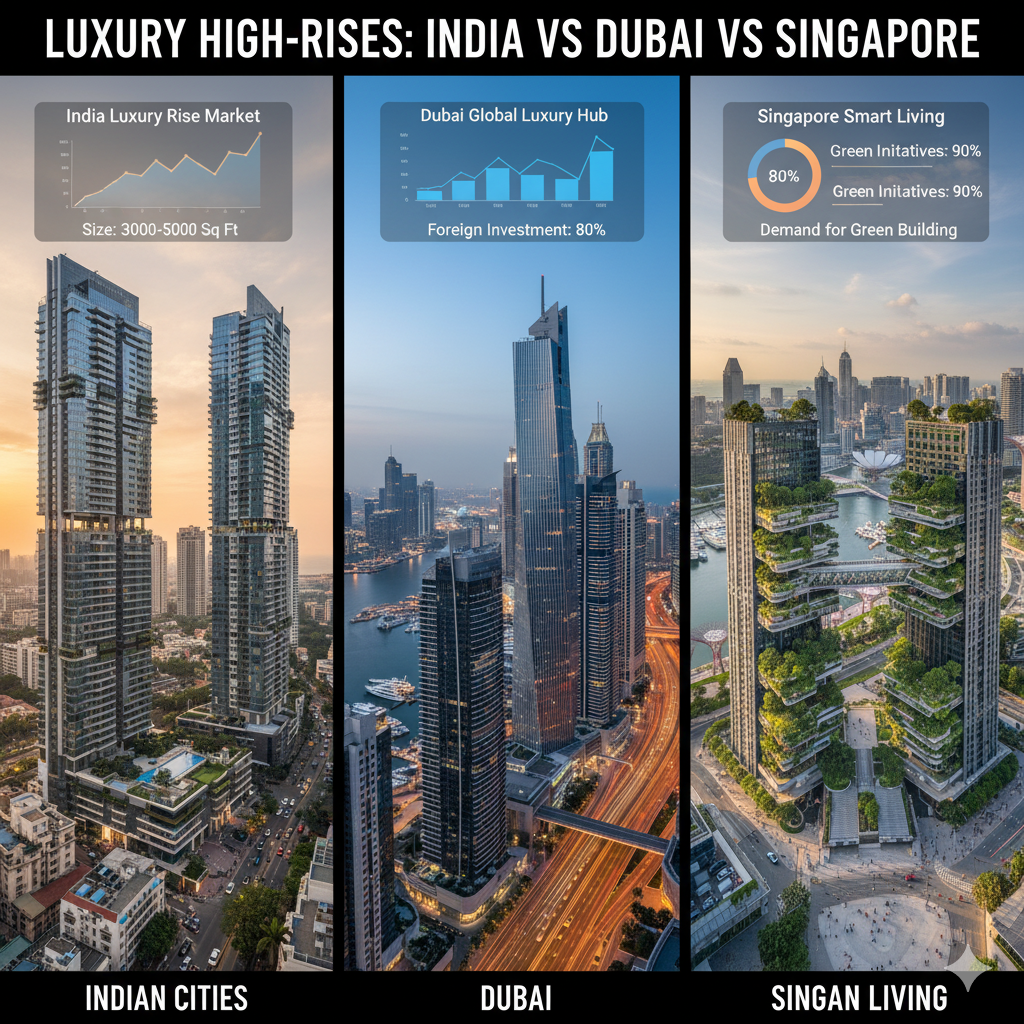
The race to the skies has redefined modern skylines across the world. In cities where land is limited and ambition is boundless, luxury high-rises have become more than just real estate—they are symbols of wealth, aspiration, and global stature. For investors and homebuyers alike, the big question is: how do India’s luxury skyscrapers compare to those in global hubs like Dubai and Singapore?
This article explores the scale, design, pricing, and lifestyle differences of luxury high-rises in Indian cities versus Dubai and Singapore, and what it means for the future of luxury living.
The Rise of Luxury High-Rises in India
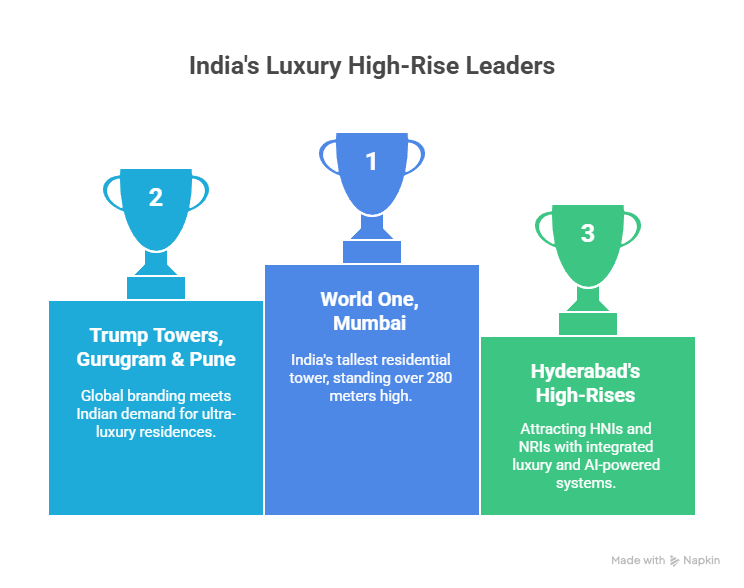
India’s urbanization wave has fueled demand for vertical living. Cities like Mumbai, Bangalore, and Hyderabad are leading the charge, with developers offering sky-touching towers that blend luxury with exclusivity.
Some examples:
World One, Mumbai – one of the tallest residential towers in India, standing 280+ meters high.
Trump Towers, Gurugram & Pune – global branding meets Indian demand for ultra-luxury residences.
Hyderabad’s new high-rises in areas like Gachibowli and Financial District, which are attracting HNIs and NRIs alike.
The focus in India has shifted from just height to integrated luxury—rooftop pools, sky gardens, private elevators, and AI-powered home systems.
Dubai: The Global Benchmark of Skyscraper Living
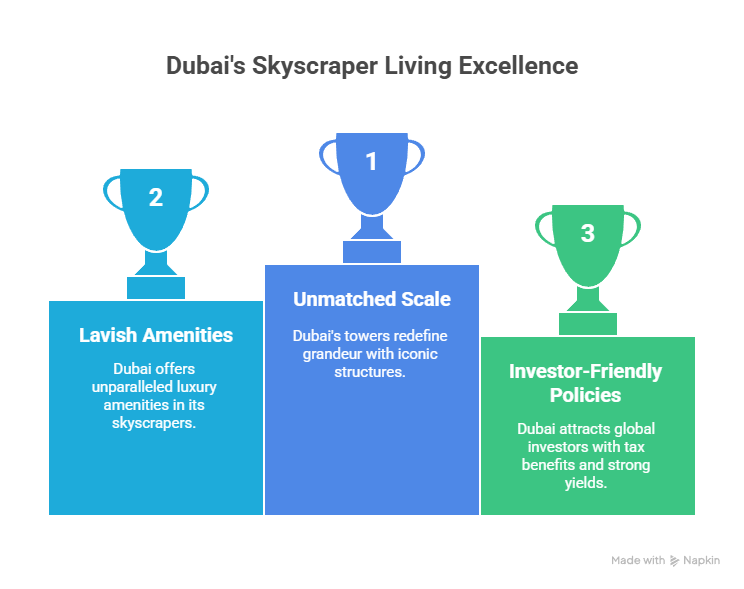
Dubai has established itself as the epicenter of luxury vertical living. It’s home to Burj Khalifa, the world’s tallest tower, and a skyline that constantly redefines ambition.
What sets Dubai apart?
Unmatched Scale: Towers like Marina 101, Princess Tower, and The Address redefine grandeur.
Lavish Amenities: Indoor sky observatories, private beaches, and entire lifestyle ecosystems within one tower.
Investor-Friendly Policies: Tax benefits, strong rental yields, and global recognition make Dubai a magnet for international buyers.
Dubai doesn’t just build for residents—it builds for the world, positioning luxury living as a status symbol and global lifestyle investment.
Singapore: Smart Luxury Meets Urban Planning
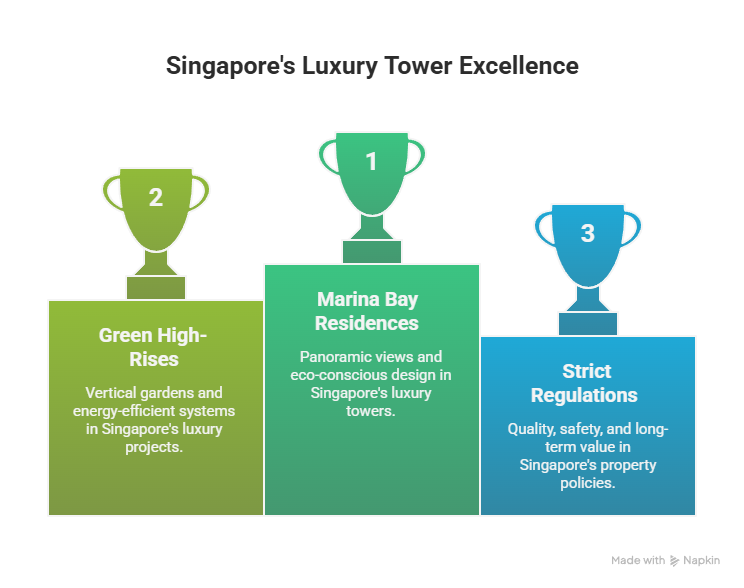
Singapore’s approach is slightly different. Instead of sheer height, the city-state emphasizes design, sustainability, and integration with urban life.
Highlights include:
Marina Bay Residences and Wallich Residence, offering panoramic views with eco-conscious designs.
Green High-Rises: Vertical gardens and energy-efficient systems are standard in Singapore’s luxury projects.
Strict Regulations: Singapore’s property policies ensure quality, safety, and long-term value, though they make ownership more exclusive due to higher costs and restrictions for foreigners.
In short, Singapore’s luxury towers are boutique, sustainable, and elite, often blending futuristic architecture with nature.
India vs Dubai & Singapore: A Comparative Lens
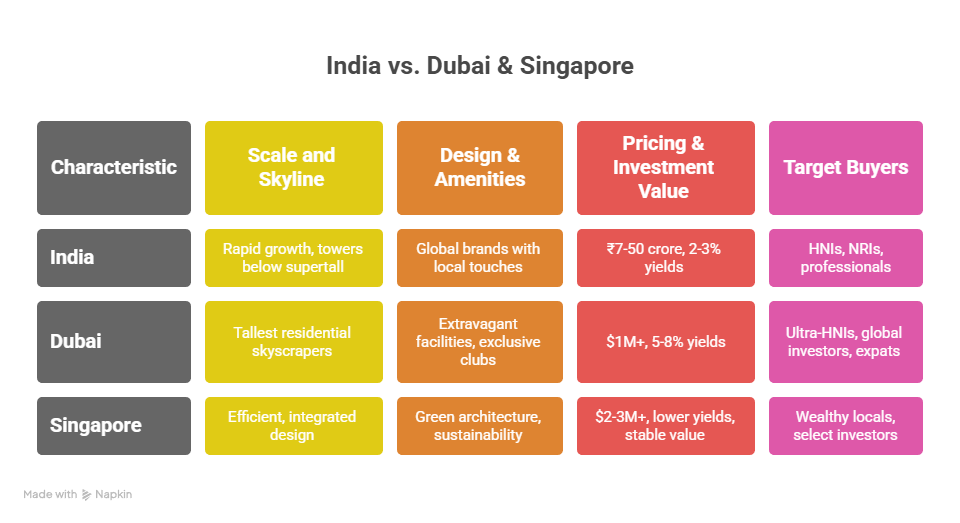
1. Scale and Skyline
India: Rapidly growing, but most towers remain below the global supertall category.
Dubai: Dominates with the tallest and grandest residential skyscrapers.
Singapore: Focuses less on height, more on efficient, integrated design.
2. Design & Amenities
India: Combining global branding (Trump, Four Seasons) with local customization. Smart homes and community-focused spaces are emerging.
Dubai: Offers the most extravagant facilities—sky dining, underwater living concepts, and exclusive lifestyle clubs.
Singapore: Prioritizes green architecture and sustainability, with energy-efficient luxury living.
3. Pricing & Investment Value
India: Luxury apartments range from ₹7 crore–₹50 crore, depending on city and branding. Rental yields average 2–3%, but appreciation potential is strong.
Dubai: Luxury units start at $1 million (₹8+ crore) with 5–8% rental yields, attracting global investors.
Singapore: Among the most expensive, with luxury high-rises priced upwards of $2–3 million. Rental yields are lower (2–3%) but value stability is unmatched.
4. Target Buyers
India: HNIs, NRIs, and upwardly mobile professionals seeking lifestyle and status.
Dubai: Ultra-HNIs, global investors, and expatriates.
Singapore: Wealthy locals and select international investors, with stricter entry barriers.
Investor Insights: Where Should You Bet?
India is the growth story. With expanding skylines in cities like Hyderabad and Bangalore, early investments in luxury high-rises can deliver high appreciation.
Dubai is the glamour bet. Strong rental yields and global investor interest make it attractive for portfolio diversification.
Singapore is the stability play. For those seeking long-term safety and exclusivity, it’s unmatched, though the entry price is high.
What This Means for India’s Future
India’s luxury high-rise market is still maturing, but its trajectory is clear. Developers are blending global designs with local tastes, and as urban centers expand, we may soon see towers rivaling global landmarks in both height and luxury.
For investors, this means India offers a rare combination of affordability and growth potential compared to the saturated Dubai and Singapore markets.
Conclusion

Luxury high-rises symbolize more than just modern housing—they represent ambition, identity, and future living. While Dubai dazzles with scale, Singapore excels with smart luxury, and India evolves with rapid ambition, each market tells a unique story.
For global investors and Indian buyers alike, the question isn’t about which is better—it’s about which aligns with your goals: appreciation, yield, or prestige.
And in that equation, India’s emerging luxury skyline is no longer a follower—it’s a contender.
Thinking about your next home?
relai scores every project on data, not paid placements, and it's free for buyers.