India’s Housing Affordability Crisis and the New Age of First-Time Buyers
India’s Housing Affordability Crisis and the New Age of First-Time Buyers
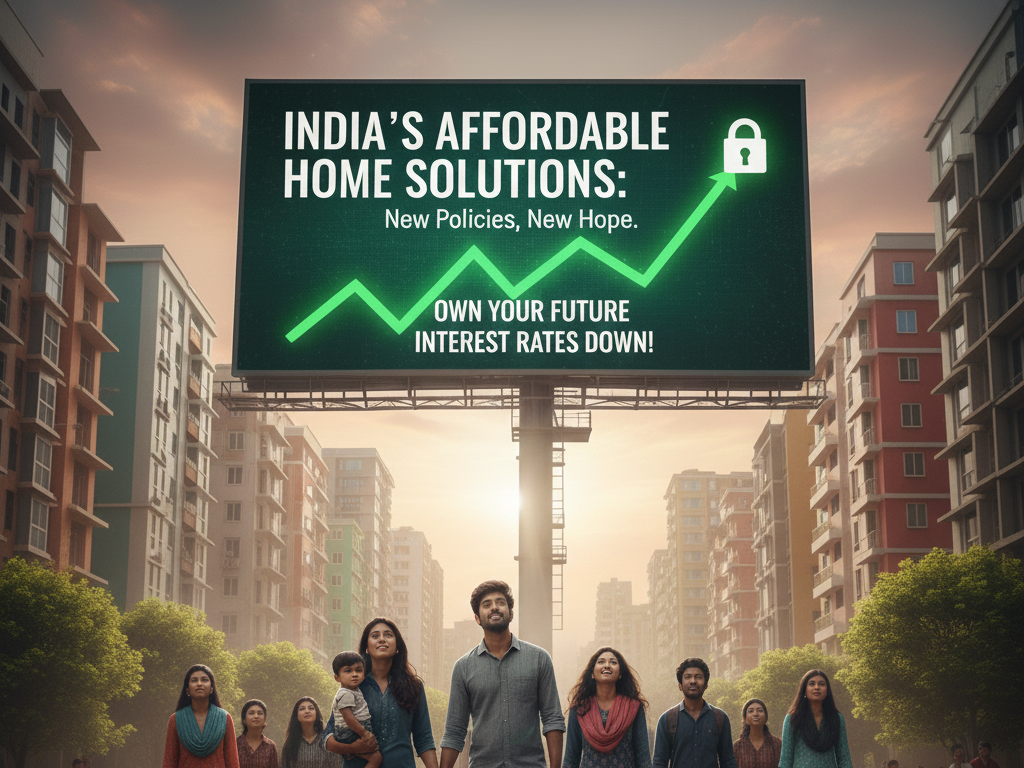
India’s housing market is going through a major shift. Prices are rising faster than incomes, loan rates remain elevated, and urban land shortages are pushing families into the suburbs. At the same time, people are starting their homebuying journey later than ever before. This trend mirrors global patterns, where affordability pressures have delayed first-time ownership across major economies.
In India’s big cities—Hyderabad, Mumbai, Bengaluru, Pune, and Chennai—the gap between household income and home prices is at its widest point in two decades. For many families, the dream of buying a home is taking longer to achieve.
This blog breaks down what is driving this shift, how it compares to global trends, and what this means for future buyers.
Why First-Time Buyers Are Getting Older in India
India hasn’t reached the extreme levels seen in countries like the US—where the median buyer age has surged to 59 and first-time buyers now average around 40—but the direction is similar. In Indian metros, the typical first-time homeowner is now in their early-to-mid 30s, compared to the mid-20s just a decade ago.
Three forces explain this shift:
1. Prices Are Rising Faster Than Incomes
According to the Knight Frank Affordability Index (Knight Frank Housing Affordability Report), affordability in cities like Mumbai, Hyderabad, and Bengaluru has weakened due to:
20–40% price appreciation post-2021
higher construction costs
premium land values within city limits
Even with stable job growth, salaries have not kept pace with property values.
2. Loan Rates Remain Higher Than Pre-Pandemic Levels
While rates may ease gradually in 2025, current levels still reduce purchasing power.
For every 1% rise in rates, a buyer loses 7–8% affordability, pushing younger families into postponement.
3. Lifestyle Delays Are Shifting Homebuying Timelines
People today are:
marrying later
changing jobs more often
prioritizing renting near work rather than buying far away
waiting for income stability before committing to a loan
These choices naturally delay the first home purchase.
The Inventory Paradox: More Listings, But Still Not Enough
Globally, several markets report rising inventory and falling demand. Threads on X highlight metrics such as:
20 straight months of rising listings
nearly 500,000 more homes for sale than buyers
homes sitting unsold for 60+ days
average discounts of $25,000
India isn’t experiencing the same oversupply.
Instead, India faces a different paradox:
India has more inventory than last year, but still has a structural shortage.
According to JLL and ANAROCK reports (ANAROCK Housing Market Report), India has a shortfall of around 30 million housing units, concentrated mainly in:
affordable housing
rental housing
migrant worker accommodation
urban-core demand pockets
So even as some developers release new supply, the demand backlog stays large.
Why Affordability Is Under Pressure in Indian Metros
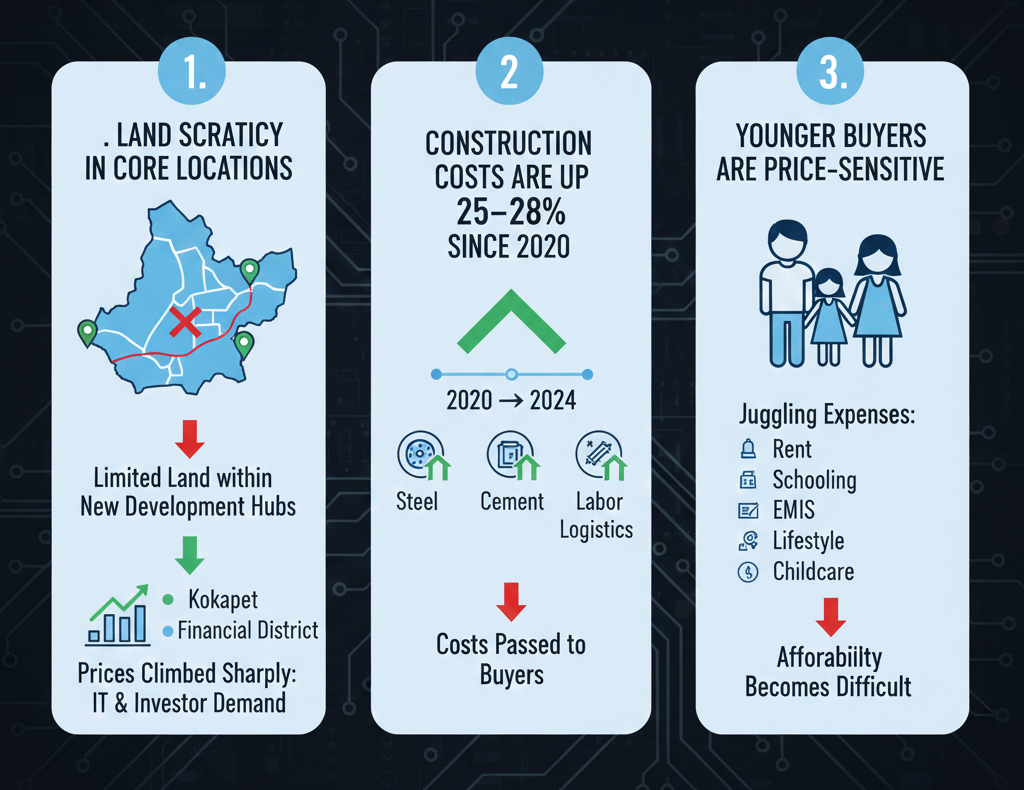
1. Land Scarcity in Core Locations
In cities like Hyderabad, the areas within the Outer Ring Road (ORR) have limited land available.
This pushes development into:
Kokapet
Financial District
Narsingi
Kondapur
Bachupally
While new supply is strong, prices have climbed sharply due to IT expansion and investor demand.
2. Construction Costs Are Up 25–28% Since 2020
Steel, cement, labour, and logistics have all become costlier. Developers pass a portion of these costs to buyers.
3. Younger Buyers Are Price-Sensitive
With many Indians in the 25–35 age group juggling:
rent
EMIs for schooling
lifestyle expenses
childcare costs
affordability becomes more difficult.
How the Age Shift Impacts Families
When homebuying moves from the late 20s to early 30s — or even mid-30s — the effects touch multiple parts of life:
1. Delayed Family Planning
People want stable housing before starting or expanding their families.
Rising prices push these decisions further.
2. Shorter Loan Tenure
A home bought at 35 gives fewer working years to repay.
This raises EMI pressure unless the buyer makes a higher down payment.
3. Higher Lifetime Housing Costs
Delaying purchase often means buying at higher prices later.
4. Increased Reliance on Parental Support
More Indian buyers today use:
joint loans
parental co-applicant backing
family-assisted down payments
This was less common 15–20 years ago.
Will Affordability Improve Soon?
Global analysts predict mortgage rates may ease to around 5.5% by mid-2025.
In India, any rate reduction will help buyers, but it won’t fully solve affordability because:
demand in key metros remains strong
jobs continue to centralize around high-value districts
urban land remains limited
construction costs are unlikely to fall
Experts at Colliers and JLL note that India’s housing demand is structurally stable, driven by:
IT sector growth
rising incomes
nuclear family preferences
suburban expansion
post-pandemic preference for owned homes
This means demand will hold even if affordability stays stretched.
X (Twitter) Buzz: The Push for Policy Fixes
Trending conversations on X link the affordability crisis to larger economic themes.
People argue that India must:
boost new-home construction in affordable and mid-income segments
improve clarity on land titles
accelerate infrastructure to open up new micro-markets
push faster approvals via online systems
incentivize rental housing
reduce acquisition delays for large townships
The belief is simple:
More supply + faster delivery = better affordability.
FAQ Section
1. Why are first-time buyers getting older in India?
Rising prices, higher EMIs, delayed marriages, and preference for renting near workplaces have shifted homebuying from mid-20s to early or mid-30s.
2. Is India facing a housing shortage or oversupply?
India faces a structural shortage, especially in affordable and mid-income categories, even though some premium projects show temporary oversupply.
3. Will affordability improve in 2025?
If interest rates soften, affordability may improve marginally. But construction costs and demand levels keep prices elevated.
4. Why are millennials and Gen Z delaying home purchase?
Unstable job locations, lifestyle priorities, high rents near workplaces, and difficulty saving for down payments are key reasons.
5. What can improve affordability in India?
More supply, quicker approvals, expanded suburban infrastructure, better rental ecosystems, and targeted incentives for first-time buyers.
Conclusion

India’s housing affordability challenge is reshaping the age and profile of first-time homebuyers. Rising prices, elevated loan rates, and limited central-city supply have pushed many buyers to delay their first purchase. While global markets show signs of cooling, India’s demand remains structurally strong due to urbanization, income growth, and demographic pressures.
As India moves toward a more urban future, solving affordability will require coordinated action—stronger planning, faster supply creation, and better financing pathways. The goal is simple: ensure families can buy homes earlier, without compromising long-term financial stability or life decisions.
Thinking about your next home?
relai scores every project on data, not paid placements, and it's free for buyers.