Hill-Station & Second Homes Boom: India’s Fastest-Growing Lifestyle Investment Trend
Hill-Station & Second Homes Boom: India’s Fastest-Growing Lifestyle Investment Trend
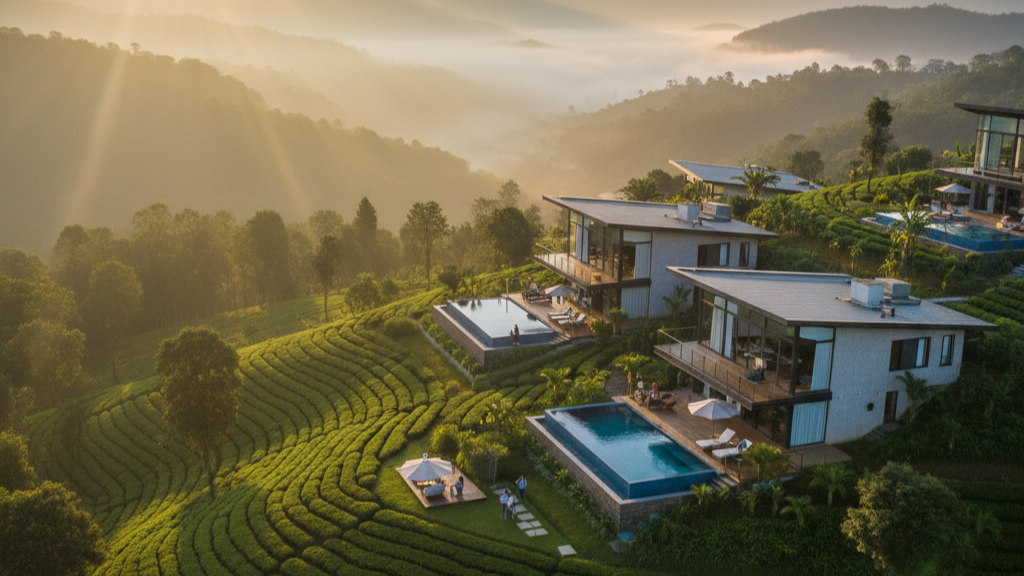
India’s real estate market is witnessing a strong shift toward second homes and hill-station getaways. This trend, once niche, has now become mainstream due to changing lifestyles, hybrid work culture, wellness needs, and rising stress levels in major cities. Locations like Lonavala, Dehradun, Dharamshala, Coorg, Ooty, Kasauli, and Mahabaleshwar are seeing rapid demand growth as buyers look for quieter, greener, and more spacious living options outside metros.
According to insights from the ANAROCK Second Homes Market Report 2024, demand for second homes has grown between 10–12% year-on-year in leading hill-station clusters, driven by remote work flexibility and wellness-focused living. Improved highways, air connectivity, and hospitality-grade amenities have further transformed these locations into serious residential destinations, not just weekend escapes.
At the same time, India’s luxury housing segment recorded a 28% surge in Q1 2024, as reported by Knight Frank India Residential Market Update 2024. This momentum is spilling over into premium second homes, pushing prices in popular hill-station markets up by 15% year-on-year.
Post-Urban Fatigue Is Reshaping Demand
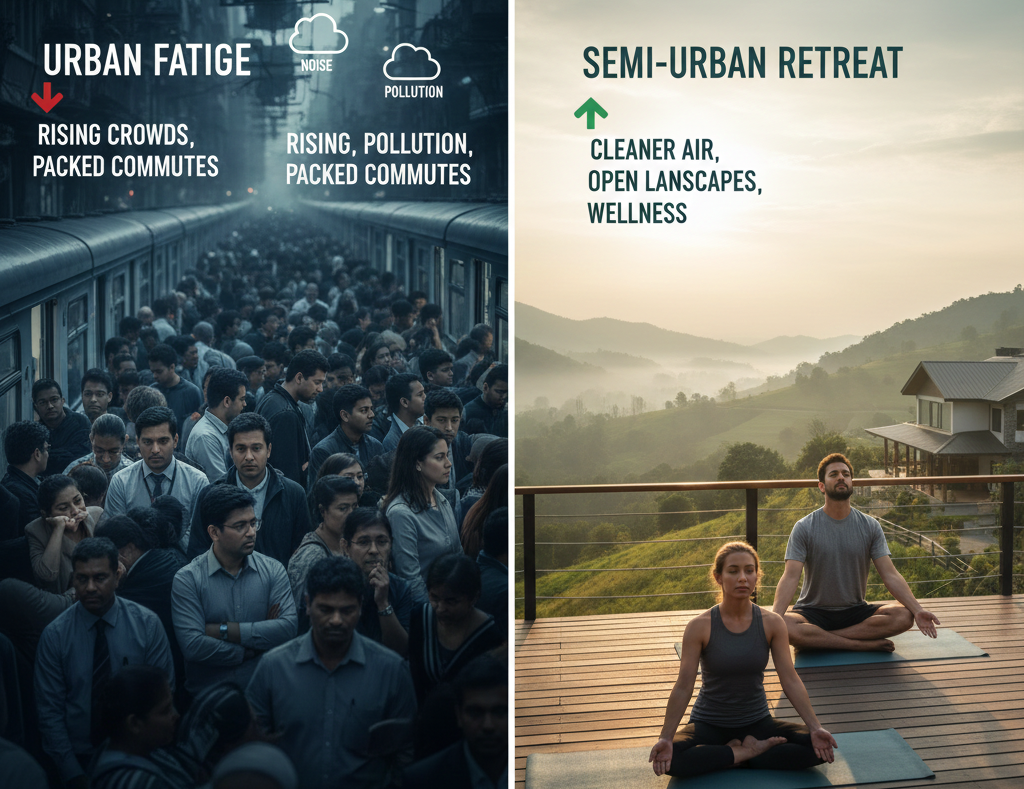
For years, most homebuyers concentrated on city apartments close to office hubs. But post-pandemic lifestyle changes created a new kind of fatigue—rising crowds, noise, pollution, packed commutes, and limited green spaces.
Hill-stations and semi-urban retreats solve these signals of urban burnout by offering:
– Cleaner air
– Open landscapes
– Privacy and low-density living
– Space for work, hobbies, and wellness
– A better pace of life
This psychological shift is one of the strongest forces behind the second home boom. Buyers are no longer seeing these homes as “vacation properties” but as alternate living spaces they can use several times a year—or even permanently, depending on work mode.
Hybrid Work Is Accelerating Second Home Purchases
The hybrid work model has made it possible for professionals to live farther from city centres while staying productive. Companies offering flexible schedules or remote cycles have boosted demand in weekend destinations near major metros.
Examples include:
– Lonavala, Khandala, and Karjat for Mumbai and Pune buyers
– Dehradun, Mussoorie, and Nainital for Delhi NCR buyers
– Coorg and Chikmagalur for Bengaluru buyers
– Dharamshala and Shimla for North India buyers
A survey by CII–ANAROCK Consumer Sentiment Report 2024 highlights that 25% of aspiring buyers are actively considering second homes—primarily due to hybrid work allowing them to split time between cities and hill retreats.
Infrastructure Upgrades Are Making Hill-Stations More Accessible
The second homes boom is not only emotional—it’s also infrastructural. Better roads, expressways, and new airports have opened up regions that earlier felt too far for regular travel.
Key examples include:
– The Mumbai–Pune Expressway, increasing Lonavala’s accessibility
– Delhi–Dehradun Expressway reducing travel time to under three hours
– New regional airports under UDAN, upgrading connectivity to hill regions
– Wider highways across Himachal and Uttarakhand improving year-round access
As connectivity reduces travel time, buyers see second homes as practical, not indulgent.
Investors Are Entering the Segment Strongly
Second homes now offer serious investment potential. Popular hill-station destinations are witnessing:
– Stable appreciation due to limited buildable land
– Strong premiumisation trends (15% YoY in major clusters)
– High rental demand via holiday homes and staycations
– Interest from NRI buyers looking for lifestyle assets
Platforms like Airbnb and boutique villa operators have also boosted the rental ecosystem, allowing second home buyers to convert properties into income-generating assets.
Demand Is Not Just Luxury—Mid-Segment Is Growing Too
While luxury villas with private pools continue to dominate the spotlight, demand is rising across brackets:
– ₹60 lakh to ₹1.25 crore mid-segment villas outside city limits
– ₹1.5 crore to ₹3 crore premium hill-station villas
– Ultra-luxury estates above ₹5 crore in hotspots like Kasauli and Coorg
This mix shows that second homes are no longer exclusive—they are now part of mainstream buyer aspirations.
Why Premium Pricing Is Rising 15% Year-on-Year
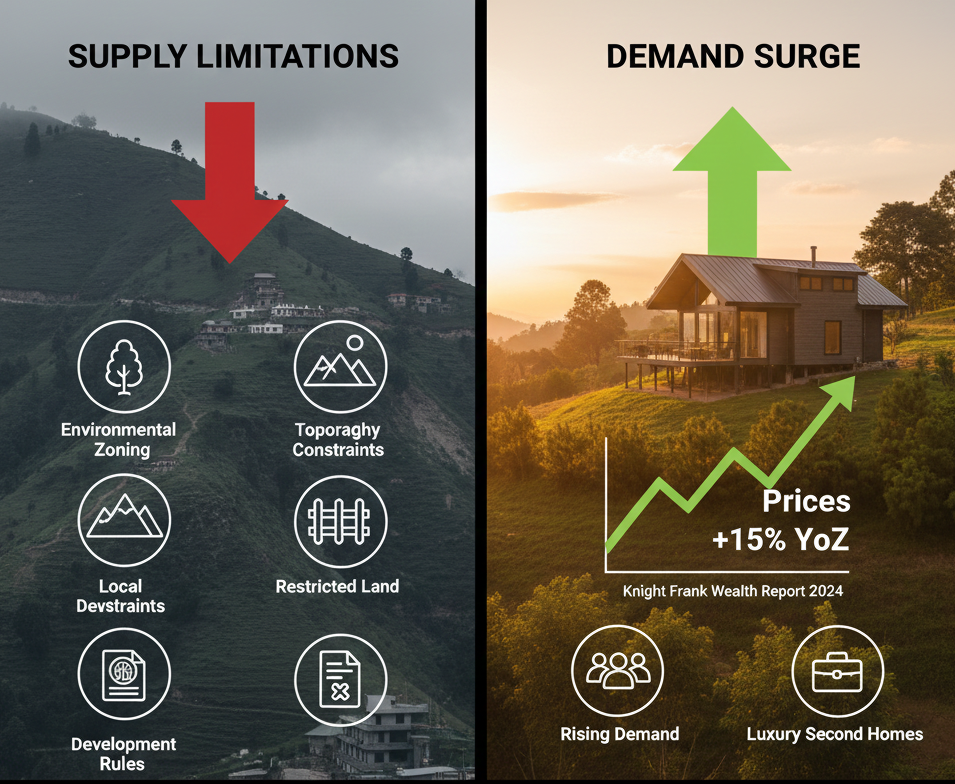
Hill-stations have supply limitations due to:
– Environmental zoning
– Topography constraints
– Restricted land availability
– Local development rules
With demand rising faster than new supply, prices have climbed steadily. As per Knight Frank India’s Wealth Report 2024, luxury second home demand has amplified price growth across India’s top leisure markets.
Buyer Profiles Are Becoming More Diverse
Second home buyers now include:
– Corporate professionals seeking weekend retreats
– Entrepreneurs adopting hybrid living
– Health and wellness-focused families
– NRIs investing in scenic home bases
– Investors leasing villas for short-term stays
This diversity ensures sustained demand, reducing volatility.
The New Trend: “Work-from-Hills” Homes
Developers have recognized the shift and are launching villa projects with:
– Dedicated work pods
– High-speed internet
– Decks and outdoor workspaces
– Yoga lawns and wellness areas
– Concierge and hospitality add-ons
These features convert second homes into functional living + working ecosystems.
FAQ Section
1. Why are hill-station homes becoming so popular?
Because hybrid work, better roads, and urban fatigue are pushing buyers to seek cleaner, quieter second homes.
2. Are second homes good investments?
Yes. Key markets show 10–12% demand growth and 15% price rises due to limited supply and high rental potential.
3. Which hill-stations have the highest demand today?
Lonavala, Dehradun, Dharamshala, Coorg, Kasauli, and Ooty are among the strongest based on buyer interest.
4. Who buys second homes?
Working professionals, luxury buyers, NRIs, and investors seeking both lifestyle and returns.
5. Will this trend continue in 2025 and beyond?
Yes. With hybrid work stabilising and infrastructure improving, second home demand is expected to stay strong.
Conclusion

India’s hill-station and second home market is experiencing one of its strongest growth phases. With 10–12% annual demand increase, 15% price growth, and a 28% surge in luxury housing, hill destinations have become the new lifestyle and investment frontier. Hybrid work and improved connectivity are turning these retreats into practical, long-term living options.
As more buyers look for wellness, open spaces, and work-from-anywhere flexibility, this trend will remain a major force shaping the future of Indian real estate.
Relai – For right home.
Let’s join together to bring change to the world of real estate.
Thinking about your next home?
relai scores every project on data, not paid placements, and it's free for buyers.