Filmnagar Eco-Footpaths: A Small Project With Big Lessons for Hyderabad’s Urban Future
Filmnagar Eco-Footpaths: A Small Project With Big Lessons for Hyderabad’s Urban Future
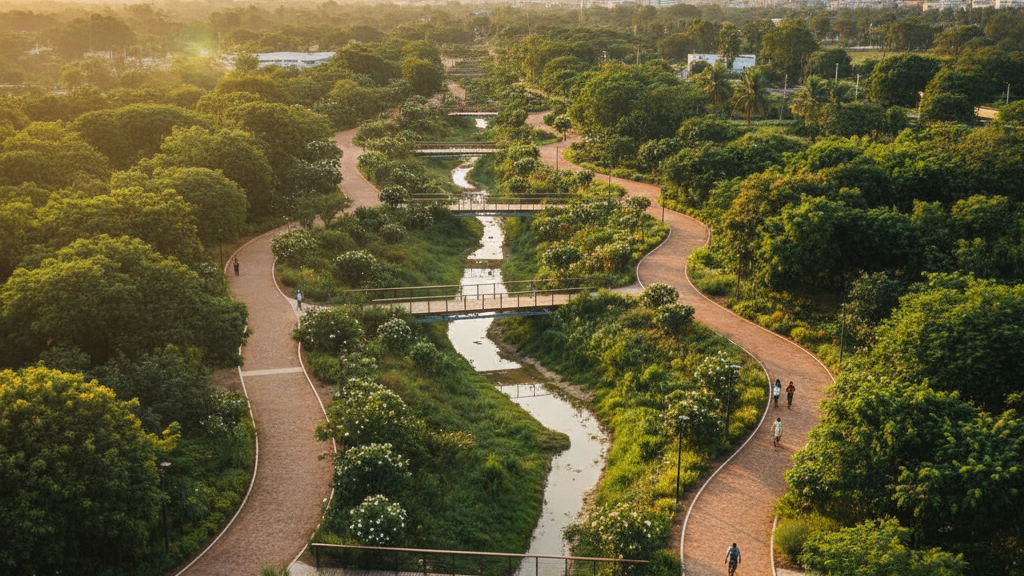
Hyderabad’s real estate and infrastructure story is often told through the big projects — the ORR, airport link, metro expansions, or new high-rise clusters. But sometimes, it’s the smaller, quieter interventions that reveal how a city is preparing for the future. The Filmnagar eco-footpath project, developed by GHMC at a cost of ₹1.68 crore, is one such example.
The project covers a 1.5 km stretch and uses recycled plastic pavers, a method now gaining global acceptance as a low-carbon alternative to conventional pavement materials. This initiative doesn’t stand alone. It is part of GHMC’s broader anti-encroachment and urban mobility clean-up in the Gachibowli–Kondapur IT corridor, one of the busiest and most high-pressure real estate zones in Hyderabad.
As the city expands vertically and horizontally, simple things like walkability, footpath continuity, and sustainable materials start shaping livability. That’s why this project has triggered conversations about how Hyderabad should design its streets, manage public land, and upgrade older neighbourhoods while staying aligned with long-term sustainability goals.
1. Why the Filmnagar Footpath Upgrade Matters
Hyderabad faces the same challenge seen in fast-growing global metros: high population growth paired with fragmented pedestrian infrastructure.
A 2019 World Bank report on Indian cities noted that walkability is directly linked to:
– safety
– economic productivity
– retail vibrancy
– public transit performance
In zones like Jubilee Hills, Filmnagar, and Gachibowli, footpaths are often narrow, broken, or blocked by encroachments. The Filmnagar upgrade stands out because it uses recycled plastic blocks designed for durability and drainage. By choosing recycled material, GHMC reduces landfill pressure and cuts down on the carbon footprint associated with new construction materials — an important shift considering construction accounts for nearly 40% of global CO₂ emissions, according to the UN Environment Programme.
More importantly, the project signals a new expectation:
Streets should belong to people, not just vehicles.
2. Link to Anti-Encroachment Drives in the IT Corridor
The Gachibowli–Kondapur belt is Hyderabad’s economic engine. It hosts the IT workforce, high-rise apartments, rentals, co-living clusters, and corporate campuses. But for years, footpaths in this area have been heavily encroached upon. Parking spill-outs, vendors, temporary shelters, and debris often push pedestrians onto the road, worsening traffic.
GHMC’s recent anti-encroachment drive aims to clear these stretches for:
– safer walkways
– smoother traffic flow
– easier last-mile access to metro and bus stops
– cleaner streets
The Filmnagar project is being read as a pilot upgrade that can be replicated in Gachibowli and Kondapur once encroachments are cleared. If done systematically, Hyderabad could begin closing the gap between road expansion and footpath development.
3. What This Means for Livability and Real Estate
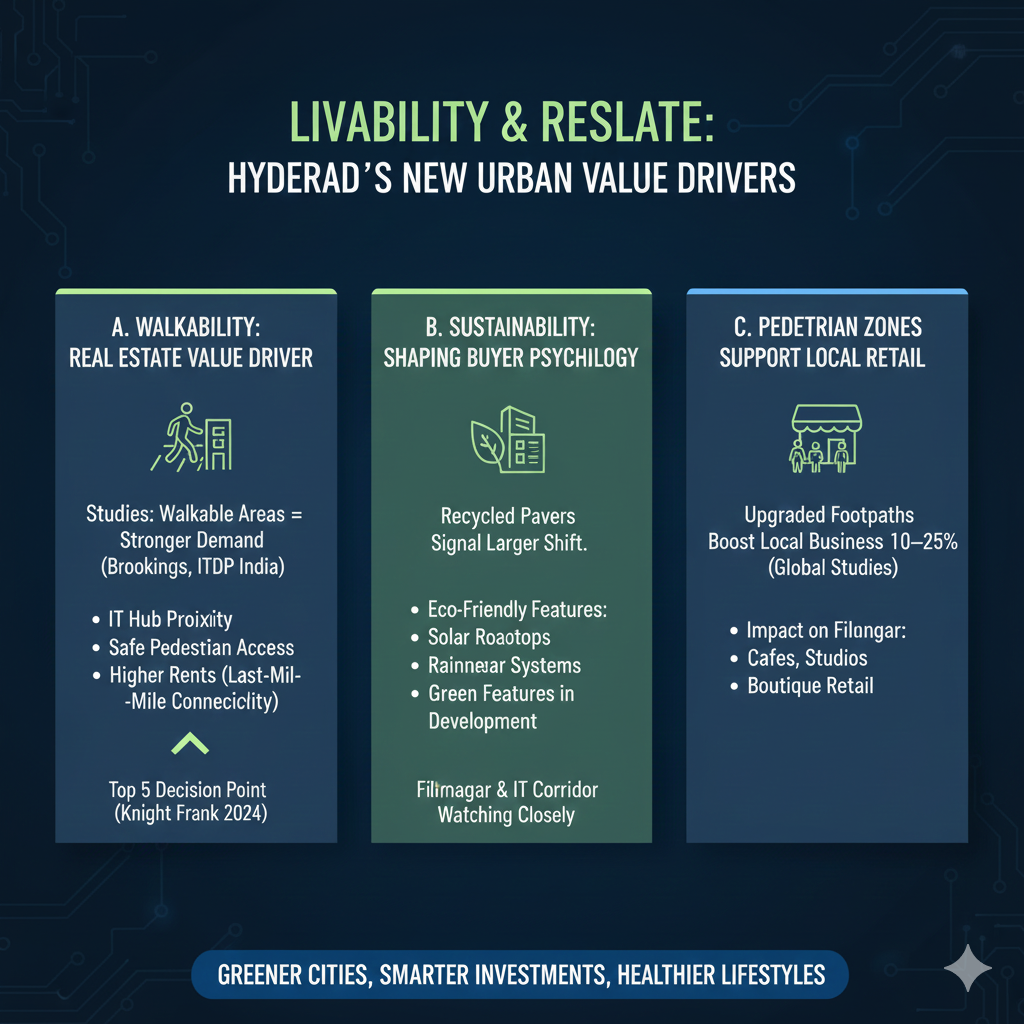
A. Footpaths are now a real estate value driver
Studies from Brookings Institution and ITDP India show that walkable areas see stronger residential demand, especially among younger professionals and families.
In Hyderabad’s case, this becomes even more relevant because:
– most new launches cluster around IT hubs
– buyers prefer communities with safe pedestrian access
– micro-markets with better last-mile connectivity command higher rents
A 2024 Knight Frank report highlighted that walkability, open spaces, and clean streets now appear in the top five decision points for mid-segment and premium buyers.
B. Sustainability signals are becoming part of buyer psychology
Recycled plastic pavers may look like a small detail, but they signal a larger shift. Eco-friendly features — rainwater systems, solar rooftops, heat-resistant materials — are influencing purchase decisions.
Developers near Filmnagar and the IT corridor are watching closely: sustainable public upgrades often encourage private developers to integrate green features too.
C. Improved pedestrian zones support local retail
Global city studies show that upgraded footpaths can boost local business by 10–25%, as seen in cities like London, Melbourne, and Seoul.
For Filmnagar, with its mix of cafes, studios, and boutique retail, this matters.
4. How This Fits Into Hyderabad’s Long-Term Urban Strategy
Hyderabad’s infrastructure push is not only about metro lines, flyovers, or expressways. The city is gradually moving toward:
– transit-oriented development (TOD)
– design standards aligned with Smart Cities recommendations
– heat-resilient materials
– clean mobility corridors
Recycled plastic footpaths support these goals in three ways:
Heat resistance: plastic composites absorb less heat than conventional materials, helping reduce local temperature spikes.
Permeability: improved drainage reduces flooding during peak monsoon.
Lifecycle cost: plastic pavers require less maintenance than cement tiles — a significant advantage for GHMC.
This aligns with the push to improve Hyderabad’s global competitiveness. As per the Oxford Economics Global Cities Index, cities with strong sustainability indicators typically outperform others in talent attraction and investor interest.
For areas like Filmnagar, Gachibowli, Kondapur, and Jubilee Hills, this means higher real estate desirability over time.
FAQ Section
1. Why did GHMC choose recycled plastic pavers?
They offer better durability, lower maintenance, and support waste-to-value sustainability goals.
2. Is this project linked to anti-encroachment drives?
Yes. GHMC plans to make pedestrian corridors usable again in the IT belt, and Filmnagar is part of that larger effort.
3. Will this affect property values nearby?
Walkable, upgraded streets usually lift residential and commercial value. The impact is gradual but consistent.
4. Can these materials withstand Hyderabad’s heat?
Recycled plastic pavers have strong heat resistance and often perform better than cement tiles in high-temperature zones.
5. What does this mean for homebuyers and tenants?
Areas with better footpaths and public infrastructure tend to be safer, cleaner, and more attractive for long-term living — a factor to consider when choosing a home.
Explore verified projects at Relai for more clarity.
Conclusion

The Filmnagar eco-footpath upgrade may seem small compared to Hyderabad’s large infrastructure projects, but its impact goes deeper. It shows the shift toward people-centric, sustainable, and walkable urban design. It connects to GHMC’s ongoing efforts to clear encroachments and improve mobility in critical zones like Gachibowli and Kondapur. And it represents a future where Hyderabad’s growth is not just fast but thoughtful.
Footpaths are more than concrete strips. They are indicators of how a city values public space, safety, and quality of life.
Hyderabad’s next phase of development will be shaped not only by high-rises and tech parks but also by projects like these — quiet upgrades that change how people experience the city every day.
Let’s Join Together to Bring Change to the World of Real Estate.
Relai – For right home.
Thinking about your next home?
relai scores every project on data, not paid placements, and it's free for buyers.