EU Sustainability Norms Are Entering Indian Real Estate Are Homebuyers Ready?
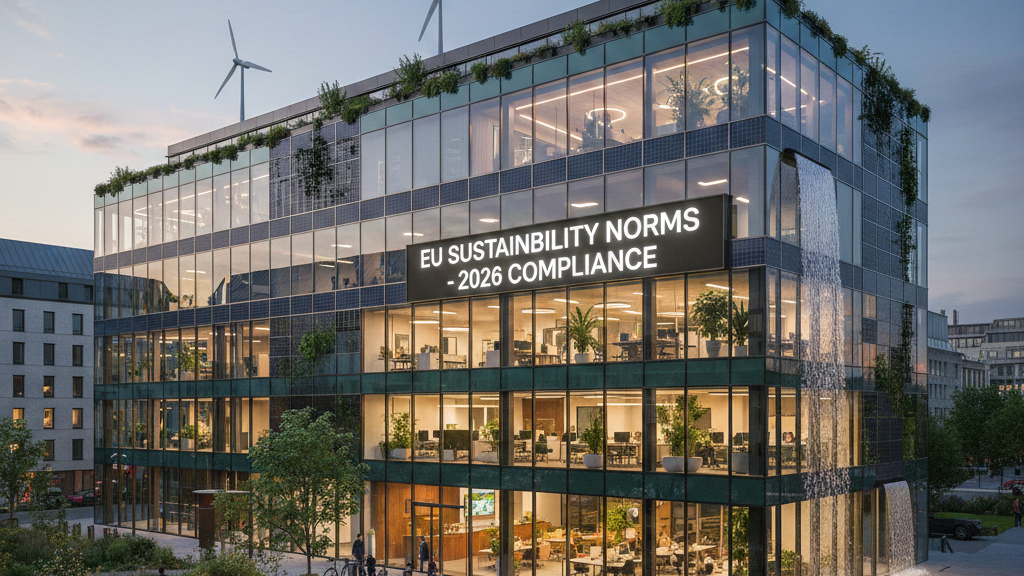
Sustainability in real estate is no longer a niche concept or a marketing buzzword. What began as a voluntary trend driven by environmentally conscious developers and corporate tenants is quickly becoming mainstream strategy shaped by global regulations, occupier preferences, and investor expectations. With European Union (EU) sustainability norms influencing corporate behaviour worldwide, Indian real estate — especially in cities like Hyderabad and Bengaluru — is starting to feel the ripple effects. The question for many homebuyers now is simple: Are we ready for this shift, and what does it mean for design, pricing, and long‑term value?
Why EU Sustainability Rules Matter Beyond Europe
EU sustainability regulations such as the Corporate Sustainability Reporting Directive (CSRD) and the Sustainable Finance Disclosure Regulation (SFDR) require firms to disclose environmental, social, and governance (ESG) performance across global operations. When large European companies operate or lease in India, their global compliance obligations extend to their offices, supply chains, and leased spaces — including real estate in Indian cities.
This means Indian developers and landlords need to build or upgrade properties with green certifications and demonstrable ESG credentials if they want to attract multinational tenants or global capital. It turns sustainability compliance into a commercial prerequisite, not just a differentiator.
Green Building Adoption Has Exploded in India
India’s real estate sector has already begun aligning with sustainability expectations:
The share of green‑certified office buildings has increased sharply, with 61 % of Grade‑A office space certified and more certifications expected as older buildings are retrofitted for ESG compliance.
Green‑certified buildings command higher occupancy rates and rental premiums, and they often outperform non‑certified peers in leasing and valuation metrics.
Sustainability is no longer confined to offices: over 2 million residential units now hold green building certifications, alongside industrial and commercial stock.
These trends show that sustainability is already reshaping how office and residential markets operate — and global norms are accelerating that shift.
What Sustainability Means for Project Design
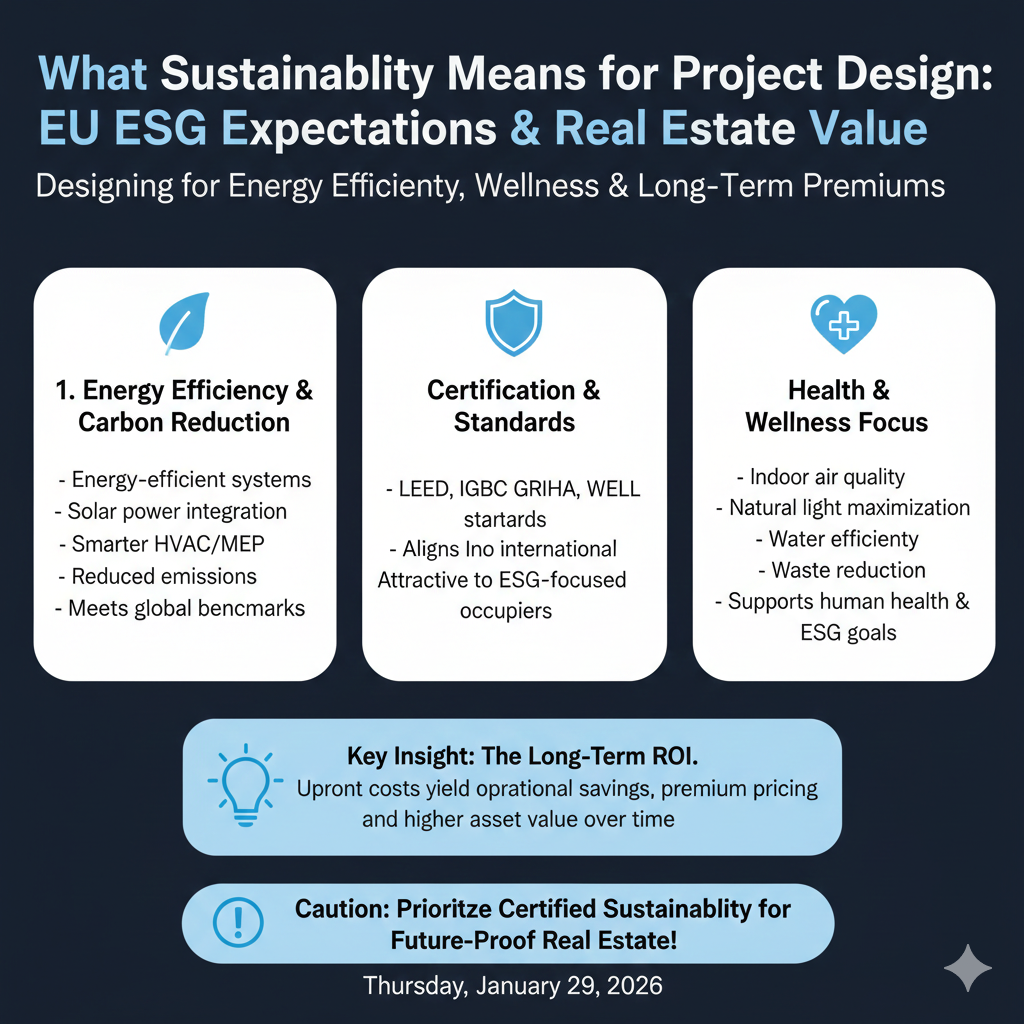
EU and global ESG expectations are influencing real estate design in several ways:
1. Energy Efficiency and Carbon Reduction:
Projects are incorporating energy‑efficient systems, solar power, and smarter mechanical, electrical, and plumbing integration to reduce emissions — a priority in global sustainability benchmarks.
2. Certification and Standards:
Developers are increasingly pursuing certifications such as LEED, IGBC, GRIHA, and WELL that align with international sustainability standards, making buildings more attractive to ESG‑focused occupiers.
3. Health and Wellness:
Design elements that prioritise indoor air quality, natural light, water efficiency, and waste reduction are gaining ground because they support both human health and corporate ESG goals.
These features often cost more upfront, but they deliver measurable operational savings (lower energy and water bills) and premium pricing power over time.
Pricing and Value: The Sustainability Premium
Global sustainability norms have introduced a noticeable pricing effect in Indian markets:
Certified green buildings in India often command rental premiums compared with non‑certified assets, especially in tech‑driven cities such as Bengaluru and Hyderabad.
Occupancy rates in green buildings tend to be higher, reducing vacancy risk and stabilising income streams for developers and investors.
Premium tenants — such as multinational corporations with binding sustainability targets — actively seek ESG‑compliant spaces, even when rents are slightly higher.
For residential buyers, this means sustainable homes may carry a price premium compared with conventional units. But buyers can expect benefits such as lower utility costs, enhanced indoor environments, and improved long‑term resale value if global ESG pressures continue.
Are Homebuyers Prepared?
Despite clear market movement, readiness varies:
Awareness Is Growing, But Not Yet Universal:
Many homebuyers still focus primarily on price, location, and basic amenities, with sustainability features considered secondary. But as sustainability becomes integrated into financing products and global corporate leasing decisions, homebuyers will increasingly encounter ESG as a factor — not a trend.
Cost Perception vs Reality:
There’s a perception that sustainable construction automatically costs much more. While green buildings can have slightly higher upfront costs, operational savings and long‑term value uplift often offset that gap.
Regulatory Readiness:
Indian regulators are also evolving. India’s securities regulator has begun rewriting ESG disclosure norms for listed companies, and sustainability reporting frameworks are gaining traction domestically alongside global norms.
This means that both demand and supply push toward sustainability continues from multiple directions — global, corporate, and regulatory.
What This Means for Residential Demand
For homebuyers and developers, sustainability expectations are shaping decisions in several subtle but real ways:
Upcoming projects with proven green credentials are likely to command stronger interest among educated buyers who recognise long‑term cost savings and health benefits.
Rental demand for green‑certified residential buildings is increasing as tenants prioritise energy efficiency and indoor environmental quality.
Sustainability is evolving from “nice‑to‑have” to a baseline expectation for modern urban living, especially among the millennial and Gen‑Z demographic that values environmental responsibility.
This shift doesn’t just enhance appeal — it reshapes buyer priorities and will increasingly be reflected in pricing and valuation over time.
FAQ Section
Do EU sustainability norms directly apply to Indian homebuyers?
Not directly in a legal sense, but they influence corporate tenant behavior and international capital allocation, which in turn affects local real estate demand.
Are sustainability certifications only for offices?
No. Residential developments, industrial parks, and mixed‑use communities also pursue green certifications as buyer and tenant demand grows.
Do green homes cost significantly more?
They may have slightly higher upfront costs, but operational savings on energy and water typically compensate over time.
Will sustainability features add resale value?
Yes — properties with strong sustainability credentials often attract a broader pool of buyers and better pricing in resale markets.
Conclusion

EU sustainability norms are quietly reshaping Indian real estate long before they become legal requirements here. As global corporates integrate ESG metrics into leasing and investment decisions, developers and buyers are responding — consciously or not — to a new market reality where sustainability, efficiency, and human wellbeing matter alongside price and location.
Homebuyers in Hyderabad, Bengaluru, and other growth markets are waking up to a future where green, certified, and ESG‑aligned homes are not just preferable but strategically valuable.
The transition isn’t complete yet — but it’s happening, and early adopters are already capturing measurable benefits.
Let’s Join Together to Bring Change to the World of Real Estate.
Thinking about your next home?
relai scores every project on data, not paid placements, and it's free for buyers.